


Introduction
Theoretical Framework
Building acoustics
Selo Casa Azul + CAIXA
AQUA-HQE
GBC Brasil Casa and GBC Brasil Condomínio
Material and Methodology
Result and Discussions
Selo Casa Azul + CAIXA
AQUA-HQE
GBC Brasil Casa and GBC Brasil Condomínio
Comparison between different certification tools
Final Considerations
Introduction
We inhabit an increasingly urban planet, moderated by a predatory development model that consumes vast amounts of energy and resources. In this scenario, cities are configured as complex and challenging spaces for sustaining quality of life in its broadest sense [1], in the face of requirements for the well-being and health of the population.
According to the World Health Organization (WHO), about 55% of the world’s population currently lives in urban areas, and it is estimated that by 2050 this proportion will increase to 68% [2], which further reinforces the importance of planning the growth of cities. The rapid and spontaneous urban expansion in cities of developing countries presents complex challenges to the relationship between urbanization, inequality, and sustainable development, which further emphasizes the importance of understanding this interaction [3].
Civil construction is renowned as one of the most important human activities, with considerable impacts on the environment, especially in the phases of construction, operation, and demolition of buildings [4]. On a global scale, the industry consumes 40% of total energy supply, 40% of all raw materials, 32% of non- renewable and renewable resources, 25% of all wood, 12-16% of all available water, emits 35% of CO2, and produces 30-40% of all solid waste [5].
It should be noted that the impact of a building on the environment does not end with the completion of the work. The building continues to impact the environment with its use and operation with the use of energy and resources, such as water consumption, natural gas, electricity, among others. It is thus necessary and urgent to incorporate strategies that minimize the use of non-renewable resources, with energy savings and waste reduction through the establishment of sustainable architecture.
It is well known that sustainability is a dynamic concept, based on environmental, economic, and social pillars. The subject was first officially mentioned in 1983, at the World Commission of the United Nations Organization (UN), in the Brundtland Report. Presented in 1987, the report proposes sustainable development as one that “seeks to meet the needs of the current generation without compromising the ability of future generations to meet their own needs” [6].
Thus, based on the concept of sustainable development, new buildings must seek appropriate economic, environmental, and social conditions in all phases of building design, construction, use, and demolition. In addition, basic requirements of comfort and safety are necessary to maintain the quality of buildings, promoting quality of life and health to its users.
The environmental quality of housing has been addressed in several investigations with emphasis on different aspects of livability, such as thermal comfort [7, 8, 9, 10, 11, and others], lighting performance [12, 13, 14, and others], ergonomic performance 15, 16, among others], as well as acoustic performance [17, 18, 19, 20, and others].
Noise pollution, which increased with the Industrial Revolution and the rapid urbanization process, is one of the main environmental problems. According to the WHO, noise pollution has now surpassed water pollution and ranks second among the types of environmental pollution that affect people the most, second only to air pollution [21]. Daily and continuous noise exposure, even if unnoticed, can harm human health, generating effects on the auditory system and psychological well-being [22, 23, 24].
High noise levels outside and inside residential buildings generate acoustic discomfort, reduced productivity, and lack of privacy [25]. Minimum acoustic performance requirements are needed for residential buildings that meet the user’s needs, focusing on the quality of life, including health and well-being.
Meanwhile, environmental certifications emerge as a method for evaluating the impacts of residential buildings, as an attempt to adapt to the global sustainability agendas. A recent study aimed to analyze the similarities and differences in methodology and evaluated themes between the LEED, AQUA, and Fator Verde certifications, which is a municipal certification in the city of Fortaleza [26]. As a result, it was observed that building certifications have common concerns, such as energy efficiency, use of water resources, and waste treatment, among others. Regarding the evaluation process, the AQUA certification stands out among the others because it does not limit itself to established criteria and explores different solutions.
Another study [27] analyzed the compatibility of thermal performance parameters present in ABNT NBR 15575 [28] and the Selo Casa Azul, AQUA, and LEED BD+C v.4 certifications. For AQUA, 57% of the criteria are more demanding than in the norm and 43% are equally addressed. In the Selo Casa Azul, 20% of the certification criteria are not required in the norm, such as ventilation and natural lighting in bathrooms. In LEED BD+C v.4, 50% of the criteria are not addressed by the norm, because they are focused on user comfort, and not on thermal performance evaluation.
The main environmental certification methods for buildings applied in Brazil – LEED, AQUA, and Casa Azul – were also investigated in a recent study [29]. It was found that, when compared to each other, all methods are incomplete, with shortcomings that can compromise the measurement of the real environmental performance of certified buildings. LEED focuses more on evaluating the performance of the building than the impacts it has on the surroundings. AQUA superficially addresses the social issue, limiting itself to the formality of services and compliance with labor rights. Whereas Casa Azul permeates all categories in an unrestrictive way.
Several environmental performance and quality assessment tools have been developed in several countries, such as the environmental certifications of buildings on a voluntary basis, or environmental seals, like the North American LEED (Leadership in Energy and Environmental Design); the GBC Brasil Casa and GBC Brasil Condomínio (Green Building Council Brasil), applied to the Brazilian context with a scope inspired by the LEED certification; the French HQE (Haute Qualité Environnementale), among others. In Brazil, the Selo Casa Azul + CAIXA was developed to classify the social and environmental performance of housing projects financed by the Caixa Econômica Federal.
In Brazil, there is the mandatory NBR 15575 – Residential buildings – Performance, which provides for the performance of residential buildings [28], developed to regulate minimum levels of quality for residential buildings, contributing to making residential developments more sustainable with greater energy efficiency, better quality living environments and user well-being during the life cycle of the building.
Although developed under the concept of sustainability, environmental certifications allow for economic benefits, that is, they can add value to the property, with the environmental issue being treated as a competitive advantage in the real estate market [30]. When comparing certified properties in Hong Kong, it was observed that buyers in the mass housing market were willing to pay higher prices for certified properties [31].
Despite this, studies focused on acoustic criteria in environmental certifications are scarce. Usually, acoustic comfort is not associated with the concept of sustainability in buildings. In general, the issue of sustainability is evaluated only in terms of energy efficiency, emissions, water, and natural resources [32].
Thus, this article aims to discuss how the acoustic comfort and performance are addressed in environmental certifications for sustainable buildings, through a critical analysis of the acoustic requirements present in the certifications: Selo Casa Azul + CAIXA, AQUA- HQE, GBC Brasil Casa and GBC Brasil Condomínio, aimed at housing developments in the Brazilian context.
Theoretical Framework
Building acoustics
With the increasing concerns regarding quality of life, and the rise in noise levels particularly in large urban centers, the problem of noise pollution and acoustic protection in buildings has been gaining prominence in recent times. In general, reducing the negative effects of noise can be achieved by lowering the noise levels emitted by the source, by treating the means of transmission with the addition of acoustic barriers, and by directly protecting the exposed individuals in the building. Brazilian norms have been published in order to prevent and control noise inside buildings.
The NBR 10151 [33] establishes procedures for acoustic measurement and evaluation of surroundings outside buildings, as well as acceptable sound pressure levels, depending on the land use and occupancy of the evaluated area and the time of day. Another example is NBR 10152 [34], which addresses the evaluation of sound pressure levels inside buildings based on reference values. Furthermore, the NBR 15575 [28] makes acoustic performance a right protected by the Consumer Defense Code, and failure to comply with the norms established by ABNT corresponds to a legal infraction subject to sanctions.
The acoustic quality of buildings is associated with acoustic insulation, which relates to the ability of building elements (walls, floor, ceiling, window frames, etc.) to reduce sound transmission between rooms [35]. Therefore, the mass, material composition, the presence of gaps, and the type of frames all influence the level of acoustic insulation.
Internal vertical sealing systems that consist of internal walls dividing rooms should guarantee adequate insulation to airborne noise and ensure privacy, while external vertical sealing systems (facades) and roofs should protect against airborne noise from outside the housing unit [36].
Meeting adequate levels of sound insulation in buildings can ensure satisfactory conditions of acoustic comfort, given that by limiting the levels of internal noise, the noise from outside is also attenuated, and the noise produced inside the dwelling unit is prevented from being propagated to other dwellings.
User satisfaction is strongly related to comfort. Regarding certified and non-certified buildings, many studies indicated lower user satisfaction with acoustic quality in certified buildings, suggesting that acoustic quality should be more valued in certification processes [37].
Airborne noise insulation in a residential building in Maceió (AL), Brazil was analyzed by on-site measurements using the parameters of NBR 15575 [28] as a reference in a study by [38]. The levels of airborne sound insulation found were lower than those recommended by the standard, indicating the inadequacy of the materials used to construct the walls in terms of acoustics.
It is well known that the levels of acoustic comfort found in Brazilian residential units are unsatisfactory [39, 40], and this fact reinforces the need for the acoustic performance of buildings to be taken into consideration since the early phases of their design. Furthermore, the adequate choice of construction materials and components is essential, since they impact the performance of buildings and can be determinant for the comfort levels of users.
In this sense, this article focuses on the certifications applied to the Brazilian context, considering the building system, climate conditions and current regulations, based on the following certifications: Selo Casa Azul + CAIXA, AQUA-HQE, GBC Brasil Casa and GBC Brasil Condomínio, which are described below.
Selo Casa Azul + CAIXA
The Selo Casa Azul + CAIXA was created in 2009 by the largest financing bank for affordable housing in the Brazil, the Caixa Econômica Federal, being the first sustainability rating system for housing projects developed for the housing construction scenario in Brazil. This certification aims to recognize and encourage quality urban and architectural solutions with rational use of natural resources, in addition to promoting awareness of the social and economic benefits of sustainable construction. To be eligible, the building must be for residential use and be suitable for CAIXA financing criteria.
The certification, from July 2021, is done in two stages: project analysis (Certificado Projetar), and verification or specific inspections during the work until its conclusion (Selo Habitar).
In the Version published on 11/June/2022 [41], the most current version, phase 4 of the Seal came into effect, which presented not only a change in the nomenclature of the levels of the Seal, but also significant changes in the indicators and in the criteria scoring. The Casa Azul + CAIXA seal has 4 classifications: Crystal, Topaz, Sapphire and Diamond; containing 51 criteria, some mandatory, others of free choice, added to the Bonus score. To obtain the Crystal Seal, 16 compulsory criteria and 50 points must be met; for the Topaz Seal: 17 compulsory criteria and 60 points; for the Sapphire Seal 17 compulsory criteria and 80 points. The Diamond Seal requires 24 mandatory criteria, 100 points and the identifier “#more” in the “Innovation” category.
Thus, the certification level is defined by the total score acquired by the enterprise, reaching the minimum score and complying with the basic mandatory criteria of the corresponding category (Table 1). However, in case the minimum conditions for the concession of the seals are not met, it is possible to obtain the identifiers “#more” separately, which establish compliance with the basic mandatory criteria of the corresponding category.
Table 1.
Scores according to the Casa Azul + CAIXA seals
| Categories | ||||
| Crystal | Topaz | Sapphire | Diamond | |
| Mandatory Criteria | 16 | 17 | 17 | 24 + “#more” Innovation |
| Score | 502 | 3 | 4 | Innovation |
These criteria are distributed in six categories: 1- Urban Quality and Well-being, 2- Energy Efficiency and Environmental Comfort, 3- Efficient Water Management, 4- Sustainable Production, 5- Social Development, and 6- Innovation. In addition to these, there is a free choice Bonus Criterion, in order to encourage the adoption of sustainability practices not foreseen in the above-mentioned categories. Among the minimum criteria to obtain the Crystal Category, three belong to category 1: quality and infrastructure in the urban space; relationship with the surroundings - interferences and impacts on the development and waste separation. In category 2 there are four compulsory criteria: performance and thermal comfort; performance and lighting comfort; energy saving devices and individual gas metering.
In category 3, there are also three compulsory criteria for the Crystal level: water saving devices; individual water measurement and permeable areas. In category 4: management of construction and demolition waste; reusable forms and props and certified wood. Finally, in the 5th category: training of residents in the management, maintenance and operation of the undertaking; social development actions in the territory and environmental education for workers and residents. The innovation category is free to choose for the Crystal Level.
AQUA-HQE
The AQUA-HQE certification was developed by the Fundação Vanzolini in partnership with the Escola Politécnica of the University of São Paulo and arose from the adaptation of the French certification Démarche HQE to the Brazilian scenario [42]. In AQUA-HQE there are two certification cycles: the construction cycle for new buildings and the operation cycle for existing buildings. The certification for environmental quality assessment of residential buildings under construction in the most current version of April 2016 with an erratum dated 03/08/2018 will be addressed. According to the manual, it is necessary to perform periodic audits in three phases: Pre-Project, Project, and Execution, for buildings under construction where the audit team verifies the conformity of the project.
There are five classifications of the AQUA-HQE seal, which vary according to the levels achieved: Pass, Good, Very Good, Excellent, and Exceptional. Performance certification is classified into three categories: Base Level, Good Practice, and Best Practice, and the project must meet at least the Base Level prerequisites of each category. To reach the other levels, it is necessary to achieve a percentage of points in relation to all the points applicable to the category. Each theme is also evaluated on a scale of 1 to 5 stars, depending on the score obtained in each of the categories (Table 2).
Table 2.
Calculation of level achieved by topic
In Brazil, the minimum level of performance in 7 categories in the Base Level, 4 in Good Practices and 3 in Best Practices makes it possible to obtain the HQE Pass classification. Except for social interest projects, in the value ranges of the Minha Casa Minha Vida program or equivalent, financed by CAIXA, which can acquire the seal by meeting the Base Level in all 14 categories.
The requirements regarding environmental quality are divided into 14 categories and grouped into 4 themes: energy and savings; comfort; health and safety and environment. The category involving Energy and savings addresses the thermal performance of the building envelope and the energy efficiency of buildings, respecting the regulations of the RTQ-R Manual [43]. Besides the reduction and control of energy consumption for air conditioning systems, ventilation, exhaustion, and other equipment; the use of renewable energy, such as photovoltaic panels; hot water management; artificial lighting technologies; and energy- efficient elevators. This also includes drinking water, wastewater and rainwater management, equipment efficiency maintenance, information on maintenance and use for the residents, waste storage maintenance, and building automation.
In the Comfort category, we highlight hydrothermal comfort with architectural solutions adapted to the local climate; acoustic comfort from the positioning of noise-sensitive environments to the acoustic performance of the building, in accordance with NBR 15575 [28]; visual comfort by analyzing the neighboring landscape with openings for natural lighting and the addition of artificial lighting, in accordance with NBR 15575 [28]; and olfactory comfort in the control of undesirable odors and ventilation systems. The Health and Safety category, on the other hand, involves the sanitary quality of the environments; electrical appliances specifications; compliance with safety standards; building’s external protection; and accessibility, in accordance with NBR 9050 [44]. Furthermore, the control of external and internal pollution sources, such as soil and air pollution, ventilation systems, water quality, and the prevention of legionellosis and burns risks.
The Environment category deals with the relationship between the implementation of the project on the land and its surroundings; a survey of existing transportation modalities; the technical, environmental, and sanitary quality of the materials, products, and equipment used; and the choice of floor coverings. It highlights the construction site with low environmental impact, which avoids annoyance and noise pollution to the neighborhood, and also considers social aspects. It is also concerned with waste management; the possibility of composting and waste removal.
GBC Brasil Casa and GBC Brasil Condomínio
The GBC Brasil Casa and GBC Brasil Condomínio certifications were developed by the Green Building Council Brasil Organization. The GBC Brasil Casa is intended for single-family homes, while the GBC Brasil Condomínio certification refers to vertical or horizontal multi-family residences. Both have similar acoustic criteria.
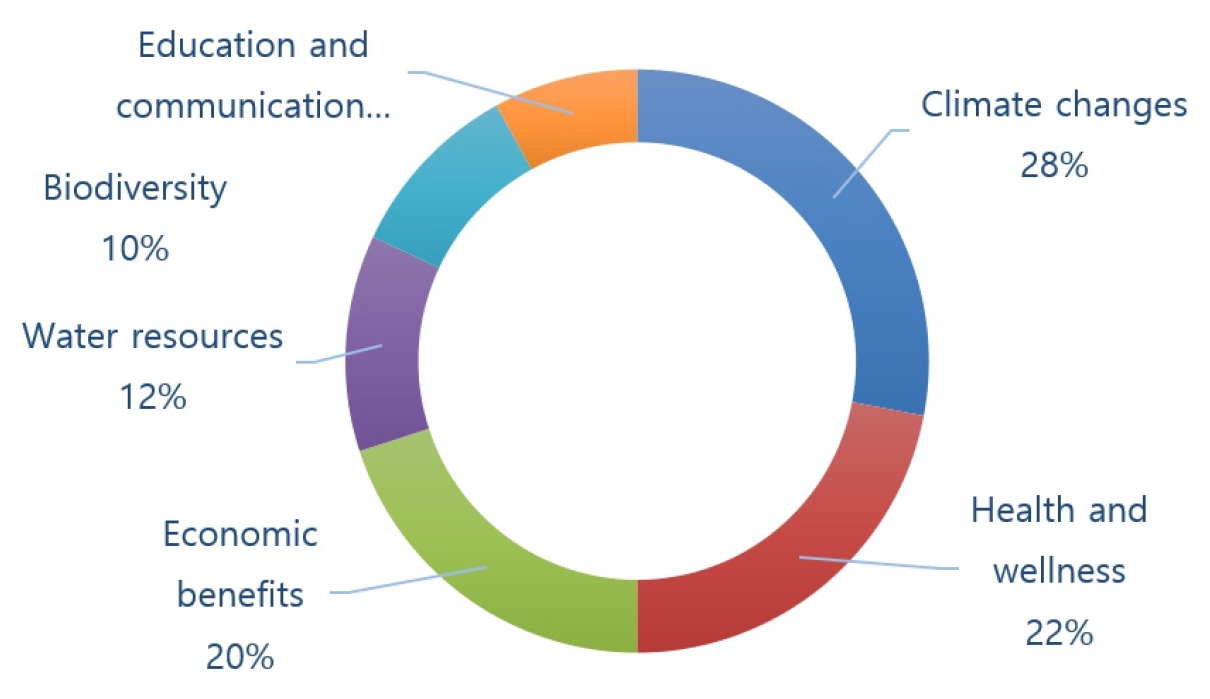
The certifications are intended to: mitigate the impacts of climate change, improve human health and well-being, protect and restore water resources, biodiversity, and ecosystem services, develop a sustainable economy, and encourage communication and education in order to contribute to increased social equity, environmental justice, community health, and quality of life [45, 46].
This certification is divided into eight categories: Implementation (IMP), Energy and Atmosphere (EA), Efficient Use of Water (EUW), Materials and Resources (MR), Internal Environmental Quality (IEQ), Social Requirements (SR), Innovation and Design (ID), and Regional Credits (RC). It is worth pointing out that the objectives determine the weighting of the points towards certification, so that the scoring of the credits depends on the degree of importance in meeting the pre-established objectives. Therefore, the credits that meet the most important objectives are given a higher scoring weight (Figure 1).
In the seals in question, there are prerequisites (mandatory) and credits (separate scores). Each project must meet all the prerequisites for certification, while the credit score will determine the specific level of certification sought. According to Green Building Council Brazil [45, 46], the credit represents a particular aspect of sustainability and consists of a design feature, measurement, quality, value, or function. The certification levels range from Green (40 to 49 points); Silver (50 to 59 points); Gold (60 to 79 points) and Platinum (80 to 110 points).
Material and Methodology
To investigate the acoustic quality requirements of the environmental certifications Selo Casa Azul + CAIXA, AQUA-HQE, GBC Brasil Casa, and GBC Brasil Condomínio, the manuals and reference guides available on the websites of the respective organizations were consulted. From there, the criteria related to the acoustic evaluation of the building and/or its surroundings present in the certifications were identified, as well as the degree of requirement in each document, in order to assess, discuss, compare and point out gaps. To achieve the objective of this article, a summary comparative table was drawn up, distinguishing acoustic aspects among the sustainability seals to be awarded to buildings.
Result and Discussions
Initially, a comparative chart was organized according to the acoustic requirements of the four environmental certifications for residential buildings, so that the proposed evaluations could be carried out (Table 3). As it can be observed in the details below, the acoustic aspects addressed and their requirements in the certifications are quite inconsistent.
Table 3.
Criteria regarding acoustic performance in environmental certifications
Selo Casa Azul + CAIXA
With in this certification, none of the 51 existing evaluation criteria specifically addresses acoustic comfort. The environmental comfort category focuses on thermal and lighting comfort. With regard to acoustic issues, there is only mention of the requirement to use anti- noise frames, and the impact on ventilation and air exchange must be considered in the thermal performance report. The mandatory criterion “Relationship with the surroundings: Interferences and impacts on the development” includes the analysis of the existing noise in the surroundings of the development, in order to preserve the well-being, safety and health of the residents, considering possible negative impacts from agents acting in the neighborhood.
Although this criterion is not specific about acoustic issues, it requires some mitigating actions that should be considered as risk factors. For example, the non- existence of excessive and constant noise sources coming from highways, railways, industries, mines, urban highways, noisy equipment, etc, within a radius of 1.25 km counted from the geometric centre of the land. For noise sources coming from airports, the distance to be considered, from the geometric centre of the terrain, should be 2.5 km. A tolerance of 15% is admitted in relation to the radii of 1.25 km and 2.5 km from the geometric centre of the development area.
There is also the characterization of noise sources in the surroundings of the building, in the period of higher probability of noise occurrence, according to ABNT NBR 10151 [33]. If the equivalent level of external noise measured is higher than 60 dB, a mitigating element that mitigates the noise discomfort shall be prepared and the acoustic report related to the external airborne noise shall be presented. In which there must be:
∙Analysis of the sound pressure levels at the façade on the different floors of the building;
∙Indication of the noise class considering mitigation elements external to the building (relief, wall, vegetation, among others);
∙Indication of the appropriate noise reduction for the noise class;
∙Obtaining the acoustic parameters for the evaluation of the external vertical walls (façades) of the building;
∙Performance level obtained according to ABNT NBR 15575 [28].
In the Category “Sustainable Production”, the optional criterion “Mitigation of discomfort of the local population during construction” with a score of 2 points cites that in the diagnosis of potential impacts on the neighborhood, there must be mitigating actions that contain the excess noise generated by the construction work. However, it was specified that the proposals presented must go beyond what is required by the applicable legislation and standards.
In the version prior to version V.008 of July 2021 [47], there was no specific analysis of the interference of anti-noise windows in thermal comfort and the verification of risk factors of noise generation in the surroundings of the development was more rigid. A radius of 2.5 km from the geometric center of the site was specified to investigate the existence of noise from roads, railways, airports, industries, etc. The tolerance of 15% radius from the center of the site was maintained in the current version.
AQUA-HQE
This certification covers acoustic comfort in a more detailed way with a mandatory requirement for two acoustic criteria. The AQUA-HQE acoustic comfort category contains two prerequisites: Base Level (mandatory items) and credits (requirements that give buildings a higher score if they are met). The prerequisite “take acoustics into account in the architectural arrangements” establishes the protection of the building from external noise, looking at the ground plan and the residential environments (rooms and studios) to be protected from external and internal noise, considering the arrangement of these areas in the building. The adequacy check for this item is performed during the design phase.
The “Acoustic Quality” prerequisite considers the compliance with the minimum acoustic performance of NBR 15575 [28] as the Base Level for acquiring the seal and generates different scores for intermediate (1 point) and superior (2 points) compliance with the norm. Compliance with this topic must be verified both in the design phase and during the construction phase, being equally demanding, since the standard establishes the reference values.
In addition, the commitment to reduce annoyances caused to the neighborhood, including noise, is also defined as a Base Level in the Construction site category, and all those involved should be informed of this concern. A credit of 1 point is added by establishing a schedule of the noisy phases of the construction site and the mitigation measures taken in agreement with the neighbors to limit the acoustic annoyance generated.
The acoustic concern in AQUA-HQE also includes the removal of waste regardless of the project, with the limitation of acoustic and olfactory nuisance being a prerequisite in the “Waste” category. The construction site is addressed in part 1 of the norm to implement a waste management system to minimize environmental degradation. However, it does not raise the possible annoyance generated to the neighborhood during construction, an issue not covered by NBR 15575 [28].
GBC Brasil Casa and GBC Brasil Condomínio
From the point of view of the acoustic requirements present in the GBC Brasil Casa and GBC Brasil Condomínio seals, it can be seen that the Acoustic performance requirement in the Internal Environmental Quality (IEQ) category can be counted as a credit that can reach up to 3 points. According to the quick guides of GBC Brasil Casa and Condomínio certifications addressing the IEQ category, the need to meet the minimum performance level of NBR 15575 [28] regarding the evaluation of thermal, acoustic, and lighting performance [48].
Especially in the area of acoustic performance, there is mention of the need to reduce the risk of annoyance or illness that noise can produce in residential users. To achieve the score referring to the acoustic performance criterion, if this criterion is to be satisfied, it is necessary to prove the levels of acoustic performance for the areas where residents spend the most time in the residence, such as bedrooms and living rooms, through acoustic insulation studies in the design phase and acoustic tests after the construction is completed and before the residence is occupied.
To qualify for this requirement, the certification points to two options. The first option consists in meeting the criteria of the detailed method (by simulation) for the intermediate level (I) of acoustic performance, as stated in Appendix E of NBR 15575-1 [28]. This option can grant up to 2 points. The second option consists in meeting the criteria of the detailed method (by simulation) for the upper level (U) of acoustic performance, according to Appendix E of NBR 15575-1 [28]. This option can grant up to 3 points. However, there was a confusion of concepts, since the referred appendix deals with the evaluation of the sound pressure level coming only from building equipment, with a procedure by measurement and not simulation.
As for the acoustic performance tests, the certifications GBC Brasil Casa and GBC Brasil Condomínio establish that these must be performed in laboratories accredited by INMETRO or certified by ProAcústica. The test procedures regarding airborne noise insulation between rooms must be performed in compliance with ISO 16283-1 [49] or ISO 1005; impact noise insulation testing of floor systems in compliance with ISO 16283-2 or ISO 10052; and testing regarding airborne noise insulation of facades in compliance with ISO 16283-3 or ISO 10052.
For horizontal residential condominiums, the tests can be performed per unit type, while for vertical condominiums, the tests must be performed in at least three units per building type, on three different floors (first floor, middle floor, and top floor), on all building facades and orientations.
It is also necessary to detail the acoustic insulation solutions used in the building, in the floor system, internal and external walls (facades), roofing, installations, and equipment.
It is worth pointing out that the performance must be met for all the areas specified by the norm, with the possible exception of the level obtained in only one of the areas.
Comparison between different certification tools
Once the acoustic performance criteria in the environmental certifications analysed were recognised, it was possible to assess through a qualitative analysis which seals have more detailed and rigid acoustic quality requirements for residential buildings.
In general, it was possible to observe with Table 3 that environmental certifications have an integrated approach to environmental preservation, such as the use of natural resources, energy consumption, waste management, among others, not only focused on the performance of the building. The certification process of the seals presented is similar, occurs by granting opinions obtained after on-site inspections and analysis of the project of the enterprise, which depending on their suitability to the criteria and prerequisites defined gets a specific score. For the Casa Azul + CAIXA seal, GBC Brasil Casa and Condomínio the analysis occurs with the presentation of the checklist model filled with the items met and respective score, whereas the AQUA-HQE process occurs with the classification of the building performance by category and the calculation of the level reached by theme is applied (Table 2).
All certifications require the minimum performance described by the standard ABNT NBR 15575 [28] regarding the evaluation of thermal, acoustic and lighting performance, because it is a mandatory standard. However, among the listed seals, the GBC Brasil Casa and GBC Brasil Condomínio are the least rigorous with respect to external acoustic assessment, because there is no requirement for prior assessment of the site of deployment of the enterprise, nor of its neighborhood with respect to the presence of noise sources. It is also not concerned with acoustic nuisance during the construction site (Table 4).
Table 4.
Comparative analysis of the acoustic performance criteria of environmental certifications with ABNT NBR 15575 (ABNT, 2013)
The Casa Azul + CAIXA seal, on the other hand, requires a detailed characterization of the surroundings, including the noise sources near the development within a specific radius, citing in addition to NBR 15575 [28], NBR 10151 [33] and makes reference to the external noise limit established by the ProAcústica Manual [50] that adopted quantitative parameters for defining the external noise class of residential buildings. If the noise exceeds 60 dB, Class II or III noise, a protective element is required to reduce the noise discomfort. This certification also mentions that one should mitigate the discomfort generated during the execution of the work to the neighborhood, such as excessive noise, vibrations, dust, interference with local traffic, landscape alteration and segregation of areas. However, there is no specific score for any of these nuisances, leaving the choice to the builder. Therefore, this flexibility weakens the sound analysis, since this criterion is optional (Table 4).
In relation to the AQUA-HQE certification, regarding the limitation of nuisances and pollution in the construction site, it is mandatory the plan of prevention of nuisances, including noise, dust, fire, odors, among others, and an extra point is earned if the layout of the construction site preserves the biodiversity during the construction with procedures chosen to minimize the disturbance of the fauna (noise, lighting) and the damage to the flora (emission of pollutants). In other words, there is a greater concern regarding the noise generated during the construction work, if compared to the Casa Azul + CAIXA seal, because there is a mandatory requirement, but no score is awarded specifically addressing the issue of noise pollution (Table 4).
In addition, the AQUA-HQE certification mandatorily requires the protection of residences against external noises by means of the adequate positioning of the buildings on the land and of the rooms and studios. It also provides examples, such as distance from noisy roads and the use of natural or constructed elements that serve as a barrier against noise. However, there is no definition of the radius of analysis of noise interference in the surroundings, as specified in the Casa Azul + CAIXA seal, there is a weakness in this requirement, because the noise source even not bordering the land, interferes with the acoustic comfort of its immediate surroundings (Table 4).
Final Considerations
From the exposed, it was observed that the requirements for certification of sustainable buildings have as main objective to reach the condition of environmental impacts reducers, in order to optimize the natural and energetic resources applied in its construction and operation. Once, the acoustic issue is not addressed separately from the other types of environmental pollution and also it is not attributed a score for solution only of the noise pollution, only for the performance of the building in some seals.
Given this context, it is possible to presume the little relevance that acoustic issues still assume in the process of environmental certification, despite the negative acoustic aspects interfere with the quality of life of citizens, and can lead to serious damage to health, since noise pollution is considered the second largest environmental problem causing diseases [21].
This finding is notably observed in the Casa Azul + CAIXA seal, a genuinely Brazilian certification, with the absence of a topic dedicated to acoustic comfort and the lack of points dedicated to meeting the intermediate and superior performance. Although there is a sound analysis during the construction site and an assessment of the existence of noise risks with a specific radius, these recommendations are mixed with other environmental issues. This situation shows weaknesses regarding the acoustic comfort and performance criteria, for these efforts do not have a specific score that may stimulate actions from the builders in order to reduce the noise impacts caused to the neighborhood during construction and to the residents during the useful life of the development.
The comparative analysis between the certifications showed some gaps, among them, the little concern with the implantation of the buildings in the urban context. Considering that the implantation influences the degree of exposure to noise sources in the surroundings, the absence of greater concern with this aspect shows that the classification of buildings in terms of sustainability is not complete, since it does not cover the aforementioned issues. The AQUA-HQE process proved to be the most concerned with acoustic issues among the others, because it generates extra points by meeting the intermediate and superior performance levels of NBR 15575 [28] and establishes the prevention of environmental pollution at the construction site as a mandatory criterion.
Although far from an ideal scenario, we witness the beginning of a discussion about acoustic quality in international certifications with the aim of improving the behavior in enterprises, while the national certification is incomplete due to the lack of acoustic strategies for the building and its surroundings. In this sense, it can be concluded that certifications must be revised to include a minimum level of acoustic requirements as a criterion for sustainability evaluation and valorization of the optional performances established by NBR 15575 [28].
This paper reinforces the importance of further reflection on the environmental assessment tools in order to foster improvements in the construction processes concerning the acoustic quality of buildings. It also highlights the need for a holistic approach, given that buildings are complex systems with their diverse interactions with the environment, the city, and their users.

