


Introduction
Material and Methodology
Research framework
Systematic paper selection and dataset collections using PRISMA protocol
Result and Discussions
Characteristics of included studies
Content analysis
Research gaps and future directions
Green space design and safety perceptions
Conclusions
Introduction
In recent decades, cities have undergone rapid growth and densification due to population increases and industrial development, resulting in increasingly complex urban systems shaped by the convergence of social, environmental, and infrastructural factors [1, 2]. Alongside these transformations, many urban areas have experienced rising crime rates, particularly in densely populated zones. For example, violent crime rose by 5% in U.S. cities in 2021, and similar patterns have been observed in European cities with regard to organized crime and antisocial behavior [3, 4]. Currently, 55% of the world’s population lives in urban areas, a figure projected to reach 68% by 2050 [1]. As urbanization intensifies, the dual imperative of maintaining public safety and fostering sustainable development has become increasingly urgent—especially in regions with limited access to green infrastructure. Since the early 2000s, global green space coverage has declined by approximately 18%, raising concerns about both environmental resilience and urban safety [5].
Urban green spaces, including parks, gardens, and other vegetated areas, are widely acknowledged for their environmental and social contributions, such as improving air quality, enhancing psychological well- being, and encouraging social interaction [2, 6, 7]. However, their relationship to urban crime remains complex and contested. Some studies emphasize that thoughtfully designed and well-maintained green areas can enhance natural surveillance and support community cohesion, thereby contributing to crime reduction [8, 9]. In contrast, other findings indicate that neglected or poorly lit green spaces may become hotspots for criminal activity [10, 11].
Despite growing scholarly attention, the discourse surrounding green infrastructure and crime prevention remains fragmented across disciplines. Criminological research often emphasizes statistical correlations, with limited consideration of physical design and spatial planning elements [10, 12], whereas civil engineering studies tend to prioritize technical and environmental aspects while overlooking social dynamics such as safety and perception [13, 14]. Moreover, important contextual factors—such as socio-economic disparities and cultural norms that shape how green spaces are used and experienced—are frequently underrepresented in current analyses [15, 16].
To address these gaps, this study conducts a systematic literature review to investigate how the relationship between urban green spaces and crime has been approached in recent academic work. It focuses on two key research questions: (1) What are the prevailing themes in the intersection of urban safety, green infrastructure, and crime? (2) What progress has been made, and what future research directions should be considered? By applying a multidisciplinary perspective that integrates criminology, urban planning, and civil engineering, this review aims to bridge disciplinary divides and identify actionable strategies for urban design. Particular emphasis is placed on participatory planning and community engagement, recognizing the importance of tailoring green spaces to reflect the safety needs and priorities of urban residents [2, 9].
Material and Methodology
Research framework
This research utilizes Systematic Reviews and Meta- Analyses (PRISMA) protocol to assemble a comprehensive literature corpus, serving as the primary methodological approach [17]. In this research, a Systematic Literature Review (SLR) framework was presented as illustrated in Figure 1. Specifically, the framework is divided into identification, screening, and inclusion in database. In the initial phase, relevant research articles are identified and screened in alignment with the PRISMA guidelines [18, 19]. Adhering to this protocol ensures transparency, reproducibility, and thoroughness throughout the review process, thereby enabling readers to evaluate the reliability and credibility of the research [20]. Eligible studies are selected based on predefined inclusion criteria tailored to the research objectives [19, 21]. This rigorous selection process helps in minimizing selection bias and ensuring that only pertinent studies are included in the analysis [17, 19, 21]. Importantly, the identified topics are derived from a rigorous, quantitative methodology, thereby minimizing researcher- induced bias [21]. By applying the PRISMA protocol, this research framework not only ensures a systematic and unbiased literature review but also provides a scalable methodology for future studies in related fields [17, 21].

Systematic paper selection and dataset collections using PRISMA protocol
The principle for selecting the existing research is that each paper should specifically address topics related to green space, safety, crime, and urban environments. To find relevant previous studies, the search strategy employed the terms including ‘green space’, ‘crime’, and ‘urban city’. In addition, in order to ensure the relevance of studies to the construction field, the terms ‘construction’ and ‘building’ were incorporated into the searching process. In this search, qualified studies were limited to English-language publications from 2014 onwards. Non- empirical works, such as bibliometric analyses, book, and editorials, were excluded because those materials or sources merely summarize or critique existing research rather than providing improved or innovative findings. Table 1 indicates search strings used for online database search and screening. Two highly recognized scientific databases, Web of Science and Scopus, were selected as the primary sources for gathering relevant research studies due to their comprehensive coverage of high-quality academic literature. As of December 5, 2024, a Boolean search was conducted using defined inclusion criteria, resulting in the identification of 108 records. During the initial screening phase, duplicate entries and records missing a DOI (Digital Object Identifier) were excluded to ensure the reliability and traceability of the dataset. Subsequently, a screening process was carried out based on predetermined criteria, focusing on document type and language. A total of 11 studies were excluded at this stage, including conference papers, book chapters, and publications in non-English languages. After the filtering, 51 studies were shortlisted for full-text evaluation.
Table 1.
Keywords used in online database search and screening
| Keywords | Search strings |
|
Set of specific keywords | TITLE-ABS-KEY (‘green space’ AND ‘crime’ AND (‘urban’ OR ‘city’)) |
The subsequent step involves individually retrieving the articles selected in PDF format, ensuring that only accessible and high-quality files were retained. The previous studies were manually retrieved as PDF files. 4 articles that could not be accessed were excluded to ensure the quality of documents. A total of 47 studies were selected for a final eligibility assessment, which includes an in-depth full-text review. Studies were excluded if they did not address key topics such as safety, crime, green spaces, or urban environments, ensuring alignment with the research objectives. Thus, 14 studies unrelated to the construction industry were excluded, and an additional 9 articles lacking sufficient focus on core keywords were also eliminated. Consequently, 24 studies were selected for further systematic review. This systematic approach ensures a comprehensive and reliable dataset, which highlights both methodological rigor and contextual relevance.
Result and Discussions
Characteristics of included studies
This section presents a descriptive analysis aimed at illustrating the characteristics of the included studies, focusing on the evolution of research topics over time, as well as their annual and geographical distribution. As outlined in Table 2, a total of 24 selected papers were divided into three distinct topics through a comprehensive content analysis.
Table 2.
Twenty four studies refined by research content
| Group | Topic name |
Number of articles | Study references |
| 1 | Green Space Design and Safety Perceptions | 8 | Maruthaveeran and Van den Bosch [23]; Payne and Reinhard [24]; Evensen et al. [25]; Hong et al. [26]; Zhao and Huang [27]; Min et al. [28]; McIntire et al. [29]; Wo et al. [30] |
| 2 | Urban Form, Spatial Planning, and Crime Prevention | 7 | Patino et al. [31]; Yue et al. [32]; Wen et al. [33]; Lu et al. [34]; Wang et al. [35]; Taylor et al. [36]; Schusler et al. [37] |
| 3 | Green Infrastructure, Equity, and Social Outcomes | 9 | Nutsford et al. [38]; Liu et al. [39]; Yang [40]; Venter et al. [41]; Gammal et al. [42]; Lotfata and Helbich [43]; Ali et al. [44]; De Mola et al. [45]; Demir and Ozcan [46] |
Figure 2 illustrates the evolving focus on three research topics related to green spaces, urban planning, and sustainability. The data presents the annual distribution of studies and the trends within research topics from 2014 to 2025, demonstrating a significant increase in academic interest over this period. It was observed that the number of studies have been steadily increased from a single article in 2014 to a peak of 5 studies in 2023 and 2024, respectively, with a notable acceleration after 2020. This increase seems to reflect a growing global emphasis on urban safety, sustainable development, and social dynamics. These trends underscore a clear transition toward comprehensive and interdisciplinary approaches that address the interplay between environmental design, crime prevention, safety, social dynamics, and sustainability. Such findings offer valuable insights for urban decision-makers and planners aiming to develop urban environments that are safer, healthier, and more socially inclusive.
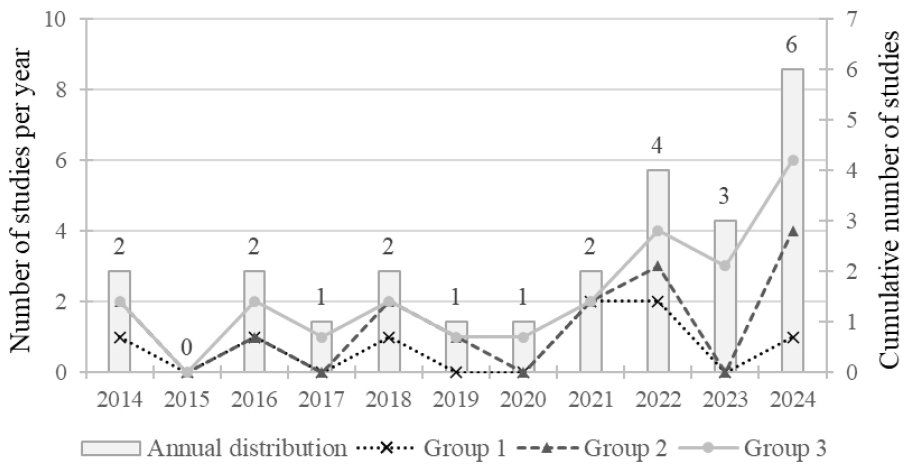
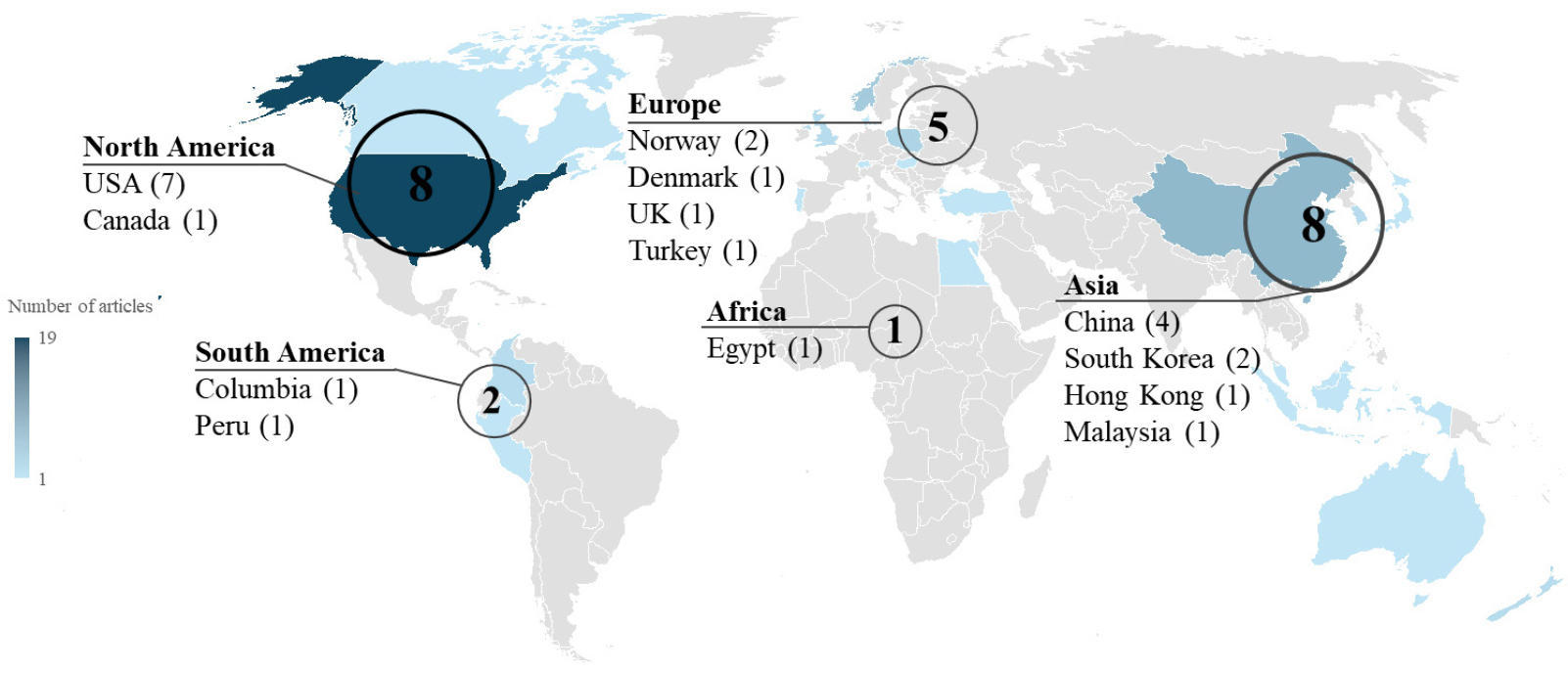
Figure 3 illustrates the geographical distribution of the examined previous studies based on the affiliations of the corresponding authors, which reveals significant regional disparities in research contributions. North America, with the United States contributing 8 studies and Asia, emerged as the most prominent region, underscoring its strong academic attentions and focus on sustainability and urban development with safety. Especially, in Asia, China has contributed four studies, reflecting its response to the challenges posed by rapid urbanization, high population density, and environmental concerns. Europe demonstrates considerable involvement, with notable contributions from Norway (2 studies), Denmark (1 study), Turkey (1 study), and the United Kingdom (1 study). These efforts are consistent with Europe’s regulatory frameworks, such as the European Green Deal, which prioritize sustainable urban infrastructure and environmental impact mitigation [22]. In Asia, contributions from South Korea (2 studies), Malaysia (1 study), and Hong Kong (1 study) indicate increasing attention to urban density and sustainability-related challenges. However, South America, Oceania and Africa remain significantly underrepresented, with only one study from Peru, Columbia, and Egypt. This figure indicates substantial gaps in research and the necessity for increased academic focus and international collaboration in these regions. This analysis identifies both strengths and disparities in global research contributions. Above all, it highlights the concentration of efforts in North America, Europe, and Asia. Thus, expanding research from underrepresented regions is essential to achieve a more comprehensive understanding of the relationship between green spaces, urban safety, and sustainability.
Content analysis
Group 1: green space design and safety perceptions
The design, maintenance, and visibility of urban green spaces are critical in shaping individuals’ perceptions of safety. A growing body of literature suggests that environmental features—such as dense vegetation, obstructed views, poor illumination, and neglected infrastructure—are associated with heightened fear of crime, particularly among vulnerable groups including women, the elderly, and minorities. In contrast, spaces characterized by open sightlines, trimmed foliage, ample lighting, and regular maintenance are generally perceived as safer and more welcoming.
As presented in Table 3, Maruthaveeran and Van den Bosh [23] found that dense vegetation and visible signs of physical disorder in Kuala Lumpur’s urban parks heightened fears of crime, particularly among women, which make it difficult to access of the space. Payne and Reinhard [24] emphasized the role of park use in enhancing natural surveillance, which in turn improves perceived safety. Similarly, Evensen et al. [25] evaluated the role of the safety interventions in Oslo parks. Based on the results, it was identified that lowering hedge heights significantly improved safety perceptions, particularly among female users. Hong et al. [26] demonstrated that access to green spaces significantly enhances the social capital of older adults, contingent upon their feeling of safety. Zhao and Huang [27] evaluated physical design elements, such as adequate lighting, pathway and well-planned vegetation, in fostering positive safety perceptions in urban parks. In the research, logistic regression, spatial analysis and survey were employed as primary methods. Study by Min et al. [28] explored safety anxieties among women in Seoul using spatial mapping. As a result, it was identified that insufficient lighting and dense vegetation in public spaces exacerbate crime-related fears, particularly at night. McIntire et al. [29] highlighted that women, ethnic minorities, and older populations often experience green spaces differently, partly due to their historical exclusion from participatory planning processes. Meanwhile, Wo et al. [30] provided a nuanced perspective by revealing that although tree canopies can foster community cohesion and reduce violent crime, they may simultaneously obstruct visibility, potentially facilitating property crimes. Collectively, these findings underscore the importance of integrating inclusive design principles that prioritize visibility, maintenance, and user diversity to create green spaces perceived as safe and inviting.
Table 3.
Studies on green space design and safety perceptions (group 1)
| Author | Objective | Factors Analyzed | Methodology |
Algorithms/ Techniques | Findings |
| Maruthaveeran and Van den Bosh [23] | Fear of crime in urban parks and defensive behavior among users. | Concealment, physical disorder, social incivilities, prior crime experiences. | Qualitative, semi-structured interviews | Thematic coding | Crime fear linked to vegetation density, physical disorder; defensive behavior mainly by women. |
| Payne and Reinhard [24] | Effectiveness of interventions for reducing urban park crime by increasing usage. | Natural surveillance, park usage, disorder. | Case study; pre- post intervention comparison | Spatial mapping | Increasing park use reduced crime; disorder linked to lack of surveillance. |
| Evensen et al. [25] | Evaluate hedge height interventions in Oslo parks | Hedge height, gender, concealment | Field and VR experiments | ANOVA, structural equation modeling | Reduced hedge height improved safety perceptions, particularly for women in daylight. |
| Hong et al. [26] | Linking green space to social capital and role of safety among older adults. | Perceived safety, neighborhood greenery. | Cross-sectional survey, quantitative analysis | Multivariate regression | Social capital improved with greenery; safety concerns reduced benefits. |
| Zhao and Huang [27] | Evaluate physical attributes of urban green spaces | Lighting, vegetation, pathways | Field surveys and spatial analysis | One way ANOVA, correlation analysis, linear regression | Well-designed vegetation and adequate lighting improve safety perceptions in parks. |
| Min et al. [28] | Investigate site- specific fears in public spaces | Lighting, vegetation, fear of crime | On-site user surveys and regression models | Spatial mapping | Poor lighting and dense vegetation heightened safety concerns, particularly for women. |
| McIntire et al. [29] | Analyze disparities in park access among marginalized groups in Philadelphia. | Park proximity, violent crime density, neighborhood social capital, demographics (age, gender, race, education) | Secondary data analysis, logistic regression | Social capital and low crime positively influenced park access; marginalized groups had reduced self-reported access. | Self-reported data introduces potential bias; results limited to Philadelphia context. |
| Wo et al. [30] | Examine longitudinal changes in tree canopy and crime outcomes. | Tree canopy coverage, violent/property crime | Longitudinal regression analysis | Fixed-effects Poisson regression | Increased tree canopy reduces violent crimes but increases property crimes, such as vehicle theft. |
Group 2: urban form, spatial planning, and crime prevention
Urban morphology and spatial configuration substantially affect crime dynamics and public safety. A variety of empirical studies have established links between thoughtfully designed green infrastructure and reductions in both violent and non-violent crimes, as summarized in Table 4. By enhancing visibility, encouraging territoriality, and facilitating informal surveillance, well-integrated green space systems can function as effective tools for crime prevention. Patino et al. [31] and Yue et al. [32] found that the presence of organized and visible vegetation was inversely related to homicide and street crime rates in several Latin American cities. Wen et al. [33] space syntax to study aging residential areas in Qinhuangdao, China. In their study, it was observed that enhanced visibility and spatial accessibility contributes to mitigating a crime. Lu et al. [34] developed the Landscape-Sexual Crime Model. As a result, it was observed that specific configurations of green spaces, such as tree-dominant landscapes are effective in reducing sexual crime rates, particularly in disadvantaged areas of the U.S. Wang et al. [35] applied spatial quantile regression in Northern Ireland to explore how the impact of green spaces on crime varies by vegetation type and crime severity. In this research, it was found that meadows were effective in low-crime areas while woodlands were beneficial in high-crime zones. In a similar context, Taylor et al. [36] used structural equation modeling to illustrate that socioeconomic disadvantage and low collective efficacy are significant predictors of park crime, although their effects can be mitigated by enhancing design features that promote perceived safety. Schusler et al. [37] analyzed tree canopy and park acreage in Chicago using regression method. Their findings demonstrated that greater tree coverage correlated with reductions of the violent crime rates. However, inconsistent results were observed for parks depending on their size and degree of the maintenance. These studies collectively suggest that urban design strategies integrating green elements, spatial legibility, and community involvement are vital for creating safer urban environments.
Table 4.
Studies on urban form, spatial planning, and crime prevention (group 2)
| Author | Objective | Factors Analyzed | Methodology |
Algorithms/ Techniques | Findings |
| Patino et al. [31] | Assess the link between urban layout and homicide rates using remote sensing. | Urban layout, socioeconomic factors, homicide rates | Spatial analysis, remote sensing | Statistical analysis | Disordered urban layouts are associated with higher homicide rates |
| Yue et al. [32] | Analyze streetscape elements and their effects on street crime in China. | People on streets, streetscape features | Baidu Street View, spatial regression | Deep learning (Faster R- CNN, PSPNet) | Visible streetscape features correlate with lower property crime rates |
| Wen et al. [33] | Quantitatively analyze and propose countermeasures for crime prevention in old residential areas. | Accessibility, visibility, spatial layout | Space syntax | Depth Map Analysis | Better visibility and accessibility reduce crime in aging urban areas |
| Lu et al. [34] | Propose the Landscape- Sexual Crime Model to study green spaces’ effects on sexual crime. | Landscape complexity, socioeconomic factors | Random forest, SHAP analysis | Landscape configuration analysis | Tree-dominant green spaces reduce sexual crimes in disadvantaged areas |
| Wang et al. [35] | Reassess the green space- crime relationship considering vegetation type and crime severity. | Grassland, woodland, crime type | Spatial quantile regression | Regression modeling | Grassland reduces crime in low-crime areas, while woodland helps in high-crime zones |
| Taylor et al. [36] | Determinants of park crime including neighborhood context and park features. | Neighborhood SES, social cohesion, park security features. | Structural equation modeling (SEM) | SEM models | Nearby crime, low SES, and poor cohesion increase park crime; security fencing mitigates some crime. |
| Schusler et al. [37] | Assess tree canopy and park acreage’s relationship with crime in Chicago. | Tree canopy, park acreage, crime types | Generalized linear modeling | Spatial regression | Greater tree canopy reduces violent crime, but relationships for parks are inconsistent. |
Group 3: environmental factors and the occurrence of violence and crime
The impact of green infrastructure extends beyond crime reduction to encompass a wide range of social and psychological benefits. However, the equitable distribution of such infrastructure remains a significant concern, particularly in the Global South and among marginalized urban populations. Unequal access to green spaces often reflects broader structural inequalities and limits the capacity of these areas to deliver social value. Numerous studies have documented the mental health benefits associated with green space exposure, as described in Table 5. Nutsford et al. [38] found strong correlations between proximity to greenery and reduced psychological distress, aggressive behavior, and depression. Liu et al.
Table 5.
Studies on green infrastructure, equity, and social outcomes (group 3)
| Author | Objective | Factors Analyzed | Methodology |
Algorithms/ Techniques | Findings |
| Nutsford et al. [38] | Investigate the mental health benefits of blue and green spaces | Proximity, stress reduction, mental well-being | Spatial regression models | Generalized Linear Regression | Proximity to green and blue spaces reduces stress-related health conditions and promotes mental health |
| Liu et al. [39] | Assess the relationship between passive green space exposure and aggression. | Green space exposure, sense of control, aggression | Cross-sectional survey, experimental study | Structural equation modeling | Passive green space exposure reduces aggression by increasing individuals’ sense of control. |
| Yang [40] | Study spatial disparities in accessibility to urban green spaces | Crime clustering, socioeconomic vulnerability | Hotspot analysis, spatial regression | Hotspot Analysis, Spatial Regression | Crime hotspots near large parks restrict access, especially for vulnerable populations in Chicago |
|
Venter et al. [41] | Assess green space- crime relationships globally, focusing on the Global South. | Green space design, socioeconomic context | National-scale spatial analysis | Regression analysis | Well-designed green spaces reduce crime; disparities in accessibility exist across contexts. |
| Gammal et al. [42] | Examine rooftop farming’s social and safety benefits | Crime rates, job creation, green space coverage | Participatory analysis, case study | Qualitative Comparative Analysis | Rooftop farming reduces crime and enhances economic stability by creating jobs and expanding greenery |
| Lotfata and Helbich [43] | Investigate the impact of green spaces on neighborhood vitality | Physical activity, crime, community engagement | Observational analysis, regression models | Multivariate Regression | Well-designed green spaces promote physical activity and reduce crime through community involvement |
| Ali et al. [44] | Assess the role of green roofs in urban infrastructure | Green roof accessibility, environmental equity | Spatial mapping, case study | Geographic Information Systems (GIS) | Green roofs enhance urban accessibility, address environmental inequities, and support infrastructure goals |
| De Mola et al. [45] | Examine the ecosystem services provided by urban green spaces | Ecosystem services, urban density | Statistical analysis, hedonic pricing | Hedonic Pricing Models | Ecosystem services from green spaces are highly valued in areas with limited infrastructure opportunities |
| Demir and Ozcan [46] | Investigate the impacts of green space and air quality on crime in OECD countries. | Green space, air quality, socioeconomic factors | Dynamic panel data analysis | System-GMM | Green space reduces crime rates; air pollution increases them, highlighting environmental roles. |
[39] explored the effect of the natural exposure on green spaces. Based on the analysis, it was observed that green spaces enhanced individuals’ sense of mental control, resulting in a reduction of aggressive behavior. Yang [40] argued that inclusive governance and participatory planning processes are as critical as physical infrastructure in ensuring both safety and equity in green space provision. In the context of developing countries, Venter et al. [41] provided a socio-economic perspective by analyzing green spaces in the Global South. Their results reported a strong link between well-designed vegetation and reduced crime, though disparities in green space access remained significant in lower-income areas. Gammal et al. [42] examined park usage patterns among women in Cairo, identifying sociocultural norms and infrastructural deficits as key barriers to equitable access. Similarly, Lotfata and Helbich [43] highlighted the role of community cohesion and cultural values in shaping green space perceptions in Iranian cities. From an environmental perspective, Ali et al. [44] assessed how green roofs in dense urban settings like Kuala Lumpur can enhance urban equity by expanding green access in space-constrained areas. De Mola et al. [45] emphasized the need for strategic, context- sensitive distribution of greenery to ensure marginalized communities benefit from urban ecosystem services. Additionally, Demir and Ozcan [46] demonstrated that increased green coverage and improved air quality are not only associated with public health improvements but also with reductions in national crime rates across OECD countries. Taken together, these findings affirm that green infrastructure must be planned and implemented through a lens of social equity to maximize its potential for fostering safety, well-being, and environmental justice.
Research gaps and future directions
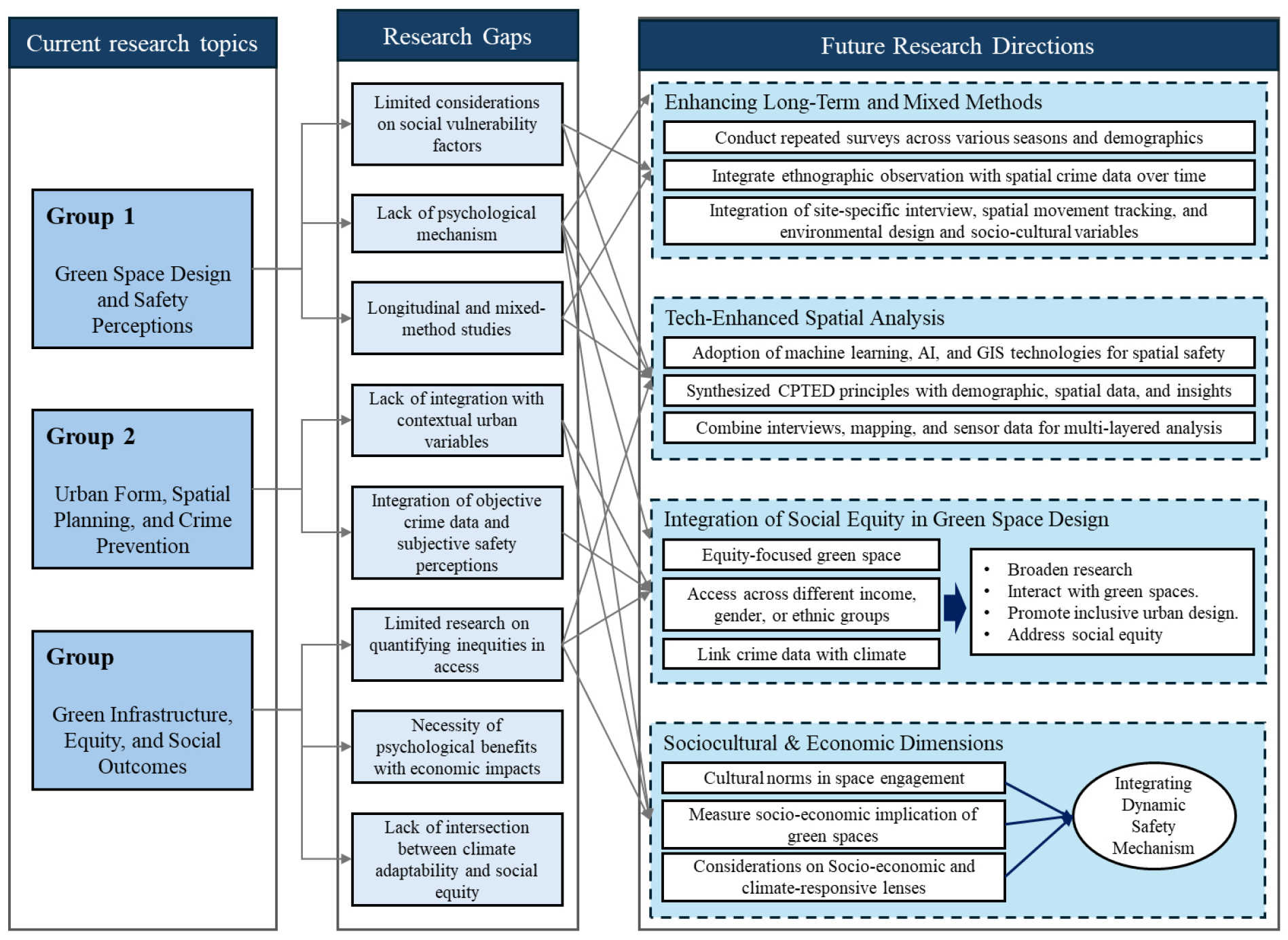
Urban green spaces increasingly function as essential components in promoting public safety, reducing crime, and fostering social inclusion. As urban cities face increasing pressures to create sustainable and equitable environments, it becomes critical to examine how spatial design, social vulnerability, and community well-being intersect. This section identifies current research limitations and strategic directions for advancing inclusive approaches to urban green space and sustainable environment, as illustrated in Figure 4.
Green space design and safety perceptions
The design and visibility of urban green spaces play a pivotal role in shaping public perceptions of safety. The current research consistently shows that features such as poor lighting, dense vegetation, and signs of neglect contribute to increased fear of crime. This indicates that vulnerable populations including women, the elderly, and minorities would be affected negatively by the features. In contrast, spaces including open sightlines, effective lighting, and regular maintenance are often perceived as safer environment. Studies in diverse urban settings have revealed that safety perceptions are not solely dependent on environmental design but also intersect with social vulnerability. For example, older adults are more likely to benefit from green space access when they perceive it as safe, while design interventions, such as trimmed hedges and clear paths help foster a sense of security. However, disparities in perceived safety continue to reflect broader urban inequalities. Research has emphasized the need for inclusive planning to ensure that all groups—especially those historically marginalized—can access and benefit from green infrastructure. Although numerous studies have addressed how environmental design influences individuals’ sense of safety, there remains a notable absence of research exploring how this perception is shaped by intersecting social vulnerabilities such as gender, age, and minority status. Moreover, the pathways through which perceived safety influences behaviors—such as frequency of park visits, participation in outdoor activities, or levels of social engagement—are not well understood. This underscores the need to incorporate cognitive and behavioral models capable of elucidating how spatial cues are internalized and translated into real-world decisions. Compounding this, much of the current literature relies on cross-sectional analyses, limiting our understanding of how safety perceptions evolve over time in response to spatial changes, policy interventions, or community-driven initiatives. These methodological constraints hinder a comprehensive understanding of the socio-spatial dynamics underlying perceived safety. To move forward, future research should employ longitudinal and mixed-method approaches to explore the evolution of safety perceptions across diverse demographic groups in relation to both environmental design and broader socio-cultural forces. This may include the integration of intersectionality-informed frameworks, and temporally responsive methods such as repeat surveys, site-specific interviews, and spatial movement tracking.
Urban form, spatial planning, and crime prevention
Urban design and spatial configuration are essential to effective crime prevention strategies. Well-planned green infrastructure has the potential to reduce both perceived and actual crime by promoting natural surveillance, enhancing visibility, and fostering community interaction. Studies have demonstrated that vegetation management, lighting, and street connectivity are associated with lower crime rates and improved public safety. Crime Prevention Through Environmental Design (CPTED) principles have been widely used to guide urban safety interventions. Research shows that integrating CPTED with contextual urban data can yield more targeted solutions. Despite the adoption of the CPTED strategies, their implementation often fails to incorporate crucial contextual variables, including population density, and income-based disparities, and long-term urban deterioration. Consequently, crime prevention strategies and urban design interventions frequently overlook the nuanced social dynamics and spatial configurations unique to specific local contexts. A further issue lies in the disconnect between objective crime statistics and individuals’ experiences related to safety, particularly within marginalized communities. This misalignment indicates the need for models or approaches that combine quantitative scores with qualitative indicators related to fear, perception, and environmental interaction. Moreover, the field remains dominated by static spatial analyses, which do not reflect the uncertain nature of urban environments. The absence of spatial- temporal modeling may limit the capacity to assess the effects of design-based interventions on crime and spatial justice. Addressing these concerns requires more comprehensive approaches that synthesize CPTED principles with detailed demographic and spatial data. This includes approaches capable of tracking changes in crime distribution over time and analyzing their interaction with social and physical urban structures. Thus, mixed- method integrating GIS, machine learning, and participatory research methodologies can further enhance the understanding of both crime and community-based safety perceptions.
Green infrastructure, equity, and social outcomes
Green infrastructure serves not only as an environmental asset but also as a tool for promoting social equity and psychological well-being. However, unequal access to safe and functional green spaces persists across many urban areas, disproportionately affecting marginalized communities. Such disparities limit the broader social benefits that green environments can provide. Existing research has linked exposure to green spaces with reduced psychological distress and increased community cohesion. Although the previous studies addressed the psychological benefits of green space, few studies have conducted specifically assessments to examine how access varies across different income, gender, or ethnic groups. Without detailed data, it is challenging to fix unfair differences and environmental problems in different communities. In addition, while emotional and health- related advantages are well-documented, the economic implications of green infrastructure remain significantly underexamined. In addition, a critical gap lies in the insufficient integration of social equity into green space planning with climate. Although environmentally adaptive interventions such as shaded walkways are becoming more common, their implementation often overlooks whether and how benefits are equitably distributed among vulnerable populations. To better align urban greening with social community, future work must evaluate green infrastructure through both socio- economic and climate-adaptation, which can support more inclusive, adaptive urban development strategies.
Conclusions
This study synthesized findings from 24 peer- reviewed articles to explore the multifaceted role of green spaces in promoting urban safety, reducing crime, and enhancing social equity. The analysis reveals that green infrastructure—when thoughtfully designed with features such as visibility, lighting, and vegetation management—can positively influence perceptions of safety and encourage public use, particularly among vulnerable populations.
While these findings highlight the importance of design in creating safer urban environments, notable limitations remain. Many of the reviewed studies rely heavily on cross-sectional data and lack sufficient representation of marginalized communities, which limits the broader applicability of their conclusions. Additionally, the socioeconomic and long-term impacts of green interventions are often underexamined, suggesting a need for more comprehensive evaluation frameworks.
To advance the field, future research should adopt longitudinal approaches and incorporate advanced tools such as spatial analytics and artificial intelligence to better capture dynamic, context-sensitive relationships between green spaces and crime patterns. Importantly, beyond safety outcomes, the capacity of green infrastructure to foster social cohesion and environmental justice is increasingly recognized, though issues like unequal access, inconsistent maintenance, and limited economic impact analysis continue to pose significant challenges.
Given the rising urgency of climate-related urban risks, further investigation into the socio- economic co-benefits of green interventions—such as job creation, health equity, and shifts in property values—is warranted. An interdisciplinary, equity-centered framework that leverages real-time data and explores psychological and behavioral mechanisms will be critical for designing green spaces that not only contribute to crime prevention but also support inclusive, resilient, and sustainable urban development.

