


Introduction
Literature Review
Modular Construction in Australia
Perception of Modular Construction in the Public
Digital Twin Technology for Modular Construction
Research Method
Result and Discussions
Participants Profiles and Awareness of Modular Construction
Level of Knowledge about Modular Construction
Changes of Willingness in Adopting a Modular House
Conclusions
Introduction
In the current ever-growing and evolving society, the need for faster, more reliable construction particularly in urban areas has become vital. 55% of the world’s population residing in urban areas is expected to increase to 68% by 2050 [1]. The population within Australia is growing in major cities as people come to cities moving from rural areas and other countries. The National Housing Accord & Investments set a target of delivering one million affordable homes over 5 years from 2024 to tackle the current housing shortage problems [2]. Industry Innovation & Science Australia recognised that the current speed of traditional housing construction cannot accommodate the housing target in time [3]. To tackle this, Infrastructure Australia announced that the modular construction method will be mandated for 80% of social housing projects by 2030 [4]. Modular construction is a construction method of manufacturing a structure off-site under controlled environments such as a factory with shorter durations and less waste. Buildings are made up of building components called modules that will be assembled on-site without sacrificing quality, and up to 95% of modules are prefabricated at the factory [5]. According to the prefabAUS, modular construction in Australia accounts for 3% of the entire industry [6]. Despite all the positive aspects of the modular construction method, its uptake is incredibly low in Australia compared to other countries such as Sweden, Netherlands, and Japan 80%, 20% and 12-16% respectively [7]. To increase the uptake of modular construction and improve productivity, diverse research has been conducted based on a construction professional’s perspective [8, 9, 10, 11]. Particularly, researchers strongly recommend adopting digital twin technologies to improve modular designs as well as coordinate connections among different components of the modular building such as structure and HVAC services more efficiently [10, 11, 12]. Although increasing market demand from clients should be preceded by pushing the construction industry to adopt more modular construction, the client perspective and perceptions of modular construction have been rarely researched. Furthermore, it is unveiled how many benefits the digital twin technology can provide to clients [13]. Therefore, this research focused on identifying the public’s perception toward modular construction as well as exploring the potential use of digital twin technology, which is Building Information Modelling, to improve clients’ perceived value of modular construction.
Literature Review
Modular Construction in Australia
Recently, modular construction or interchangeably prefabricated construction has been recognised as a sustainable construction method compared to traditional construction. As modular construction can deliver the final outcomes including houses or buildings to a client faster and cheaper with less waste and a safer working environment regardless of the impacts of weather [14, 15, 16]. On the contrary, the modular construction method also has various challenges to be widely adopted such as high upfront costs to establish a factory, skill shortage problems in the construction industry, and physical constraints related to logistics and lifting modules on-site [17, 18, 19]. The modular construction method requires more skilled and experienced design and construction professionals, but the Australian construction industry is currently suffering from skill shortage problems [20, 21]. Despite the challenges, various countries are striving to utilise modular construction. For example, 84% of newly built homes adopted the modular construction method in Sweden [7]. The UK government push the construction industry to adopt and utilise modular construction for the delivery of 100,000+ homes by 2020 [22]. According to the Construction and Property Services Industry Skills Council [23], 3-5% of all new construction and housing utilise the modular construction method in Austrlia. The Australian construction industry still indicates its infancy level of modular construction adoption compared to other countries [19]. Although the current level of modular construction utilisation is infancy in the Australian construction industry, there are several leading companies utilising modular construction for their projects including the Little Hero low-rise apartment complex in Melbourne. Researchers pointed out that the Little Hero apartment is a good example of indicating capabilities of modular construction in terms of high quality and workmanship as well as speedy completion of a project [24]. Researchers recognised that the public perceptions of modular construction have been improved after they experience the success of modular construction. Although people addressed the cost concerns, which were the most identified hindrance for clients to engage with a modular building [25, 26], this research shed light on the possibility to improve the public perceptions of modular construction.
Perception of Modular Construction in the Public
There is a consensus among researchers that the public’s perception of modular construction needs to be studied further and identify ways to increase the uptake of modular construction among the public in Australia [27]. In the UK, the public’s attitude and poor perceptions toward modular construction are recognised as the most challenging issues hampering the uptake of the modular house in the market [28, 29, 30]. Interestingly, researchers revealed a vicious cycle presented between the client and construction professionals as the clients’ unsatisfactory experiences in modular construction create negative perceptions [31, 32, 33]. Eventually, negative perceptions influence other potential clients, and it leads to little market demand for modular construction, especially in the housing market [34]. Researchers asserted that normative influences such as culture or a trend among clients need to be established via positive experiences in modular buildings [8]. However, a sample modular house is not readily available for potential clients to see if the prefabricated home is suitable for them. Insufficient details of a modular building also increase clients’ concerns and complications to adopt modular construction [35]. Consequently, when clients cannot make an informed decision, they become reluctant to invest in a modular building as the outcome of the investment is uncertain and possibly not satisfactory. Researchers pointed out that the construction professional-oriented explanations of modular buildings focusing on sustainability and affordability fail to convince clients to adopt modular construction since it provides only partial information and does not satisfy clients’ want-to-knows [36]. Insufficient details of modular buildings lower the public’s confidence in the modular construction method as it is an unfamiliar way to build a house compared to the traditional method [37]. Moreover, from the design and construction professional perspectives, the modular construction method is still new, and it requires a learning curve for the construction industry to adopt and utilise [38]. Researchers suggested that proper education and training for the modular construction method can shorten the learning curve and time for fostering and increasing the maturity level in modular construction [39, 40]. Researchers compared three different modular buildings with one traditionally built building to identify the level of client satisfaction for each case. A slight improvement in clients’ satisfaction with the three modular buildings was detected, however, the level of improvement was not significant compared to a traditionally built building.
Further following up with the previous studies, another research was conducted to understand why clients are reluctant to invest in a modular building [41]. Two crucial factors are identified affecting the clients’ decisions: 1) Mundane Design, i.e., pre-fixed ordinary box-type design; and 2) Lack of Opportunities to Customise Building Design. Firstly, the public perception of a modular building design was equivalent to a container box with inside fittings [8]. Secondly, due to the mundane and unattractive design of a modular building, clients want to customise designs including textures of finishes as well as building materials. However, the current skill level and off-site manufacturing of modules in the construction industry cannot accommodate the needs from the outset of a project. Consequently, the two factors create negative synergies and discourage clients to adopt modular construction. It deems to be difficult to overcome the current skill shortage and tailor the client’s requirements to the design of a modular building. To overcome the current issues, researchers recognised that digital twin technologies, especially Building Information Modelling (BIM) can be a solution to consolidate more clients’ requirements in the early design stage. BIM can also enable the design and construction professionals to coordinate various module components before the manufacturing stage regardless of their level of experience and skill [42, 43, 44]. Yet, it is still unknown how much client satisfaction and perception toward modular construction can be improved via the use of BIM, as well as whether BIM is useful digital twin technology for modular construction. Thus, this research aims to identify the implication of BIM use for improving clients’ perceptions toward modular construction.
Digital Twin Technology for Modular Construction
The construction industry has increasingly adopted digital twin technologies such as BIM, AR, and VR to tackle the current skill shortage and low productivity problems. BIM enables the design and construction professionals to carry out construction twice digitally and physically since the digitally designed BIM models enable professionals to rectify design errors and clashes before the construction stage commences physically [45]. BIM also provides means to coordinate various designs accurately which reduces unnecessary reworks from the early design stage [46]. Since the digital twinning capabilities of BIM can enable the modular construction method to establish digital threads connecting virtual BIM designs to physical building modules, BIM can provide means to accommodate clients’ design requirements as well as rectify any critical coordination errors among various modules effectively from the early design stage [47]. Researchers created various pre-sets of design parameters in BIM objects for building modules and utilise them by combining various sets of parameters at the outset of modular design [25]. The research implies that the generative design capability in conjunction with a BIM system can enable the design and construction professionals to create the most effective design and quickly check if a client is satisfied with design options. The viability of BIM and the modular construction method was explored in a power plant infrastructure project in Brazil [48]. Researchers revealed the synergies of BIM and the modular construction method integration through 3D visual error checking of module designs and 3D-based construction schedule visualisation. The research identified that the design and construction professionals as well as clients can receive benefits to develop and confirm the designs of a modular building before the modules start to be built. Thus, it can be extrapolated that the mundane designs of modular buildings and a lack of opportunities to change designs and select building materials, which are the most critical hindrances for clients to use modular construction, can be improved by adopting BIM. Interestingly, design professionals also indicated challenges in designing modular buildings as there are large limitations in adopting customised designs as well as making design changes in the later design stage [49]. The design professionals addressed that they would be more willing to adopt the modular construction method if design flexibilities can be facilitated. Thus, it is evident that the BIM capabilities can support the design and construction professionals to adopt modular construction more actively as well as improve clients’ perceptions and satisfaction. Furthermore, the identified two critical barriers preventing clients from investing in modular buildings can be mitigated by utilising BIM capabilities. Thus, this research aims to confirm if BIM can serve as a digital technology to improve the positive perceptions of clients toward modular construction.
Research Method
The research adopted a focus group to identify the current awareness and knowledge of the public toward modular construction and explore the implication of BIM use for improving the clients’ perceptions. A total number of 81 individuals were recruited randomly to cover a wide range of the public. They were divided into 10 groups for the convenience of conducting focus group data collection. The focus group is comprised of three stages.
∙Stage 1: Identify Awareness and the Level of Knowledge of Modular Construction.
∙Stage 2: Identify Willingness of Adopting a Modular House (2D Floor Plan Provided)
∙Stage 3: Re-identify Willingness of Adopting a Modular House (BIM Demonstration Provided)
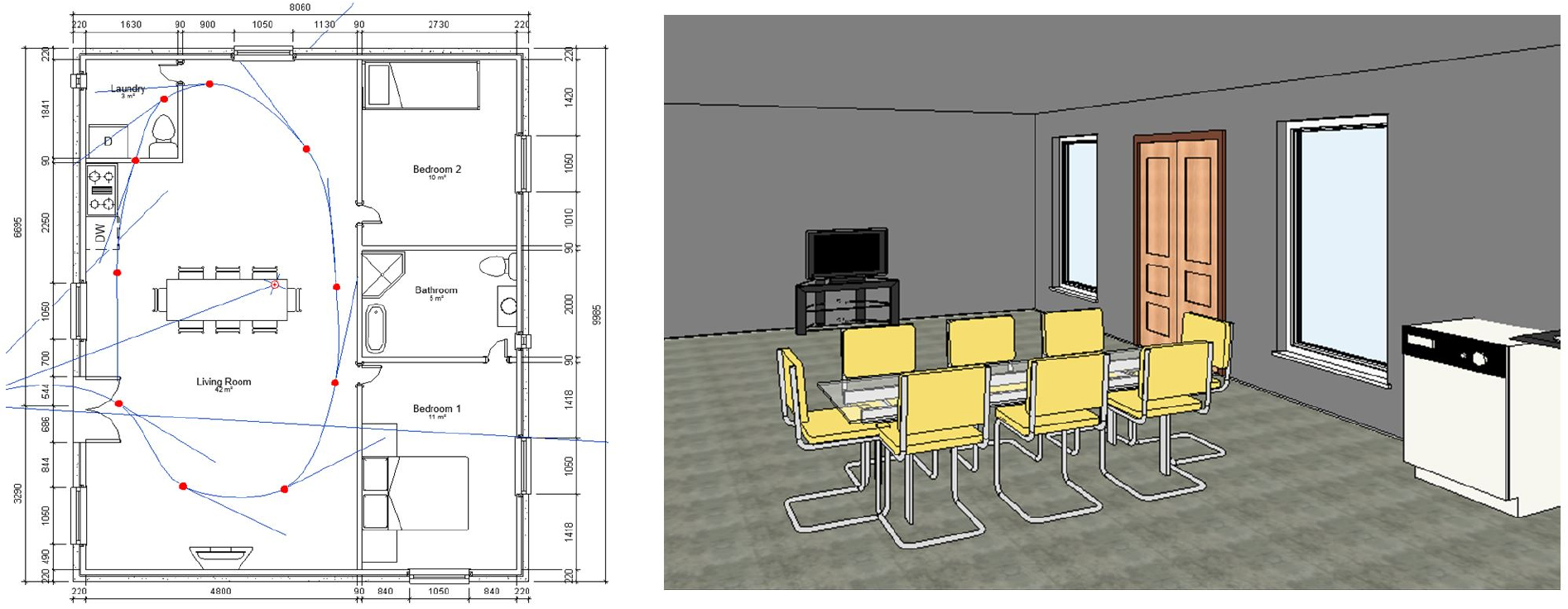
In Stage 1, participants were asked to indicate their level of awareness and knowledge of modular construction. In Stage 2, participants were provided with a floor plan and other views of a modular house in a 2D format (See Figure 1) to explain what a modular house will look like. Any chances for participants to customise the design by changing designs or building materials were not given at this stage. After the 2D- based explanation, a BIM demonstration explaining BIM capabilities for design and material selection and presenting a 3D model of a modular house and a virtual walk-through inside of the house was provided to the participants at Stage 3 (See Figure 2 and Figure 3).
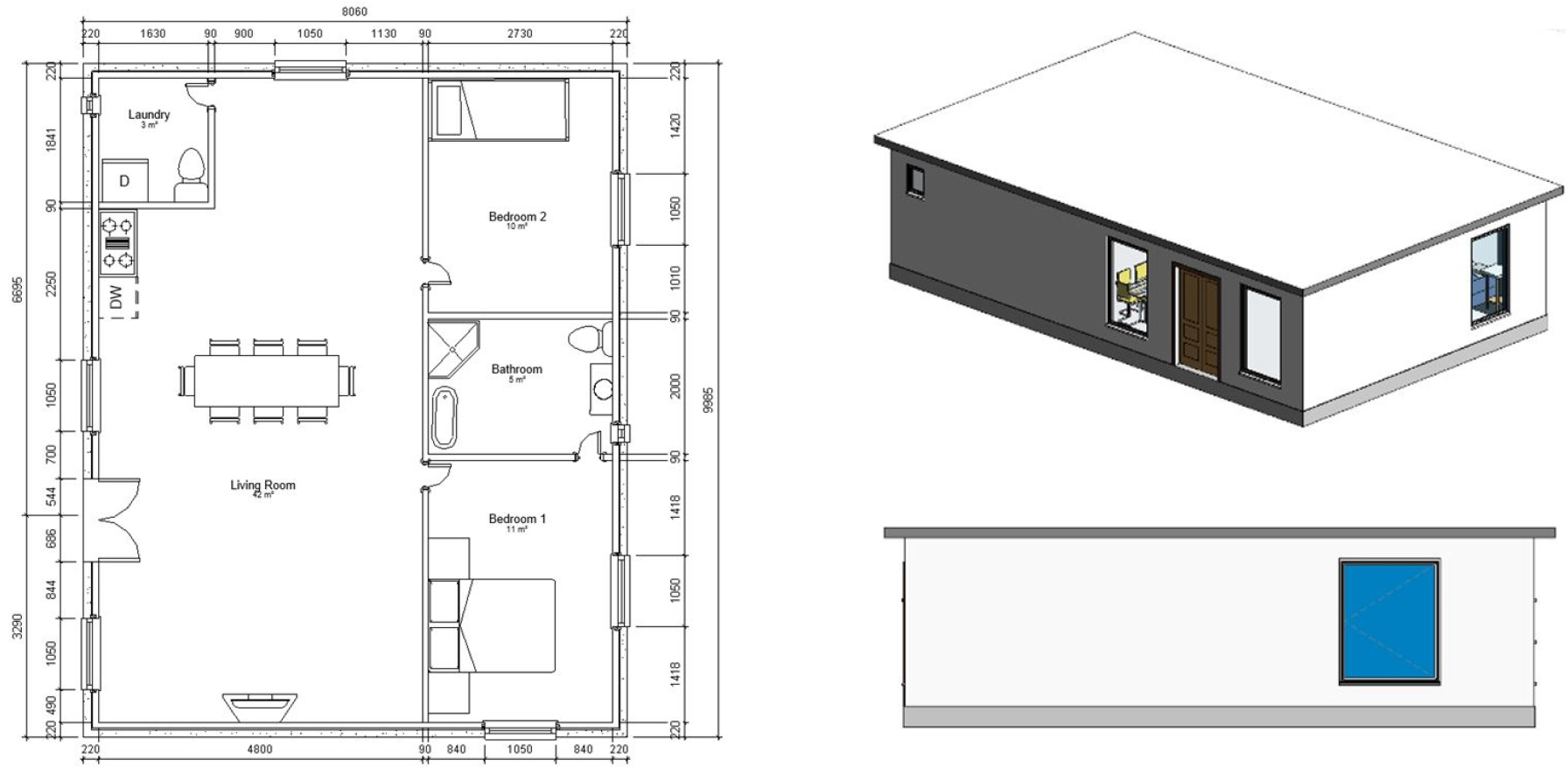
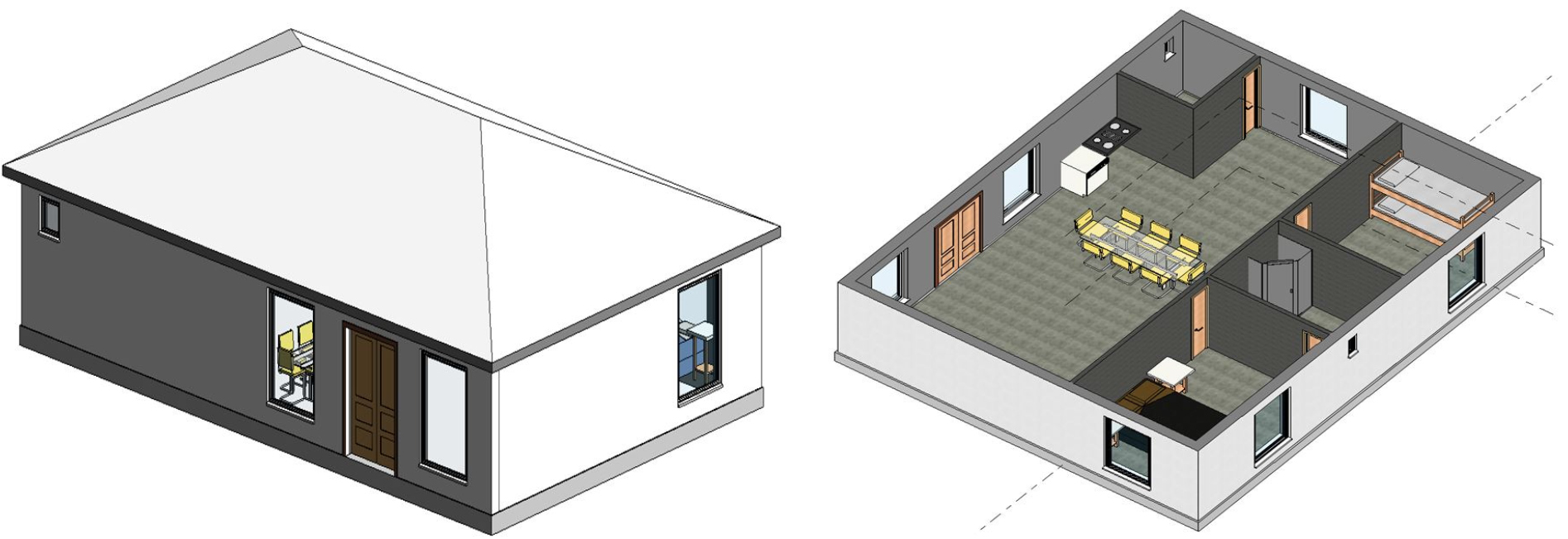
In Stage 3, participants were actively involved in exploring a BIM model as well as changing building components. As shown in Figure 2, participants wanted to see the inside of the house, and BIM provided means to hide a roof and see inside in a 3D format. In addition, the initial roof was a flat roof (See Figure 1), but participants wanted to change it to a pitched roof. Consequently, researchers demonstrated a real-time design and material change of a roof (flat roof to pitched roof) in a BIM system by interacting with participants. Especially, participants created a moving path inside of the house as shown in Figure 3, Left (Red dots indicate the viewpoints of a client and Blue line indicates a moving path). Based on the BIM capability enabling a user to take a 3D virtual walk- through, participants had a chance to experience the actual inside space in a 3D virtual immersive platform. After the BIM demonstration, the willingness of adopting a modular home was asked again to identify if there is any improvement in the willingness. A five- Likert scale was adopted to effectively capture and compare any improvement before and after the BIM demonstration. Due to the geographical constraint, focus groups were conducted with a mix of on-site participants and online participants via Zoom.
Result and Discussions
Participants Profiles and Awareness of Modular Construction
The recruited 81 participants were purposefully targeted who are not working in the design and construction industry to minimise any influences from participants’ professional knowledge. 90% of participants belong to the age band 20s to 40s, who have relatively higher interests in buying a house compared to 50s and 60s (Table 1). The total number of participants from 20s, 30s and 40s indicates a balance without a large skewness to one particular age band. It was challenging to recruit participants from the age band 50s and 60s as they have no further interest in investing money in another house, especially a modular house.
Table 1.
Profiles of Participants
| Age Band | Number of Respondents | Percentage |
| 20-29 (20s) | 21 | 26% |
| 30-39 (30s) | 28 | 35% |
| 40-49 (40s) | 23 | 28% |
| 50-59 (50s) | 8 | 10% |
| 60+ (60s) | 1 | 1% |
| Total | 81 | 100% |
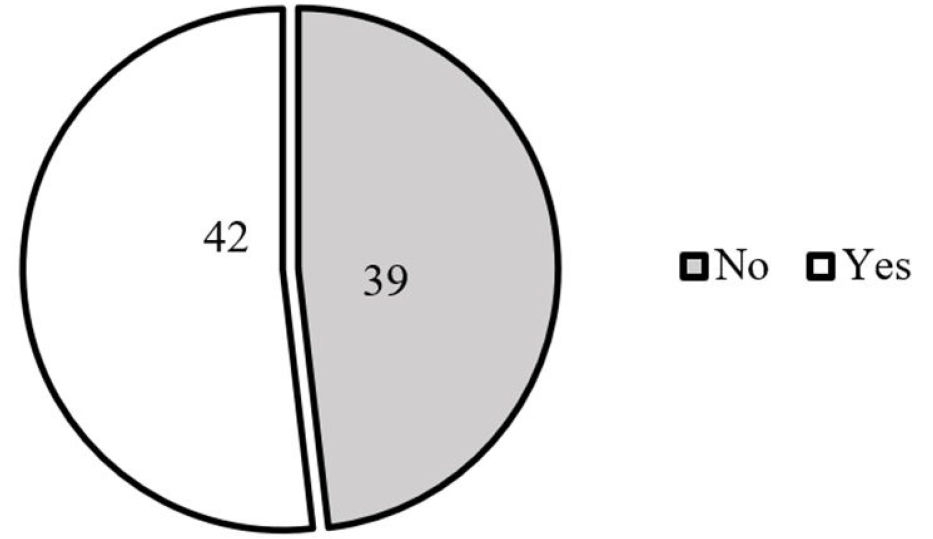
Participants were asked the question “Have you heard about Modular Construction?”, and 52% of the total participants (42 individuals) indicated that they heard about modular construction as shown in Figure 4.. The rest of the participants (39 individuals) indicated that they either never heard about modular construction or maybe heard the term ‘modular’ somewhere. Based on this, the awareness of modular construction is not large enough to increase the uptake of modular construction in the market, and this finding is echoed with the current volume of modular construction (3%) in the Australian construction industry.
Furthermore, the findings advocate the need of providing education for modular construction to potential clients as well as construction professionals as it is not time effective to wait for the market to see the value of modular construction and increase demand [39, 40]. Continuous education and promotion of modular construction need to be provided to the public to improve the awareness of modular buildings and increase the market demands in Australia.
During the discussion about increasing the awareness of modular construction with participants, all participants mentioned that certain financial benefits such as tax reduction or refunds or financial support should be provided to the private housing market to further boost the uptake of modular construction. Proper government policy such as 80% uptake of the modular construction method by 2030 in the infrastructure sector should also be in place to further encourage the adoption of modular construction. Based on the findings, it is evident that a holistic approach is instrumental to increase awareness among the public, and the approach should take a place as a combination of education, financial support and government policy that can push the market toward modular construction.
Level of Knowledge about Modular Construction
Participants indicated their level of knowledge about modular construction based on the categorisations (five-Likert scale) of each level is explained as follows.
∙Very High: Understand the entire process of modular construction as well as the pros and cons.
∙High: Aware of benefits/barriers of modular construction (time, cost, quality).
∙Average: Modular house is similar to a Container box.
∙Low: Heard about the term ‘Modular House’.
∙None: Never heard about modular construction or modular house.
As a result, 40% of participants identified that they have average knowledge, and only 12% of participants indicated that their knowledge levels are high or very high as shown in Figure 5.
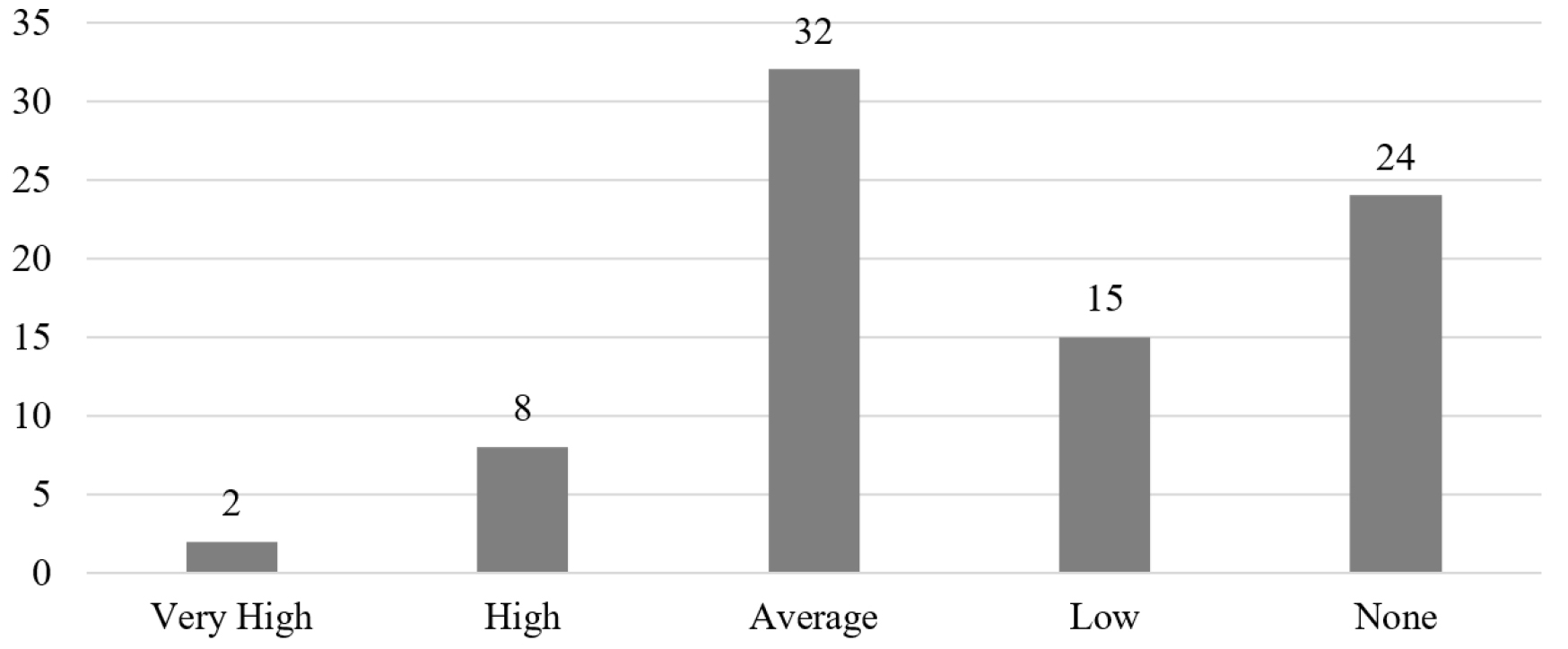
Interestingly, 52% of participants who have average knowledge agreed that the simplest way to explain a modular house is explaining a container box with a kitchen, bathroom, and other HVAC services. Based on the finding, it can be extrapolated that the public recognises a modular building as a container box which is not attractive enough to invest in. Thus, increasing design flexibility and level of customisation based on clients’ requirements is essential to change and improve the current perceptions toward a modular building.
Changes of Willingness in Adopting a Modular House
Participants indicated their willingness to invest in a modular house twice – Before and After the BIM demonstration. As shown in Figure 6, before the BIM demonstration, 88% of participants (71 individuals) indicated either uncertain willingness (Neutral, 47% of participants) or unwillingness (Disagree or Strongly Disagree, 41% of participants) toward a modular house. The finding revealed that a high or average level of knowledge about modular construction does not guarantee investment in a modular house. Indeed, only 12 % of participants (10 individuals) indicated their positive willingness toward a modular house.
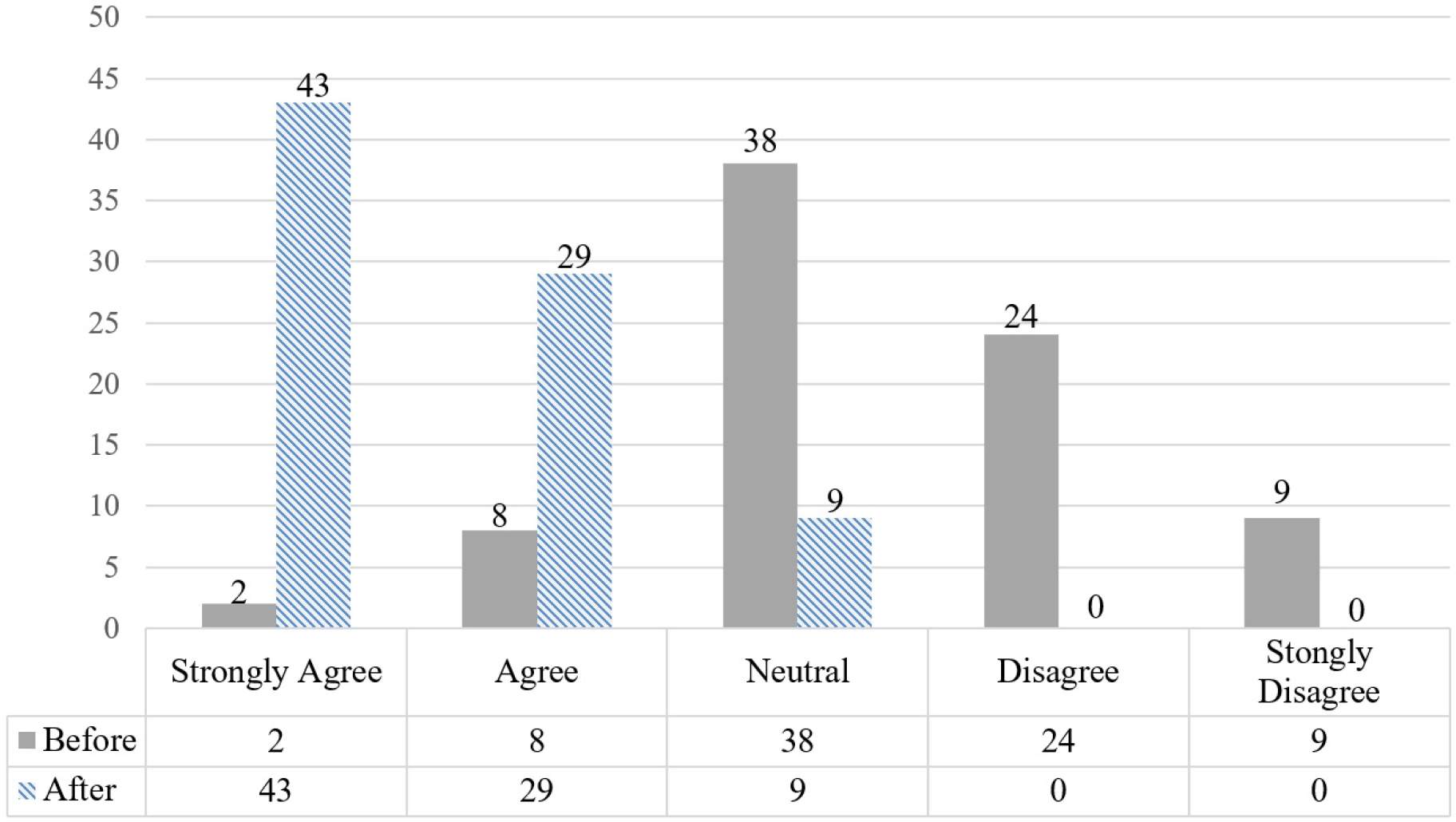
After the BIM demonstration, the willingness changed positively and almost 90% of participants (72 individuals) indicated that they were willing to invest in a modular house. More importantly, the BIM capabilities are confirmed useful as the demonstration convinced those participants, who indicated negative perceptions previously, to change their perceptions positively as there is no negative answers (none of the participants indicated Disagree or Strongly Disagree). All participants agreed that BIM supports their understanding of a modular house in terms of design, materials, and aesthetic aspects. Furthermore, all participants addressed that the real-time design and materials changes as well as the virtual walk-through inside a modular house using BIM affect their willingness tremendously positively (See Figure 3).
Participants emphasised that real-time interaction with researchers significantly lower their concerns about “Don’t receive what they pay for” since they can actually see and alter any design and materials in a 3D environment. One participant commented that BIM is an intuitive tool since it provides 3D views and immersive experiences using a walk-through for them to understand spaces and designs without the professional knowledge and experience required to interpret 2D-based design information.
Therefore, the implication of BIM as a digital twin technology is identified that can support the public to improve the perception of modular construction and a modular house. Especially, BIM capabilities, which are real-time design change and interactions between clients and construction professionals, are recognised as the keys to success in improving satisfaction and willingness to adopt modular construction as well as invest in a modular house.
Conclusions
The uptake of the modular construction method is low in Australia, and the public perceptions toward modular buildings are currently not positive enough to increase the uptake. To increase the uptake, the research aimed to identify the current public’s perception toward modular construction as well as explore the benefits of using BIM as a digital twin technology for improving the perceptions and willingness to invest in a modular house. More than 50% of participants indicated that they are aware of modular construction, and the participants all agreed that a modular house is equivalent to a container box with a kitchen, bathroom, and other HVAC services. Thus, it is identified that the current perception of a modular house is not attractive compared to a house built in the traditional construction method. It is identified that increasing design flexibility and level of customisation based on clients’ requirements is essential to change and improve the current perceptions toward a modular building. More importantly, BIM is recognised as an essential digital twin technology to improve perceptions and increase clients’ willingness to invest in a modular house. Especially, two particular BIM capabilities: 1) the real-time design change with interactions between clients and construction professionals, and 2) an immersive virtual walkthrough experience inside a modular house, are identified as the most influential functions of BIM that can improve the willingness of the public to adopt a modular house. The findings of the research will serve as a stepping stone to explore various BIM capabilities to further increase the uptake of modular construction as well as increase positive perceptions and willingness of the public.

