


Introduction
Background and Purpose of the Study
Research objectives and scope
Research methods and organization
Research trends
The ‘traditionality’ of Korean architecture before 1990
Concept and definition of ‘traditionality’ and ‘traditionality’
The struggle with ‘tradition’ in Korean architecture since the 1950s
Critical regionalism
Overview of critical regionalism
Key Concepts of Critical Regionalism
Contemporary Korean Architecture Through the Lens of Critical Regionalism
Three Korean Architects and Their Works around the 1990s: A Critical Regionalist Perspective
The Meaning of Tradition in Contemporary Korean Architecture in the 21st Century and Beyond
Conclusion
Introduction
Background and Purpose of the Study
In Korea, ‘traditionality’ has been an ongoing debate since the country’s liberation. In the past, Korean architecture applied Confucianism and Feng Shui as the fundamental elements of architecture, which were a result of the country’s social and environmental background. However, Korean architecture has been somewhat disconnected from its traditions due to the unilateral adoption of Western internationalist styles by Japan in the early 20th century and the outbreak of the Korean War in 1950. Since then, buildings that have lost their local character have become increasingly common as they pursue a functionalist architecture that utilizes Western construction discipline and technology to solve problems such as housing shortages [1]. The problem of this lack of ‘traditionality’ in Korean architecture has been continuously addressed since the 1960s, and through the efforts of a few architects, buildings that express tradition in various ways have been realized over the years.
This study selects buildings that embody ‘traditionality’ from the works of contemporary architects representing Korea before and after the 21st century and analyzes them through Frampton’s concept of ‘critical regionalism’. By examining the efforts of contemporary architects to locate the tradition of Korean architecture between the traditional, modern, and contemporary, this study will ultimately provide an opportunity to discover new possibilities for contemporary Korean architects to find their identity.
Research objectives and scope
The question of identity and the embodiment of ‘traditionality’ began to be discussed in Korean architecture after the 1960s. With the industrialization of the 1970s and 1980s, Korean architecture became more concerned with rapid growth in a short period of time than with finding an identity. In this development- oriented built environment, Korean architecture still prioritized efforts for rapid growth over concerns about tradition. However, in the 1990s, a few architects began to move away from the superficial stage of focusing on Western architectural culture and tried to form an architectural culture that reflected Korean life and culture [2]. In particular, they began to use traditional elements in their architecture in a non-direct way as a way to solve the problems of modern architecture, i.e., they tried to implement modern architecture in a dialectical way, which is to say that modern architecture is built through modern materials and technologies, but the content and form elements express ‘tradition’. In particular, the 4-3 Group, which was deeply concerned about the realization of tradition, is representative. In this context, this research focuses on representative architects (Hyo-sang Seung, Kyung-guk Woo, Kyu-sung Woo) who were deeply concerned about the realization of tradition in their contemporary architecture between tradition and modernity in the 1990s and their representative works (Sujoldang, Yeounheon, Whanki Museum) before and after the 2000s.
Research methods and organization
The research methodology is a combination of literature review, fieldwork, and interviews, focusing on representative public buildings and residences that express ‘traditionality’ designed by architects Hyo-sang Seung, Kyung-guk Woo, and Kyu-sung Woo before and after the 2000s. Through this, the traditional design elements of contemporary architecture, which are dialectical between cosmopolitanism and tradition, were examined from the perspective of Kenneth Frampton’s (1930~) ‘critical regionalism’. In particular, the concepts of ‘place-form’, ‘natural elements and the tectonic’, and ‘tactile’, which are the core concepts of Frampton’s two articles published in 1983, were selected as the basis for analysis and applied to the buildings designed by the above architects [3, 4].
This study is organized into five main steps. First, we reviewed previous studies on ‘traditionality’ embodied in Korean architecture before and after the 21st century. Second, the concept and definition of tradition were summarized to analyze what ‘tradition’ is and how existing buildings interpret tradition and express it in contemporary architecture. Third, we examine the historical background of the disconnection of ‘traditionality’ in Korean architecture since the 1960s. Fourth, this study analyzes public and residential buildings that have expressed ‘traditionality’ since the 1990s, categorized by content and form. Fifth, the ‘traditionality’ expressed in contemporary architecture is examined from the perspective of Kenneth Framoton’s ‘critical regionalism’.
This study explores Korean contemporary architecture through Kenneth Frampton’s concept of critical regionalism, which is one of the representative Western architectural theories. This research scrutinizes Korean contemporary architects who has the conflicts and agonies between the tradition and modernity. It provides an opportunity to enrich architectural discussions by interpreting architecture from a more hermeneutics perspective, rather than from the perspective of architectural interpretation, which has been viewed from its own cultures.
Research trends
First of all, previous studies on ‘traditionality’ embodied in Korean architecture have focused on categorizing elements of modern architecture and elements of tradition. In particular, the research questioned the existing generalized interpretation of tradition and sought to interpret tradition in the context of the current social background. The contents are shown in Table 1, as follows.
Table 1.
Review of previous studies on the tradition of Korean architecture
| Researchers (Year) | Title | Contents | |
| 1 |
Kim, H.J. & Lee, H.H. (2000) | A Study on the Traditionality in Modern Korean Architecture | Traditional architectural elements of buildings built after 1990 that express the traditionality are reinterpreted in modern language of architecture to be applied to modern architecture [5]. |
| 2 |
Lee, E.J. & Shim, W.K. (2001) | An analytic study on the discussion of tradition and its embodiment in Korean contemporary architecture from 1961 to 1979 | The Korean tradition was analyzed by period, and the theory of tradition mainly in the 1960s and 70s when the theory of tradition was actively implemented was analyzed. The method of implementing the theory of tradition is classified into content and form, and modern meaning is derived through analysis [6]. |
| 3 | Lee, J.H., Kwon, K.D., & Kim, J.J. (2002) | A Study on the Expression of Traditionality about Works of Korea Contemporary Architect | Applying Korean traditional elements as they are imitating the past. Applying traditionality to modern architecture and culture should be carried out in form of intertextuality through reinterpretation of the modern background [7]. |
| 4 | Han, B.S. (2014) | A Study on the Expression of Traditional Concept in North and South Korean Architecture From 1945∼1980s | Expression methods of tradition in South Korea and North Korea are compared, and the homogeneity and heterogeneity of the perception and inner aspects of the tradition of South and North Korea are identified [8]. |
| 5 |
Lee, Y.W. & Yoon, S.H. (2015) | A study on the Expression of Korean Traditionality in Korean Contemporary residential Space | The expression trend of the traditionality, which is observed in the modern residential space, was analyzed. The elements of traditional residential architecture were classified into social background, plan, elevation, structure, materials, and environmental factors. The analysis was conducted by largely classifying modern housing cases representing traditionality into morphological and physical aspects [9]. |
| 6 |
Ryu, M.R, & Seo, C.S. (2016) | The study of the contemporary architecture’s elevation with the traditional motif | The motive expression of traditional elements that appear in modern architecture is analyzed from today’s perspective [10]. |
As shown in Table 1 above, the analysis was based on the history of Korean architecture since the Korean War, based on a review of previous studies. The ‘traditionality’ expressed in contemporary architecture was examined through hermeneutic methods and categorized based not only on elevations and floor plans, but also on semantic elements.
Based on the previous research on ‘traditionality’ in Korean architecture, this study is not limited to the classification of modern and traditional elements, but analyzes the expression of ‘traditionality’ in contemporary architecture built after the 1990s in terms of the cultural and environmental factors of Korea.
The ‘traditionality’ of Korean architecture before 1990
Concept and definition of ‘traditionality’ and ‘traditionality’
The meaning of ‘tradition’’ is “a way of thinking, custom, behavior, etc. that has been historically formed, accumulated, and passed down through a lineage in a group or community” [11]. In the dictionary sense, the character of a group with such traditions can be interpreted as ‘traditionality’. ‘Tradition’ in Korean architecture can be interpreted as a style that arose from the social and environmental background of Korea’s past era. However, in a retrospective way, expressing tradition in architecture can be seen as an imitation of the past. Therefore, it is more significant to look at tradition in contemporary architecture to embody the process of development and change of tradition rather than to enumerate the elements of visual expression of tradition or the inheritance of abstract tradition [6].
The meaning of ‘Traditionality’ is a way of expressing the social factors of architecture in the past and the technology of the time. Currently, it is meaningful to deliberate the issues of internationalist architecture by incorporating Korean ‘traditional’ architectural elements through adequate reinterpretation in today’s context. Rather than retroactively implementing the expressive elements of past ‘traditionality,’ it is more meaningful to reinterpret them beyond their historical meanings and traditional architectural methods.
The struggle with ‘tradition’ in Korean architecture since the 1950s
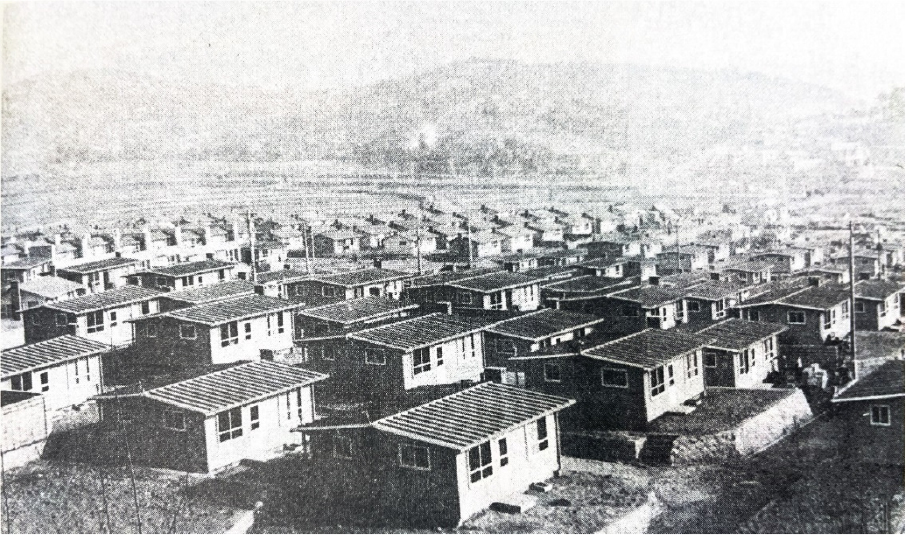
Looking at the situation in the 1950s, in order to solve the housing shortage caused by the Korea War (1950-1953), free housing for emergency relief was constructed using building materials provided by foreign aid, including winterization houses, camps, recovery houses, welfare houses, and refugee resettlement houses (see Figure 1) [1]. It is noteworthy that traditional architecture, such as hanok (traditional Korean houses), was rarely constructed. The traditional handcrafted hanok was not suitable to solve the housing shortage, and as industrialization made Western building materials more readily available, western-style houses became the prevalent form in Korea [1]. Against this backdrop, Korean architecture was urged to break with tradition as it pursued functional architecture to the exclusion of ‘tradition’ in order to stabilize the country as soon as possible.
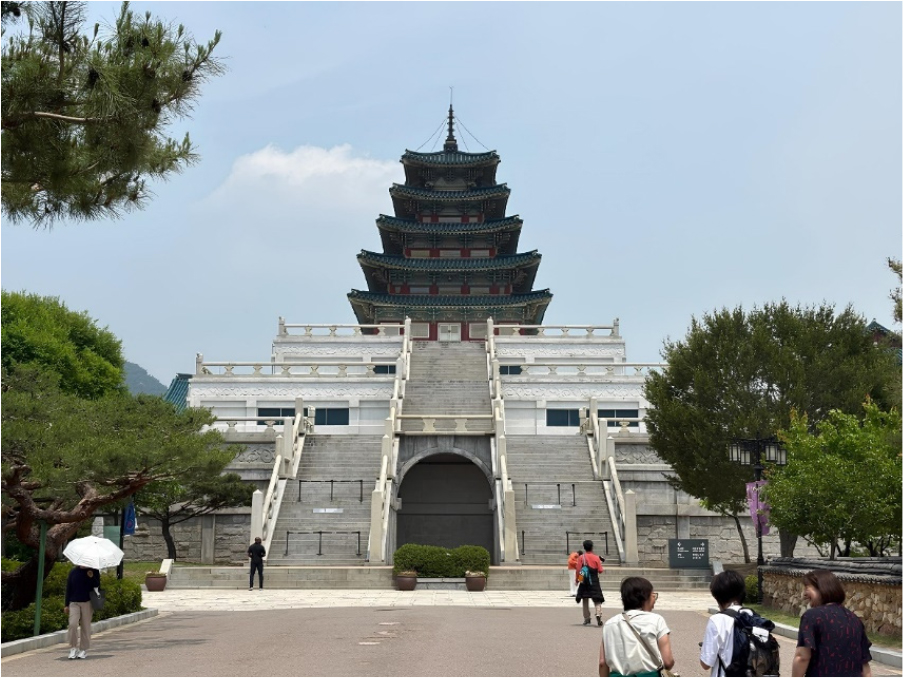
The 1960s and 70s were a period of stabilization after the Korean War, and Korean ‘tradition’ began to be discussed in earnest. The Buyeo Museum (Soo- geun Kim) and the National Museum of Korea in Gyeongbokgung Palace (Bong-jin Kang), at different stages, sparked specific discussions about architectural ‘tradition’ (see Figure 2 & 3) [6].
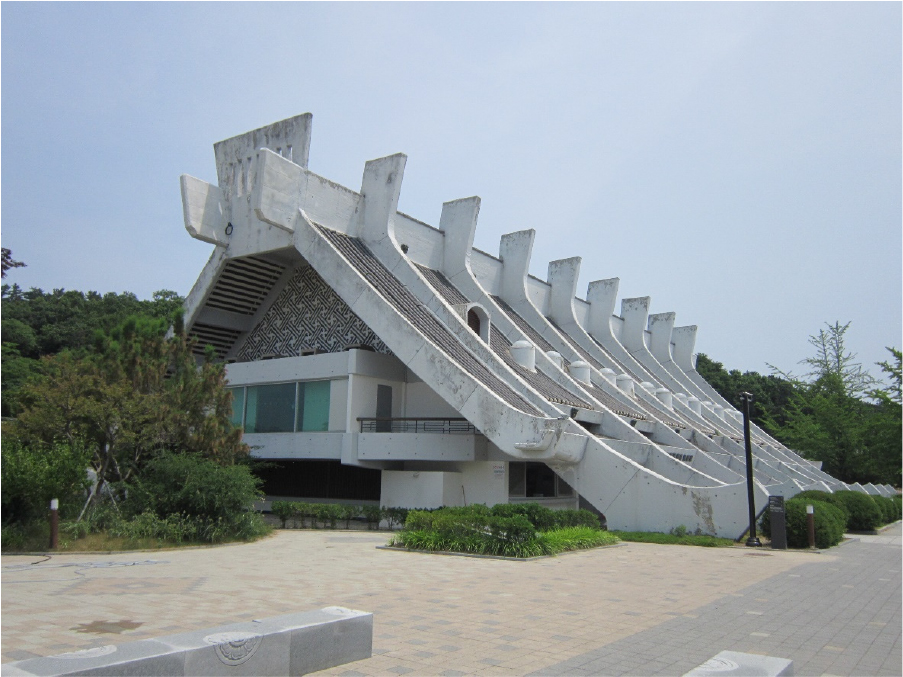
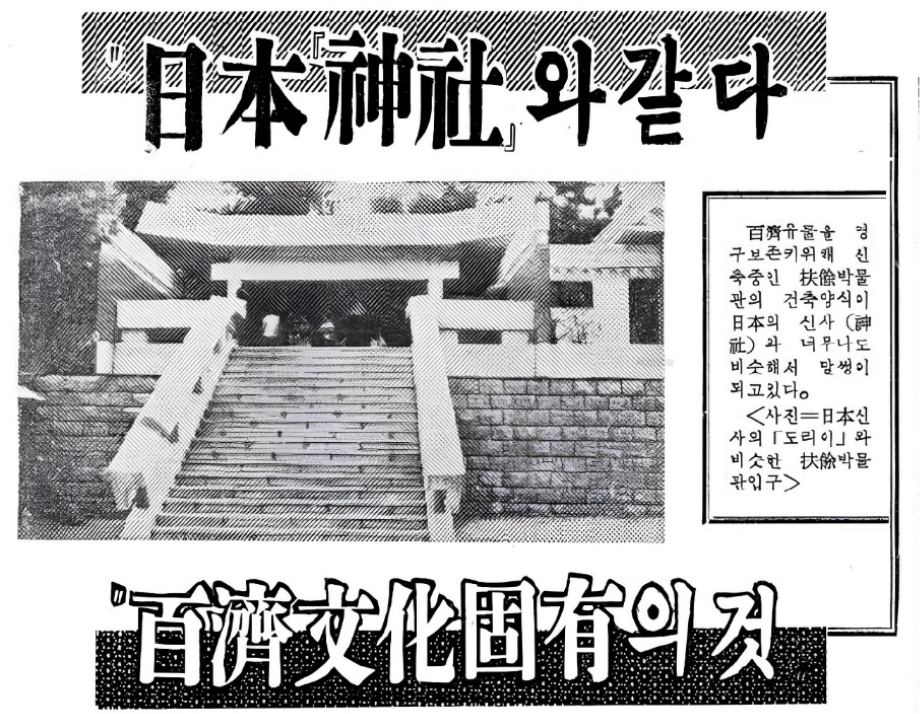
Soo-geun Kim’s early work, Buyeo Museum, was constructed with a concrete structure based on the motif of ‘rafters’, a traditional element, and while embodying this ‘tradition’, he also installed top lights on the top of the floorboards to bring light into the interior. However, the government-led imposition of ‘tradition’ prevented the artist from voluntarily discussing tradition as an interpretive expression [6]. Furthermore, discussions of tradition were constantly raised about the resemblance to Japanese shrines (see Figure 4) [12]. At that time, tradition was largely shaped by government-led directives rather than by the independent vision of architects themselves [13]. Within such an environment, although Kim did not acknowledge it, he appears to have been limited in his ability to reinterpret tradition freely, instead having to work within imposed boundaries.
Completed in 1968, Bong-jin Kang’s National Museum of Korea (now the National Minsook Museum) demonstrates the architect’s distorted view of the application of traditional elements in the realization of modern architecture. The architect interpreted the guideline of the competition program to ‘imitate existing historic buildings so that they can be reproduced’ as a blind following of traditional architecture [14]. In other words, the building is not a metaphorical synthesis of traditional Korean architectures such as Hwahwamsa Gakhwangjeon, Geumsansa Mireukjeon, Beopjusa Palsangjeon, and Bulguksa podium, but rather a synthesis of these four buildings in one building based on the architect’s own interpretation. Despite the opposition of many architects at the time, the building was realized under the auspices of the military regime [14, 15].
Beginning with the construction of the Buyeo Museum and the National Museum of Korea in the 1970s, a series of cultural facilities, including the National Theater, regional national museums, and cultural centers, were built. In the 1980s, the establishment of the Dong-nip Gee-nyum-gwan (Independence Hall of Korea) further intensified the discourse on Korean identity in architecture [16]. However, discussions on Korean-ness in architecture at the time posed a critical challenge: to find a balanced approach between the modernism that Korean architecture sought to pursue and the tradition that had been inherited and needed to be preserved.
Residential architecture was a reflection of the owner’s and architect’s personalities, and the Western facade was constructed with a tendency to avoid hanok design. However, there were many cases where the floor plan of the interior space was distributed and centered on the living room, replicating the traditional interior plan of hanok[1]. Despite these changes toward Western design, the floor plan of the traditional hanok was maintained in the Korean lifestyle and behavior.
The 1980s was a time when the government made many efforts to promote Korea through international events such as the 1988 Olympics. In the field of architecture, the term ‘Koreanness’ began to be used in place of ‘tradition’, and large public buildings (such as the Jeonju City Hall, the National Center for the Arts, the Independence Hall, and the Olympic Stadium) were constructed with ‘Koreanness’ in mind, mainly reflecting the economic and political logic of the time [17]. The architecture that expressed ‘Koreanness’ during this period changed from a formal to a metaphorical expression, which was built without a detailed analysis of the range of traditions.
Critical regionalism
Overview of critical regionalism
In 1983, Keneth Frampton published the concept of ‘Critical Regionalism’ in two articles [3, 4], which he used to criticize postmodern and avant-garde architecture for losing the essence of architecture. It is the idea that the whole culture should be understood through the characteristics of its own cultures, rather than a holistic concept, in order to understand the individual cultures (which appear together at the same time) in a complex cultural situation resulting from the collision of local indigenous and imported cultures [3]. The details are organized in Table 2 below.
Table 2.
Comparison of regionalism and critical regionalism
Furthermore, in emphasizing his philosophy of regionalism, Frampton cites the writings of architect Harwell H. Harris (1903-1990), arguing that it is important to have a “regionalism of liberation” that embraces what is outside rather than a “regionalism of restriction” [3].
Key Concepts of Critical Regionalism
In his 1987 essay “Ten Points on an Architecture of Regionalism: A Provisional Polemic,” Frampton emphasizes the role of myth as the most important and creative force in critical regionalism [18]. As such, Frampton’s key concept in critical regionalism is the creation of a ‘region with a myth’. This myth is not myth in the religious sense, but rather the values, beliefs, and sensibilities shared by a group of people, and the elements that today’s architecture should incorporate are natural, tectonic, and tactile [18]. It is a dialectical architecture that consciously deconstructs universal modernism with images and values that become the identity of the ‘region’ by understanding the ‘myth’ of universal civilization as a ‘myth’ and not the ‘sentimental’ (romantic) vernacular architecture of the region. The key concepts of critical regionalism are summarized below:
Place-form
Frampton criticizes the weakening of place-form in contemporary architecture and urban planning. He argues that modern cities and architecture have lost their sense of place, and that Critical Regionalism seeks to recover a more humane way of living through architecture that is rooted in a specific locale [4]. Place-making is a concept that German philosopher Hannah Arendt (1906–1975) emphasized as “the living together of people,” which is the space of human appearance [4, 19].
In describing regional identity, Frampton cites German philosophe Martin Heidegger’s (1889–1976) concept of place, which he emphasizes as a contrast to space [4]. In other words, space (Spatium) refers to a mechanical continuum delimited by coordinates (Cartesian system), while place (Raum) refers to a characteristic that a region possesses that is unique to it or that distinguishes it from other regions. Thus, Frampton underscores ‘place creation’ as the most vital means of resisting the homogenizing spread of placeless consumer culture through Critical Regionalism [3].
Natural elements and tectonic
Among all forms of cultural expression, building and architecture maintain the closest relationship with nature [18]. Critical Regionalism argues that architecture must be formed through an intimate interaction between nature—such as topography, climate, and light—and culture, including local context, history, and tradition. Modernization and universal technology tend to favor levelled sites and artificial lighting, thereby leading to placelessness, the erasure of local distinctiveness. On the other hand, designs that modify to the environment and natural light or follow the land’s contours serve to emphasize the site’s spatial and sensory characteristics. Therefore, architecture should be more than just a visual object; it should use tactile elements, light, climate, and materials to communicate a sense of place. This approach advocates expressions that are grounded in place, in contrast to the establishing tendencies of contemporary technology (such as air conditioning and artificial lighting). Most importantly, architectural expression should not be scenographic or surface-deep, but tectonic, emerging from the very structure of the building itself. The tectonic, in Frampton’s view, is not merely a technical act of construction, but a poetic articulation of structure that reveals the aesthetics and meaning of resisting gravity [4].
Tactile
Frampton argues that the human body’s ability to perceive the environment through senses beyond vision suggests a potential strategy of resistance against the dominance of universal technology [4]. In other words, one needs to employ all of the senses—touch, temperature, smell, spatial orientation, and more—instead of merely visual perception to fully comprehend architecture. The innate capacity of the human body to recognize and respond to these types of environmental cues is essential.
Frampton opens up to this challenge by emphasizing the importance of the ‘tactile,’ arguing that architecture has a unique ability to be experienced through every one of the senses. That is, perception of architecture involves not only the optic nerve but also the other senses that contribute to a holistic spatial experience [18]. In most cases, materials and surfaces function not only as visual forms but also as part of an integrated sensory environment, interacting with airflow, acoustics, ambient temperature, and even scent to shape the experience of space [18].
As such, Frampton’s solutions for creating mythic neighborhoods include ‘place-making,’ ‘natural elements and tectonic,’ and ‘tactile’. These solutions can help to negate the current image-oriented architecture and ultimately realize the architecture that critical regionalism seeks.
Contemporary Korean Architecture Through the Lens of Critical Regionalism
Three Korean Architects and Their Works around the 1990s: A Critical Regionalist Perspective
Sujoldang, Hyo-sang Seung, 1993
The meaning of ‘sujol’ in Sujoldang is derived from the Korean phrase ‘Daegyo yakjol (大巧若拙),’ which means “many skills are as bad as sleepiness” [20]. Sujoldang was designed by Hyo-sang Seung in 1993 and reflects Seung’s ‘aesthetics of the empty’. The architect did not follow the functional pursuits of modernity, but designed a building that maintained Korean ‘tradition’ and the behavior of Korean life. In terms of form, he tried to reconstruct what was made through traditional materials such as wood by using modern materials such as steel and concrete and modern technology. In this way, the designers tried to reproduce the spiritual sensibility of the tradition, rather than simply reproducing the same form as the tradition [21].
In the case of the yard, which is the core space of Sujoldang, it is used as a space for purposeless (a variable space), and is also used as a garden, living room, exhibition hall, feast hall, and sometimes as a silent object. This can be understood as an embodiment of Frampton’s notion of place-making, in that the inhabitants themselves define the character of a place (see Figure 5).
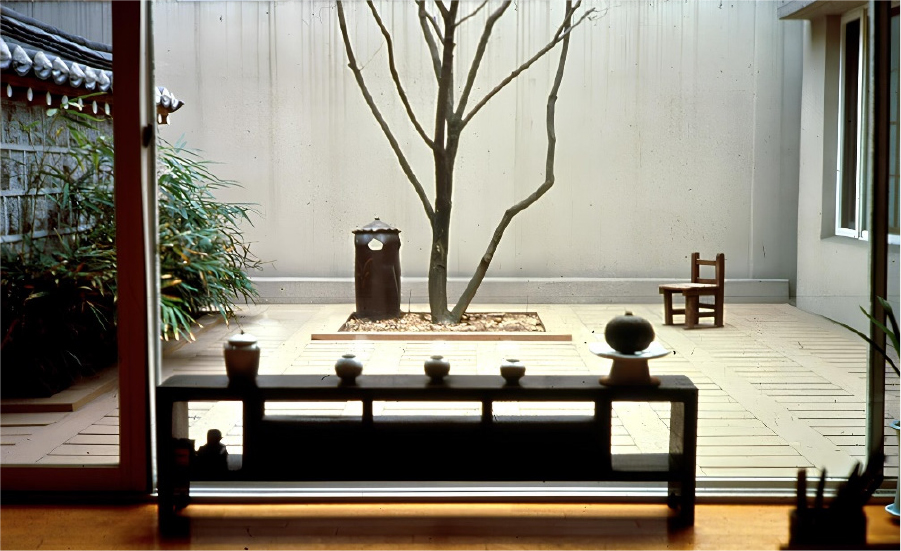
Sujoldang uses stone walls made of materials that have been traditionally used in Korea to define the boundary with the outside space. In addition, the canopy, which is based on the eaves of a hanok but made of modern materials, the traditional sago stone wall, and the eaves made of wood are an effort to recognize the building in its context rather than as an object separated from the surrounding nature.
The sense of traditional materials creates a traditional area in a modern space. As a traditional space, the layout of the rooms was planned in the form of a traditional Korean house with a separate building structure function as the centerpiece. In addition, the use of a courtyard, a variable space, to connect the spaces can be said to fulfill the Korean sentiment through the experience of using the space (see Figure 6). The details are organized in Table 3 below.
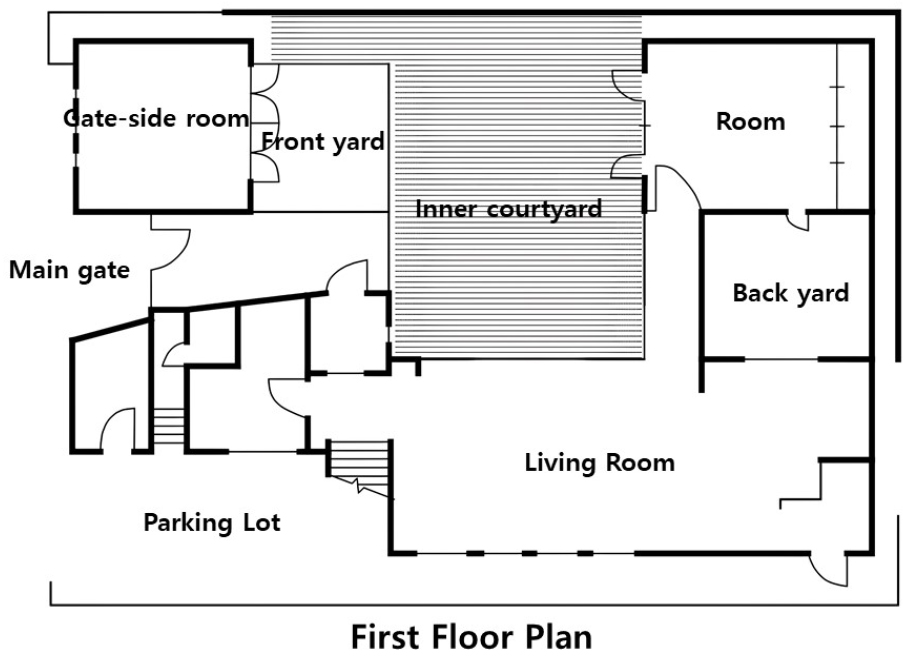
Table 3.
Analysis of Sujoldang
Yeounheon, Kyung-guk Woo, 1991
The site where Yeounheon is located has been a densely populated area of hanoks in the past, but its original appearance has been changing since the road was built. The basement of Yeounheon was planned as an office, the ground floor as a shop, and the second floor as a residence, but the architect planned the space to accommodate changes from the time of planning, and the second floor is now used as an office and shop [23, 24].
Yeounheon is a building that incorporates Frampton’s concept of place or place-making. The building is constructed of exposed concrete, which is the material of newly constructed buildings in a background of changing urbanization, to create a sense of unity, but it also connects the present and the past by applying elements of walls and gable roofs that apply the concept of plate walls that existed in the past in the area (see Figure 7) [23]. In particular, the wall acts as a link to the past sense of place, which is composed of the past plate walls, and as a transition space to the main building, it acts as a filter to categorize pedestrians using the road and users using the space.
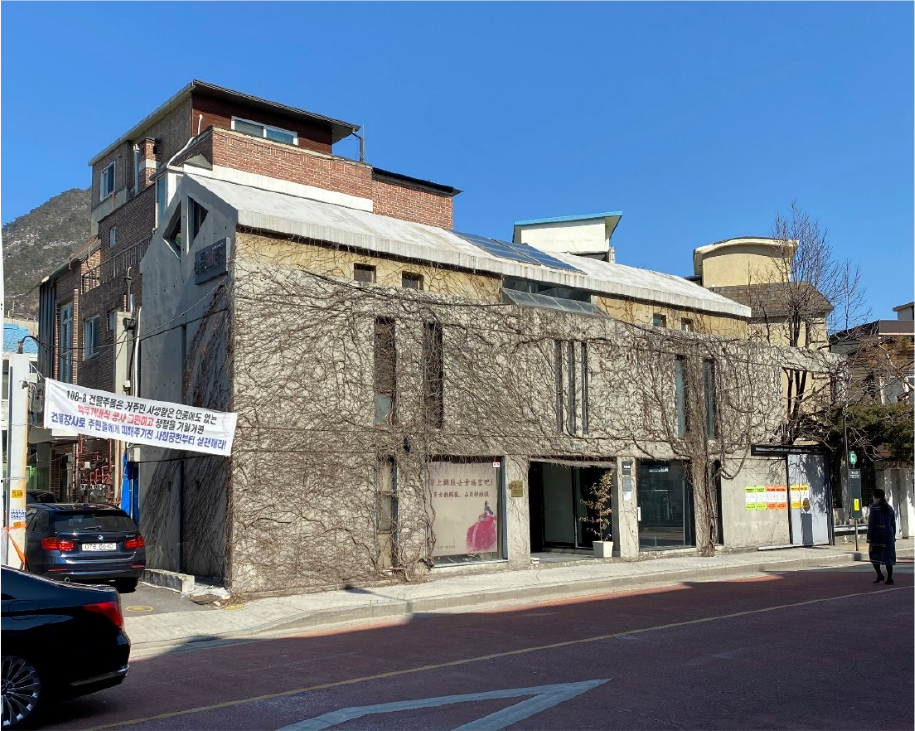
In addition, the architectural elements of Yeounheon (bamboo beams, concrete grate, H-shaped steel frame, glass block walkways, and stairs) provide a visual and sensory experience [23]. In particular, exposing the material and structure of H-shaped steel to the outside has the effect of unifying the structure and design of the building in a tectonic sense. Furthermore, through the interpretation of the existing background and environmental elements of the site, Yeounheon tried to solve the problem of the disconnect between the surface and the modern society in terms of design by using modern materials and implementing them in the form of traditional Korean construction techniques.
The rough concrete finish of the building materials and the vines on the fence also emphasize the tactile aspect. In the case of the interior space plan, a traditional element, the ‘courtyard,’ is placed between the masses divided into weights for users and time-changing programs, acting as a gathering center (see Figure 8) [23]. The details are organized in Table 4 below.
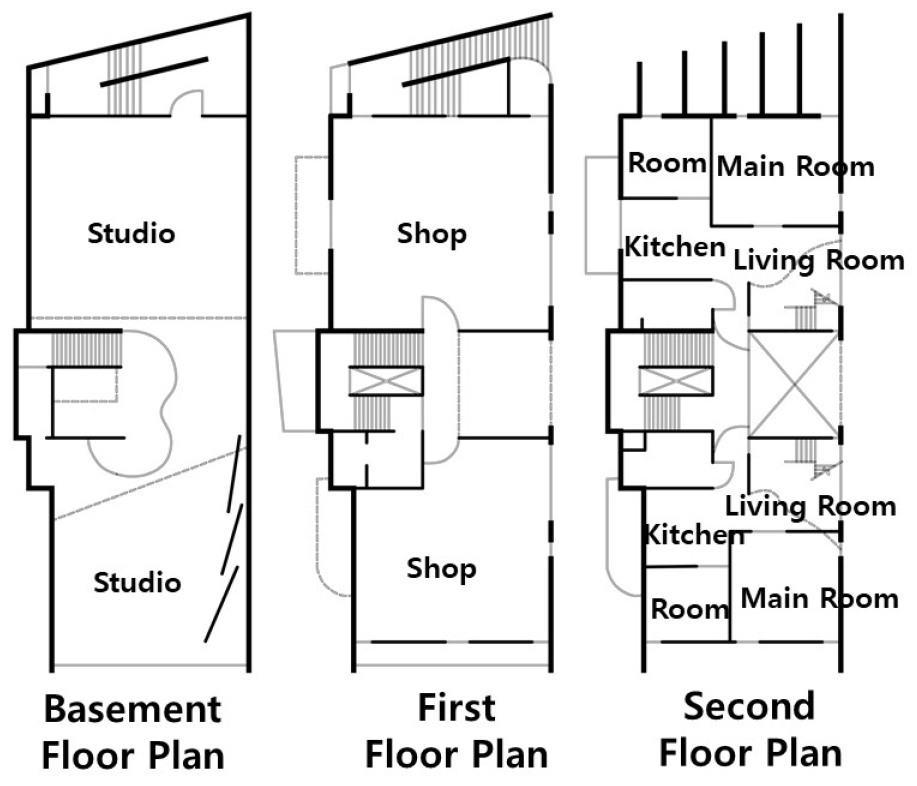
Table 4.
Analysis of Yeounheon
Hwangi Museum, Gyu-sung Woo, 1994
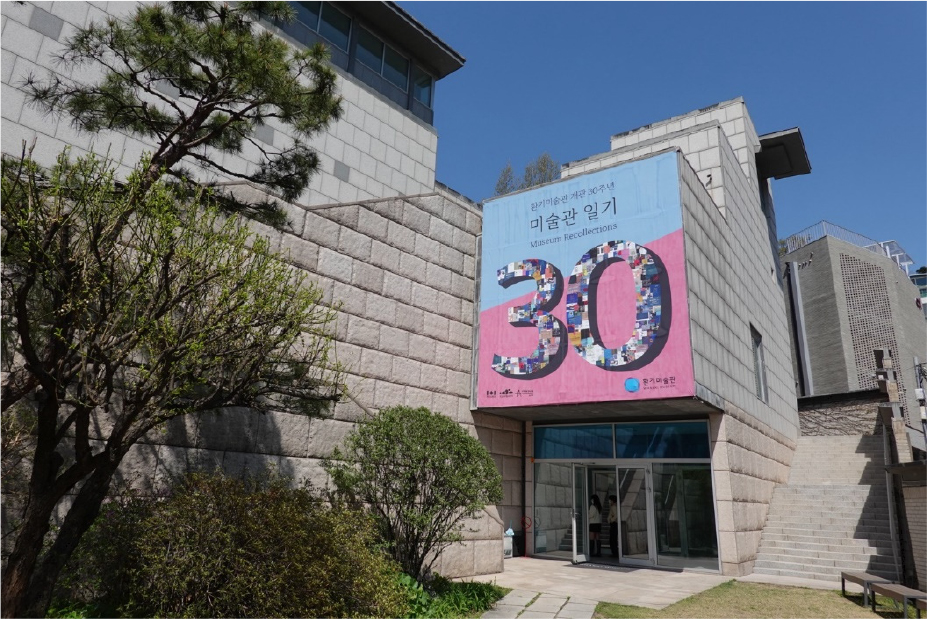
Although the Hwangi Museum was built with modern and contemporary architectural materials, it was planned to harmonize with natural elements such as trees, mountains, rocks, and clouds, as traditional Korean architecture emphasizes harmony with nature [25]. The site is located in a single-family residential complex in Buam-dong, with greenery on the high side and water flowing on the low side, which reflects a feng shui concepts (see Figure 9).
In terms of place-making, the layout plan forms an axis according to the flow of the valley in order to create a sense of unity with the residential complex in which it is located, and is planned in the form of spatial division that appears in traditional palace layouts, garam layouts, etc (see Figure 10). The buildings planned as detached buildings, which are separated structure, are composed of individual forms and programs, but at the same time, they have the functions and meanings of museums compounded within the area defined by the wall [25]. In addition, in order to fit into the skyline, many of the programs were placed in the underground space to blend in with the surrounding mass [25]. The Hwangi Museum used the chaegyung (a method of selectively framing and incorporating views) by blocking the crowded view of the city by forming an axis between the gaps of the planned space with weights, and attracting the view of Inwangsan and Bukhansanseong, and also used stone as a masonry material in the sense of ground contact [25]. These traditional architectural elements provide an opportunity for visitors to relax. The details are organized in Table 5 below.
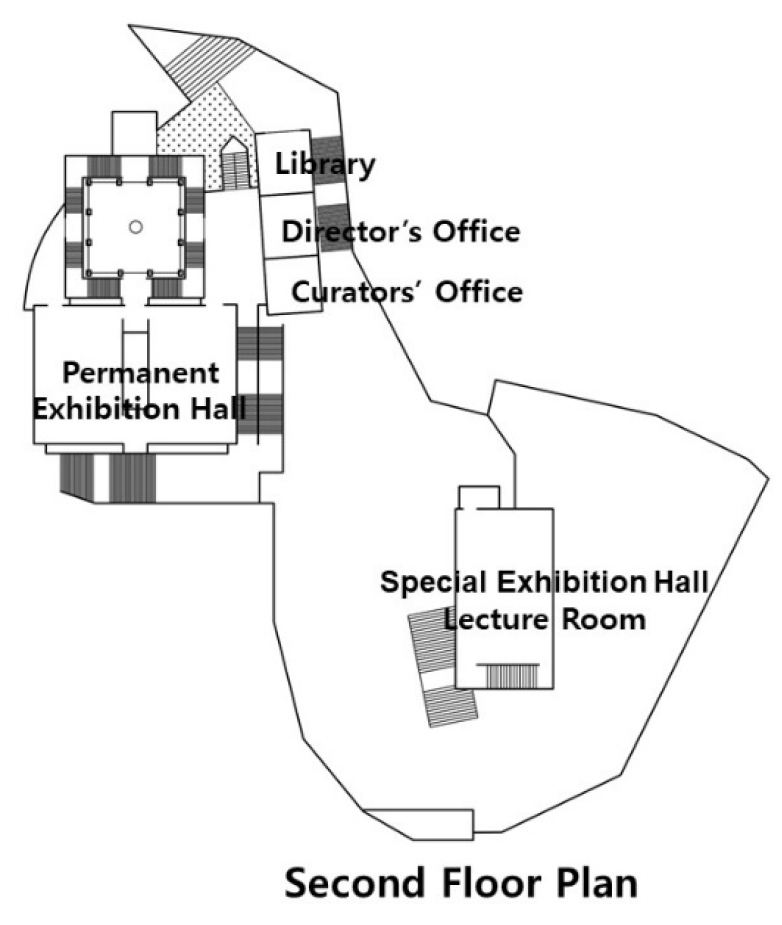
Table 5.
Analysis of Whanki museum
The Meaning of Tradition in Contemporary Korean Architecture in the 21st Century and Beyond
“The phenomenon of universalization, while being an advancement of mankind, at the same time constitutes a sort of subtle destruction, not only of traditional cultures, which might not be an irreparable wrong, but also of what I shall call for the time being the creative nucleus of great civilizations and great culture, that nucleus on the basis of which we interpret life, what I shall call in advance the ethical and mythical nucleus of mankind.” [26].
In Korean architectural culture, internationalist styles have been used to solve the housing shortage during the Japanese occupation and after the Korean War. For this reason, ‘tradition’ tended to be overlooked or treated as a secondary concern in Korean architectural practice. However, in the 21st century, Korean architecture in the post-war period has seen the emergence of buildings that adhere to Korean ‘tradition’, which distinguishes them from the uniformly built, functionalist, internationalist architecture. Filippo Brunelleschi (1377-1446) described history as the experience of different cultures, and argued that new technique come from this history [27]. Around the turn of the 21st century, progressive architects in Korea (especially the 4-3 group) have envisioned architecture as an expression of a dialectic between internationalist styles and past Korean traditions. This was a step beyond the retrospective imitation of Korean traditional elements and sought to realize them through the reinterpretation of ‘tradition’ through current technologies, materials, and construction methods. It can be said that these architectural expressions, which are reinterpreted and implemented according to the local specificity of Korea in the current era, compensate for the deficient aspect (Korean tradition) in the architecture implemented through internationalist styles.
“Critical Regionalism has to be understood as a marginal practice, one which, while it is critical of modernization, nonetheless still refuses to abandon the emancipatory and progressive aspects of the modern architectural legacy. At the same time, Critical Regionalism’s fragmentary and marginal nature serves to distance it both from normative optimization and from the naive utopianism of the early Modern Movement.” [26]
For example, the spatial construction of traditional elements reflects the Korean environment, and these elements are manifested in the courtyard of Sujoldang, the arrangement of the differentiation, and the application of Feng Shui theory. These are the forms and spirit (emotions) of traditional buildings such as hanok, which are recreated using modern technology. The elements of the environment are unique to the region, and these elements have developed historically as elements of tradition. This can be seen in the placement of the weights in the Hwangi Museum of Art, which takes into account the skyline of local buildings and terrain, and the placement of many programs underground. In Yeounheon’s case, she also connects the present and the past of the urbanizing area with the building materials and the form of the roof. It also prolongs memory through architectural devices (walls) as a metaphor for past memories. These elements can be described as a critical regionalism that emphasizes the characteristics of the site, and encompasses multiple dimensions of the building located on the terrain, its structure, and the play of light [26].
Elements of ‘tradition’ have been developed in the past against the backdrop of Korean regionalism, and this ‘tradition’ can be interpreted as a ‘place that embodies mythology’ as Frampton describes it [28]. Architects such as Hyo-sang Seung, Kyung-guk Woo, and Kyu-sung Woo have attempted to implement architecture within the larger framework of Korean values and myths through their own interpretations of ‘tradition’. Through the efforts of these architects, the architecture that embodies ‘tradition’ can be seen as the design and spatial elements of current contemporary architecture, realized through modern technology, and developed into contemporary architecture that suits the Korean people’s identity.
Conclusion
This study examines how progressive Korean architects at the turn of the 20th century integrated ‘traditionality’ into contemporary architectural practice. Their design approaches are interpreted in light of Kenneth Frampton’s theory of Critical Regionalism, a concept that has been extensively discussed in Western architectural discourse. Based on this, we examine the meaning of ‘traditionality’ in Korean contemporary architecture at the end of the 20th century as follows.
First, ‘traditionality’, which did not cleary appear on the surface through the Japanese occupation and the Korean War, has been embodied in Korean architecture since the 1960s, and has gradually expanded its scope from designing to express Korean identity to individual architectural design as an element to fulfill individual needs. Since the 1990s, the implementation of this element of ‘traditionality’ has been manifested in various ways by the current era’s interpretation of the time.
Secondly, the expression of ‘traditionality’ in contemporary architecture since the 1990s has been manifested through the reinterpretation of the current era in terms of form and content, as opposed to the historical reproduction of architecture before that time. This phenomenon seems to solve the deficiencies in contemporary architecture by applying elements of ‘tradition’ that have been developed in the past by Korean lifestyle and culture. In addition, the existing traditional Korean architectural styles are elements that have developed in response to Korean regionalism and are suitable for Korean architectural planning regardless of the passage of time.
Third, Korean architecture has been implemented through topographical understanding such as Feng Shui theory in the past, which can be interpreted as a solution to Kenneth Frampton’s ‘critical regionalism’ (placemaking, natural, textonic, tactile). In particular, it can be interpreted as a mythical architecture that embodies the characteristics of the region. This architectural arrangement is an architectural approach that differs from the internationalist style of buildings. The ‘traditionality’ of modern architecture, embodied by the 4-3 group of architects who were active before and after the 21st century, is manifested in the planning through the understanding of these local characteristics. In particular, the architecture that incorporates Korean values is manifested in the formal and spatial design elements that are planned in a dialectic of internationalism and traditional elements.
Whereas in the past, contemporary, modern and traditional architecture were categorized as different architectures, Korean architecture since the 1990s, built as a dialectic of contemporary, modern and traditional elements, is seen as a development of ‘tradition’. In addition, from the perspective of ‘critical regionalism’, it can be interpreted that buildings containing Korean mythology are constructed from the perspective that contemporary people demand residential spaces that fit Korean ethos.
This study analyzes the concern for ‘traditionality’ in the process of implementing modern architecture in the 21st century through Frampton’s concept of ‘critical regionalism’, a representative architectural theory in the West at the time. This research is meaningful in that it analyzes architecture from a comparative cultural perspective between East and West and tries to find the characteristics of post- modern Korean architecture. However, overcoming the limitations of the scope of analysis and the limitations of juxtaposition in the process of comparing different cultures in the East and West are issues that should be considered in more depth in subsequent research. Nevertheless, analyzing Korean contemporary architecture of the late 20th century with representative Western architectural theories will provide an opportunity to discover new interpretive possibilities in architectural theory and history.

