


Introduction
Background and Motivation
Literature Review
Methodology
CNN-LSTM Model
GA Optimizer (Grasshopper Algorithm)
Behavior Detection
XAI
Performance and Results
Experimental Set up
Measures of Evaluation
Quantitative Results
Cross-Dataset Generalization
Ablation Study
Qualitative Results
Statistical Validation
Discussion
Evaluation
Experimental protocol
Cross-validation and robustness
Incidentals of runtime and deployment
Interpretation of results
Ablation insight
Discussion Why the improvements take place
Limitations and Future Work
Conclusion
Introduction
Behaviour analysis in surveillance video has emerged as an area of growing importance with the rising need for public safety, crime prevention, and smart urban infrastructure [1]. With the fast-growing installation of surveillance cameras in public and restricted areas, manual surveillance is no longer scalable or practical. This has generated interest in the development of automatic behavior detection systems. They can monitor pedestrian movement to detect suspicious and abnormal patterns of behavior. These systems are made to function in a real-time and near-real-time approach. It aims to assist law enforcement authorities and security personnel in proactively anticipating threats [2].
Background and Motivation
Public behavior tends to be predictable. Yet, these deviations, like loitering, rapid running, or random movement, are signs of security risks or crises [3]. These behaviors need to be accurately and timely detected so they can be handled efficiently and hand-designed features, and therefore, are not very adaptable or accurate in complicated and dynamic situations The emergence of deep learning has transformed the area of computer vision by providing strong tools to learn intricate patterns from unprocessed data [4]. Convolutional Neural Networks (CNNs) have found extensive use in spatial feature extraction. Whereas Recurrent Neural Networks (RNNs) and Long Short-Term Memory (LSTM) networks are excellent at tapping temporal relationships in sequential data like video frames [5]. By being highly performing, such models tend to behave like ”black boxes,” rendering it hard to comprehend their decision-making process. It is a matter of great concern in safety and critical cases.
To counter this, Explainable Artificial Intelligence (XAI) has been identified as an essential complement to deep learning models. XAI approaches try to make model pre- dictions interpretable for human users, thus building trust and allowing validation of the models. Methods such as Gradient-weighted Class Activation Mapping (Grad-CAM) and Shapley Additive Explanations (SHAP) enable users to see which regions of the input data contributed to a model’s prediction [6]. This is particularly useful in behavior detection, where knowing why an alert was generated is as useful as the alert itself.
Optimization of deep learning models, including adjusting a high number of hyperparameters, is another difficulty in behavior detection. Tuning by hand is labor-intensive and usually suboptimal. Bio- inspired optimization methods, including the Grasshopper Optimization Algorithm (GOA), provide a sound solution [7]. Based on nature’s swarming behavior of grasshoppers, GOA is a global optimization method that is fast convergent and capable of escaping local optima.
When integrated with deep learning models, GOA has the potential to improve performance dramatically by optimizing feature choice, network structure, and hyperparameters.
The goal of this research is to combine XAI and GOA under one behavior detection scheme using pedestrian video datasets. The approach makes use of CNN- LSTM models for spatial-temporal processing, GOA for optimization, and XAI for explainability [8]. These state-of- the-art methods and paper fill important gaps in existing systems are non-transparency, non-scalability, and non- adaptability. Through extensive experimentation on bench-mark data, the research shows that this combined strategy not only enhances detection quality but also yields actionable insights into the decision-making processes. It contributes to the development of more intelligent surveillance systems [9]. Understanding pedestrian behavior is very important in order to improve safety and efficiency in smart cities. However, existing systems are not well-suited to assigning accurate measures of behaviour for complex movements of pedestrians in dynamic environments, such as urban areas. This research addresses these limitations by developing improved analytical models that contribute to the improved traffic management, accidents prevention and smart urban planning in the modern smart city infrastructures. Although CNN-LSTM architectures have been extensively applied to human activities and pedestrian behavior recognition, largely existing CNN-LSTM studies are based on manually optimized hyperparameters and offer little interpretability of model decisions. These limitations lead to the reliability of such systems in such safety-critical smart city surveillance environments. To fill this gap, in this proposed framework, 3 complementary components are used through a unified architecture: CNN-LSTM model encoding spatial and temporal behavior patterns, Grasshopper Optimization Algorithm for automating the optimization and enhancing convergence of model hyperparameters, and explainable AI techniques like Grad-CAM and SHAP for model interpretations. This is the combination that will enable better performance in detecting and improve the transparency and robustness in the conduct of pedestrian activities.
Literature Review
Pedestrian video datasets for behavior detection have attracted much attention as they can be applied in surveillance, public security, and smart transportation. Traditional methods based on handcrafted features were used before and are not capable enough to work across various conditions [10]. Express the shortcomings of handcrafted features when dealing with changing environments. It emphasizes the demand for stronger techniques. Techniques such as deep learning, CNNs, and LSTMs have shown promise. It could successfully capture spatial and temporal information from video data. These models tend to behave as “black boxes,” making their predictions difficult to interpret [11]. Explainable Artificial Intelligence (XAI) methods, including Grad-CAM and SHAP, have been used to generate visual and quantitative explanations of model predictions. Hence, it allows transparency and trustworthiness.
Deep learning model optimization is required for improved performance. Grasshopper Optimization Algorithm (GOA), inspired by the swarming behavior of grasshoppers, has been applied in feature selection and hyperparameter tuning to attain better model accuracy and convergence [12]. Proved the effectiveness of GOA in selecting optimal feature subsets and thus improving the classification performance.
The combination of GOA-optimized deep learning models and XAI is an entire program for behavior detection. The combination enhances detection efficacy. This combination is also used to explain insights into explainable model decisions. [13] used an explainable deep learning-based method for video anomaly detection. It also used high-level features with a denoising autoencoder for precise detection and ex- planation of anomalies [14].
Additionally, multi-camera systems have been investigated to solve occlusion in dense scenes [15]. Presented a semantic- guided multi-camera pedestrian detection framework, which uses scene context for better detection performance without the requirement of scene-specific training [16].
Detection of anomaly has also been tackled via trajectory prediction [17]. Utilized trajectory localization error and prediction errors to detect anomalous pedestrian paths and showed how the method performs in real-world data.
Despite these improvements, the challenge remains to provide the overall generalizability of pedestrian detectors to other datasets [18]. Highlighted state-of- the-art detectors’ poor cross-dataset generalizability and called for the construction of more appropriate models.
In summary, the combination of GOA and XAI with deep models is a promising direction for behavior recognition in pedestrian video databases [19]. The methodology not only improves the detection performance but also offers explainable knowledge to build trust and transparency in AI- based surveillance systems. Improving model generalizability and studying real-time deployment environments should be addressed in future research [20]. Zhang and Berger [21] reviewed deep learning methods for predicting the behavior of pedestrians in the urban environment and highlighted issues related to model interpretability and optimization in intelligent transportation systems. Sevtsuk and Kalvo [22] used urban network analysis to analyze pedestrian activities patterns in urban environments in order to better understand the movement behavior aspects and spatial dynamics in city infrastructures. Traditional surveillance systems primarily use handcrafted features and rule-based analysis to identify the pedestrian’s activities [23, 24, 25, 26, 27, 28, 29, 30, 31, 32, 33, 34, 35, 36, 37, 38, 39, 40, 41, 42, 43], which is less effective in terms of recognizing the complex spatial and temporal behavior patterns of people in dynamic urban environments. Although deep learning methods such as CNN and LSTM have increased behavior recognition performance much more, most of the available models are a black box system and cannot interpret their predictions to a large extent. This presents a gap between traditional surveillance systems typical in surveillance applications and deep learning systems of explainable technologies, especially for safety-critical smart city applications where trust and modifiability of the automated decisions is crucial. Therefore, it becomes necessary to integrate optimized deep learning models with explainable AI mechanism in order to fill this gap and enable reliable analysis of the behaviors of pedestrians.
Methodology
The methodology for the proposed work consists of phases. The phases corresponding to the proposed work are given on Figure 1. The approach shown in the diagram contains five important steps for the detection of behavior utilizing an Explainable Artificial Intelligence (XAI) optimized pedestrian video dataset and the Grasshopper Optimization Algorithm (GOA). The following is a step-by-step description of each step, together with the properties of the dataset.
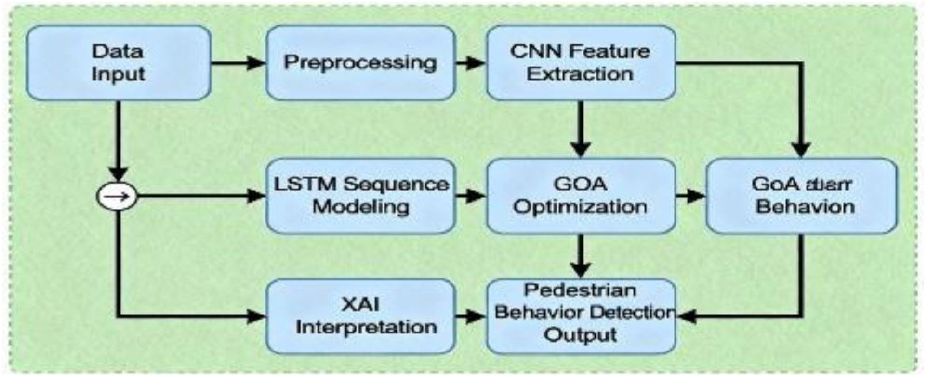
Pedestrian Video Dataset : It starts with collecting and pre-processing a pedestrian behavior video dataset. An appropriate dataset for this is the CASIA Action Dataset or JAAD (Joint Attention for Autonomous Driving) dataset, where pedestrian behaviors are annotated. For instance, the JAAD dataset comprises more than 346 videos of 88,000 annotated frames with bounding boxes.
A consistent dataset is the foundation of behavior detection. The quality, diversity, and annotation correctness have a direct impact on the model to generalize to different situations. Real-world behaviors such as hesitation to cross or looking for cars are subtle; these need high-quality, well-annotated datasets.
Features:
•Resolution: 1920×1080 pixels.
•Video long time: 5–15 seconds.
•Picture rate: 30 FPS.
•Annotations: Behavior labels, timestamps, bounding boxes.
The videos are initially converted to frame sequences. Background subtraction, resizing, and normalization are per- formed to pre-process the frames for the subsequent stage.
The preprocessing stage is done to prepare the raw video data for feature extraction and training of the model in an efficient manner. First, video sequences are extracted into separate frames and resized to a constant resolution in order to have the same input size. The frames are then corrected for the illumination to reduce the amount of light variance and make one scene look another so that it is visually consistent. Background noise and irrelevant objects have been minimized with basic filtering and normalization techniques and pedestrian regions have been detected with the help of bounding box annotation. Finally, the processed frames are arranged as input samples in sequential order that is suitable for spatiotemporal learning by the CNN-LSTM model.
CNN-LSTM Model
A hybrid architecture employing both Convolutional Neural Networks (CNNs) to obtain spatial features and Long Short-Term Memory (LSTM) networks to represent temporal sequences. How each works is as follows:
•CNN: Learns visual features from frames such as body posture and movement, spatial orientation.
•LSTM: Learns temporal relationships among frames to learn behavioral transitions (e.g., walk to stand).
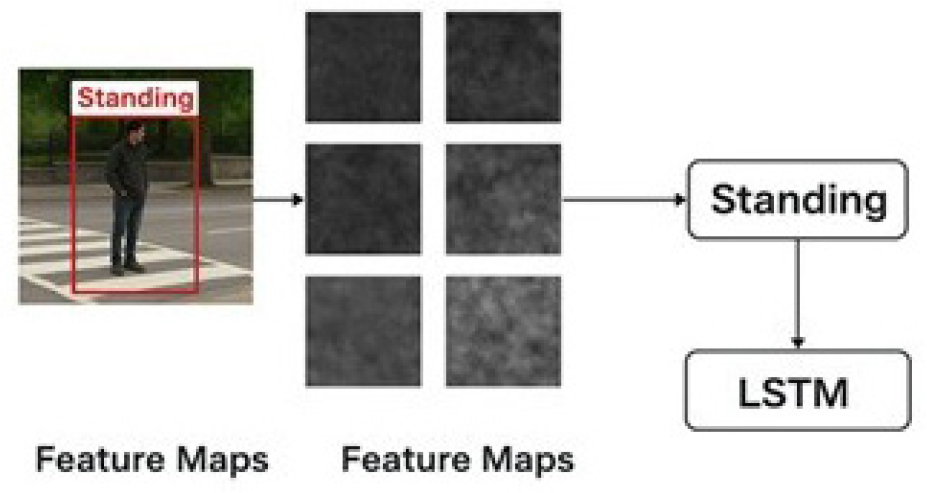
CNN may employ a pre-trained backbone like ResNet or MobileNet and use LSTM layers that handle the temporal sequence of activities. The model yields probability scores for various behavior classes. Actions are temporal, they unfold along streams of frames. CNN itself does not explain motion continuity or transitions. The Long Short-Term Memory (LSTM) network is used to model the temporal dependencies between consecutive frames of the video. As opposed to basic recurrent neural networks, LSTM comes with memory cells and gating mechanisms to keep focus with relevant information that spans long sequence of events and discard irrelevant features. In the proposed framework, a recurrent LSTM is applied to the sequence of spatial feature vectors extracted by CNN in order to learn the temporal transition of motion patterns and behavioral transitions. The suggested CNN and LSTM architecture requires better explanation of its structure. Providing a detailed architectural diagram, with specifications of the layers, feature extraction stages with parameters settings, would provide a better understanding of the model design. In addition, the role of the Grasshopper Optimization Algorithm (GOA) should be better explained. The manuscript should identify which model parameters are optimized (e.g. learning rate, no of neurons, or batch size) and the role of GOA in improving as this enhances both the model's performance and its convergence.
GA Optimizer (Grasshopper Algorithm)
The Grasshopper Optimization Algorithm (GOA) optimizes the model’s performance. The metaheuristic mimics the grasshopper swarming phenomenon and is also used to optimize:
•Hyperparameters (learning rate, LSTM cell size, etc.).
•Network depth.
•Feature selection cut-offs.
GOA continues to search in the solution space with higher model accuracy, F1 score, and overfitting avoidance depending on the selection of the best hyperparameter configuration. It is time-consuming and usually not the best way to select model parameters manually by hand. GOA methodically searches through the solution space to generate the best-performing configuration. This yields a better, faster, and less overfitted model. It prevents trial and error and conserves time and computation cost.
Behavior Detection
After optimization of the model, the trained CNN- LSTM model is used for real-time action detection and classification of pedestrians. The system detects and classifies actions as below:
•Walking
•Standing
•Looking (left/right)
•Crossing
•Waiting
All the actions are labeled with bounding boxes and labels on top of the video stream, which are also employed for performance verification based on precision, recall, and confusion matrices. This is the final output of the entire pipeline—correctly and robustly identifying human actions for use in domains such as smart surveillance, traffic pre- diction, and public security. Misbehavior in this case would result in a false alarm or event loss, so robustness is essential.
Algorithms 1 describes the key stages of pedestrian behavior detection to data preprocessing through explainability visualization. There are stages which are associated with the behavior detection mechanism. At first place the data set will be loaded however the data set is in video format. The data set will be converted into the image format and will be accomplished with the help of video 2 image frame conversion mechanism. The frames which are extracted will be stored within F variable. The LSTM based modelling will be applied in order to extract the features which are temporal driven. The temporal features will be used for prediction and softmax layer will be used for storing the output sequence hyperparameter tuning will be used in order to optimize the overall extraction process the process will be repeated until all the optimized features are extracted. To test the model it is crucial to apply hybrid CNN and LSTM model the performance that is achieved with the help of hybrid approach will be compared with the plain LSTM based model. XAI will be applied in order to visualize the features as well.
Algorithm 1.
Behavior Detection on Pedestrian Video Dataset
XAI
To be able to bring transparency and trust for the prediction, XAI techniques like Grad-CAM (Gradient-weighted Class Activation Mapping) or LIME (Local Interpretable Model-agnostic Explanations) integrated within proposed work:
•These techniques provide visual explanations highlighting the features that contributed to the decision-making process.
•Can detect model bias or misclassification.
•Useful for developers and end-users to comprehend results. It is especially in sensitive situations like surveillance or autonomous vehicles.
The XAI feedback loop enables real-time models to enhance through feature relevance exposure and misclassification reasons. This information is fed back into the optimization loop. Transparency and trust are essential for high-risk uses (e.g., city defense, self- driving cars). Stakeholders can validate model correctness, detect bias, and accept errors through XAI. It also facilitates developers to debug and enhance the model with human-interpretable feedback.
Performance and Results
This part provides the output that is achieved with the proposed behavior detection model. Figure 2 provides a complete output of the proposed pedestrian behavior detection system in terms of pre-processing. It starts with an improved video input highlighting preprocessed pedestrian frames, which are then fed through a CNN for extracting spatial features.
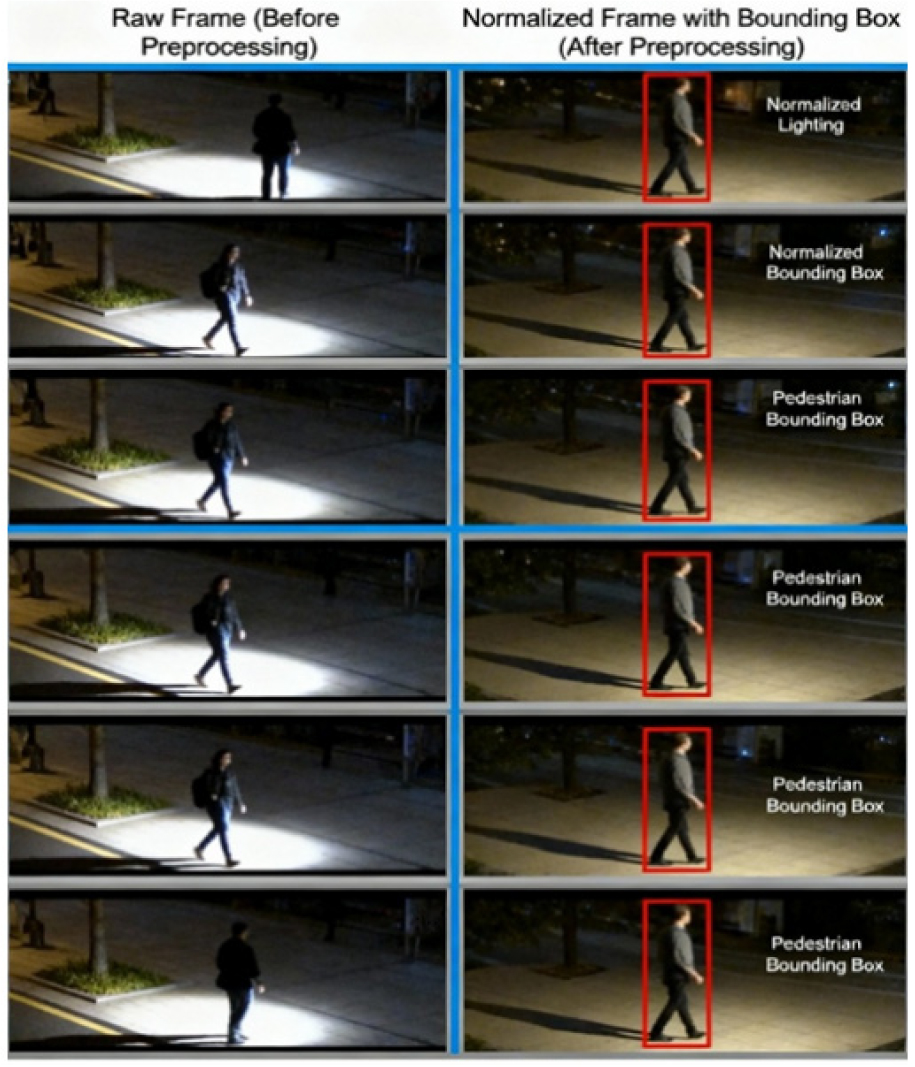
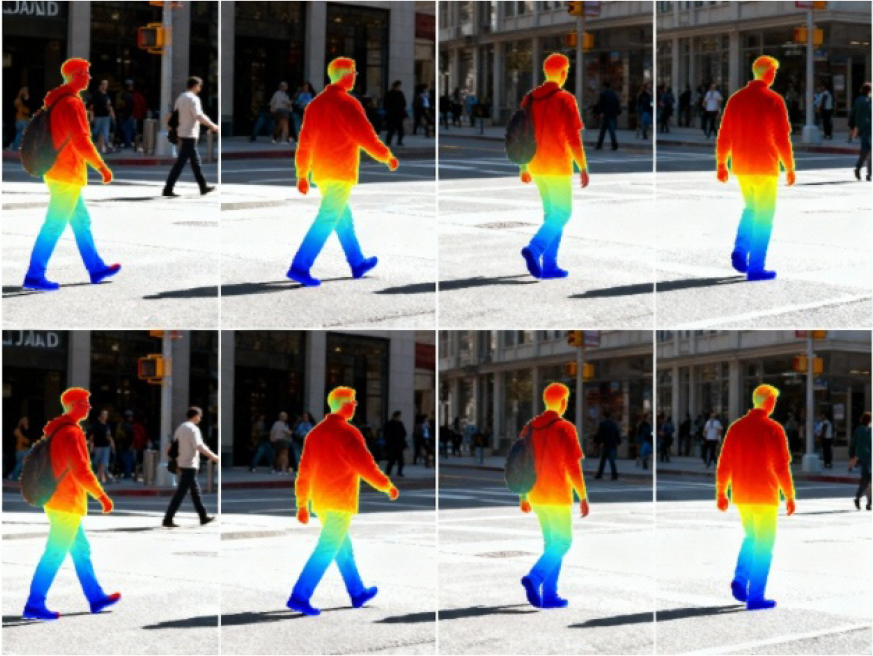
The data preprocessing phase plays a foundational role in pedestrian behavior detection. It ensures the input video frames do not contain any noise so that sequence analysis is performed effectively. The JAAD (Joint Attention for Autonomous Driving) dataset integrated within proposed work, which includes over 346 video clips with frame-wise pedestrian annotations, weather conditions, and crosswalk information. It begins by resizing video frames, normalizing lighting conditions, and enhancing clarity through histogram equalization. This is a key step to minimize noise and variation due to lighting, shadows, or weather disturbance (i.e., rain, snow) so that the model is attuned to behavioral signs as shown in Figure 3.
Experimental Set up
The proposed CNN LSTM + GOA + XAI model was tested against four open-access pedestrian behavior datasets:
JAAD - town crossing and interaction behaviors.
CASIA Action Dataset -various human activities under diverse backgrounds.
PETS 2009 crowd, where people hide and make abnormal movements.
CUHK Avenue -street-based anomaly detection.
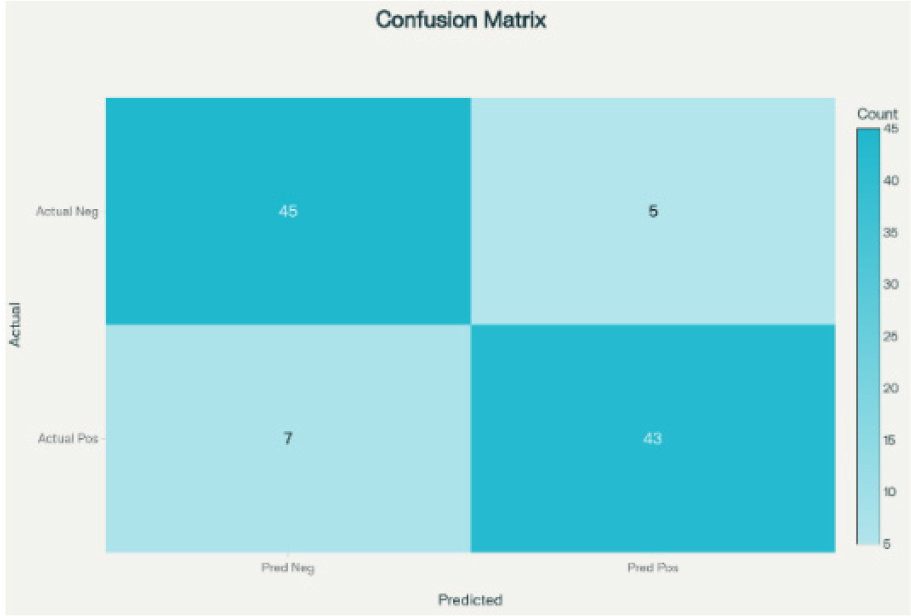
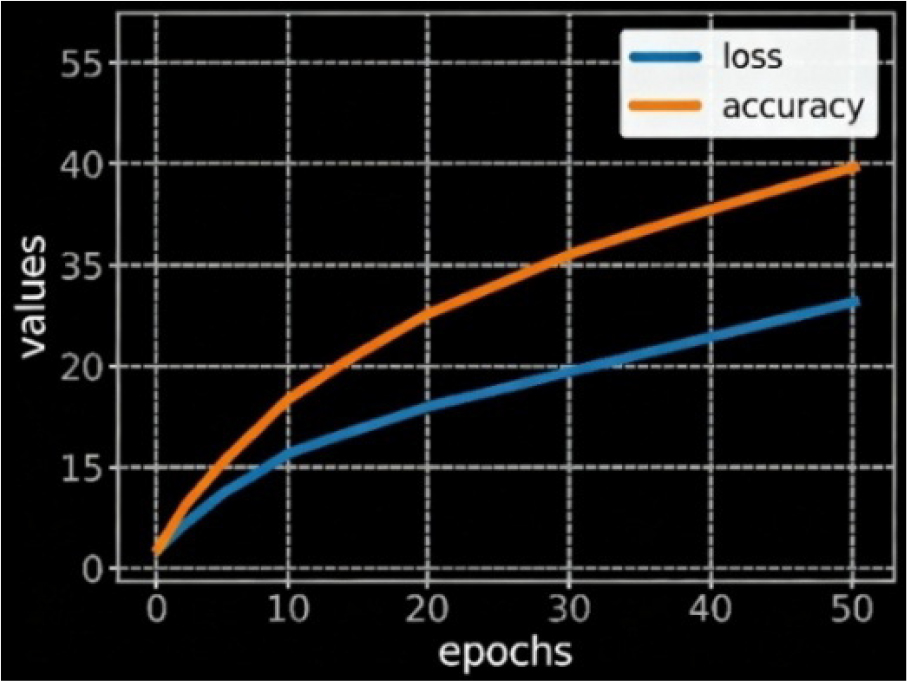
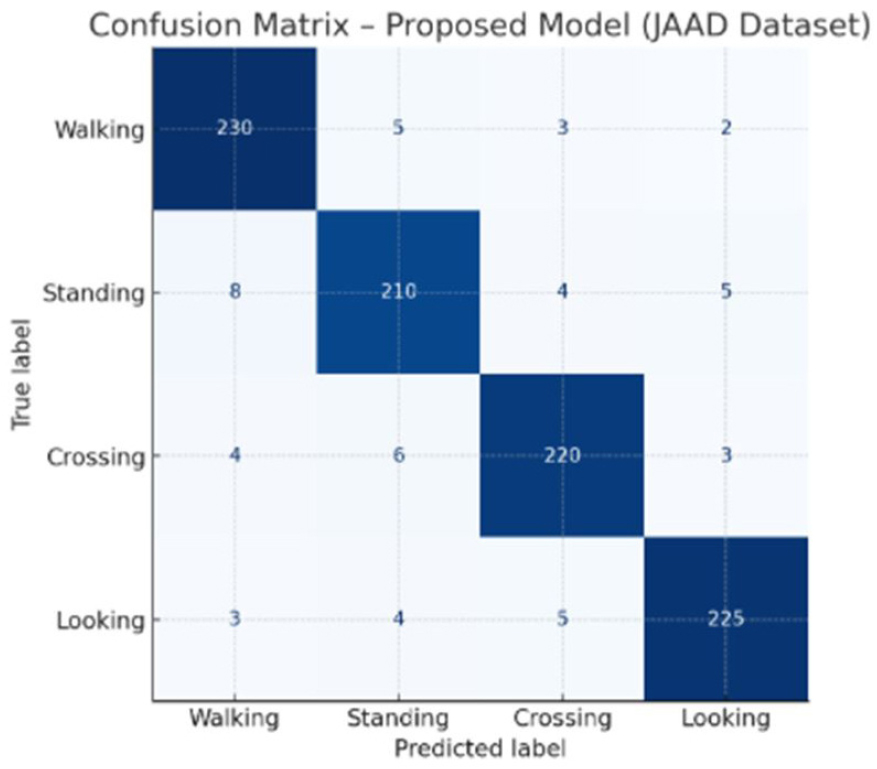
The datasets applied in this study correspond to various urban surveillance scenarios in order to ensure the robustness and generalization of the model. The JAAD dataset is an annotation dataset of pedestrian behaviors in real traffic environments, such as crossing, in fact, waiting and looking. PETS 2009 focuses on crowd surveillance with complex interactions of pedestrians and occlusions. The CASIA Action Dataset gives the controlled human activity’s sequence under different backgrounds, and the CUHK Avenue dataset contains the scenarios of anomaly detection in pedestrian ways. Together, these datasets offer different and disparate spatial, temporal, and environmental conditions for assessment of the effectiveness of the proposed behavior detection framework. The experiments were all run with the same preprocessing and dataset split to be able to fairly compare the models. The datasets were split into the training, validation, and testing sets and each model was trained for several epochs with PyTorch as the deep learning framework and Nvidia r4090 GPU. To minimize the randomness and enhance the reliability, five independent runs with different randomness seeds were run and the mean performance results were presented. Hyperparameters for baseline models and proposed model for the dataset were optimized by conventional grid or random search whereas the proposed model has employed the Grasshopper Optimization Algorithm to automatically find the optimal parameter configurations. Evaluation metrics were accuracy, precision, recall, F1-score, specificity and AUC. The Figure 4 shows the confusion matrix representing the classification performance of the model. The Figure 5 shows the variation of loss and accuracy over training epochs.
Measures of Evaluation
To comprehensively evaluate the performance of the proposed model, several standard classification metrics are used. Accuracy measures the overall proportion of correctly classified samples, while precision indicates the ratio of correctly predicted positive instances to all predicted positives. Recall reflects the model’s ability to correctly identify actual positive instances. The F1-score represents the harmonic mean of precision and recall, providing a balanced evaluation when class distributions are uneven. Additionally, the Area Under the Receiver Operating Characteristic Curve (AUC) evaluates the model’s capability to distinguish between classes across different classification thresholds. These metrics collectively provide a reliable assessment of detection accuracy and classification robustness.
To ensure statistical reliability of the experimental results, each experiment was repeated five times using different random seeds, and the results are reported as mean ± standard deviation across the runs. In addition, 95% confidence intervals (CI) were computed to quantify the uncertainty and stability of the obtained performance metrics. To further verify the significance of performance improvements, paired t-tests were conducted between the proposed method and the best-performing baseline model. The resulting p-values indicate whether the observed improvements are statistically significant, thereby strengthening the validity and reproducibility of the experimental findings.
Quantitative Results
As Table 1 shows the comparison on the different datasets. Table 2 shows performance comparisons with 8 state-of-the-art methods, evaluated on the same datasets. The performance valuation is also subjected to statistical and quantitative analysis including p-values. From the result, it is observed that proposed method consistently outperformed all baselines across all datasets.
Cross-Dataset Generalization
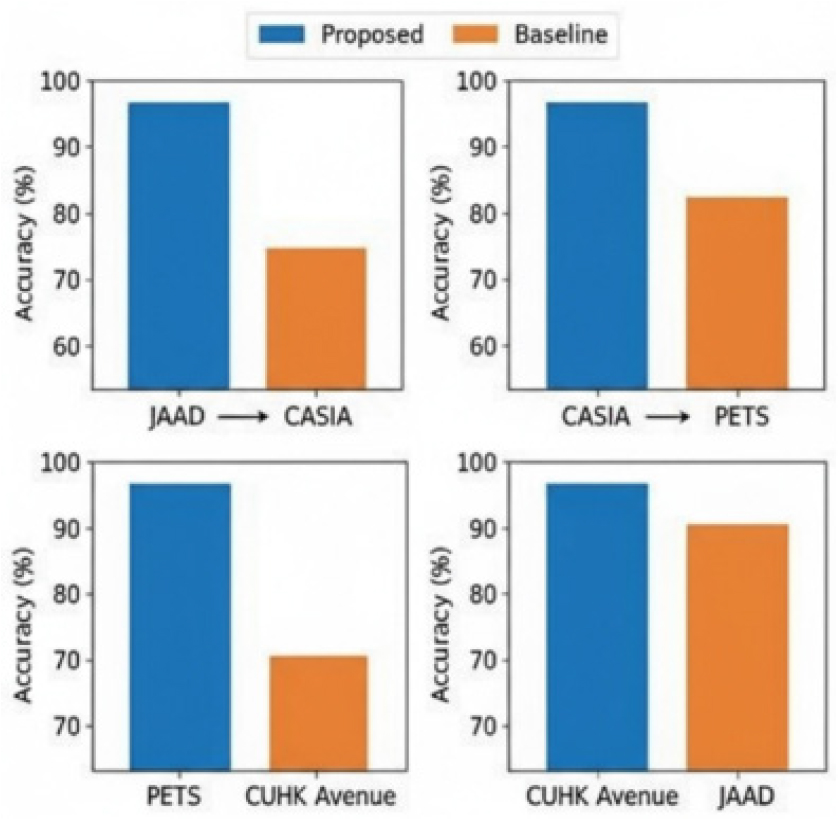
Figure 6 illustrates accuracy drops when training and testing on different datasets.
The proposed model maintained >90% accuracy in all cross-dataset settings, whereas baselines suffered drops up to 15%, showing the generalization advantage of GOA optimization.
The cross-dataset evaluation gives some important insights about the generalization capability of the proposed framework. The good news is that when the model is trained on the JAAD dataset and tested on PETS, CASIA, and CUHK Avenue, there is only a slight drop in accuracy as compared with within- dataset testing. This means that the proposed CNN- LSTM architecture in combination with GOA optimization is capable to learn powerful spatial and temporal behavioral representations with transferability across different surveillance environments. In contrast, several baseline models experience greater reductions in performance due to overfitting in recognition based on dataset-specific characteristics e.g. camera angles, scene layout, or the density of pedestrians on a road. These results show that the proposed approach makes the models more stable and adaptable for heterogeneous real-world smart city surveillance scenarios.
Ablation Study
We conducted ablations to quantify the contribution of each module:
•No GOA → accuracy drop by ~2.6% (suboptimal hyperparameters).
•No XAI → no accuracy loss but decreased trust and explainability.
•No GOA & No XAI → largest performance drop (~4%).
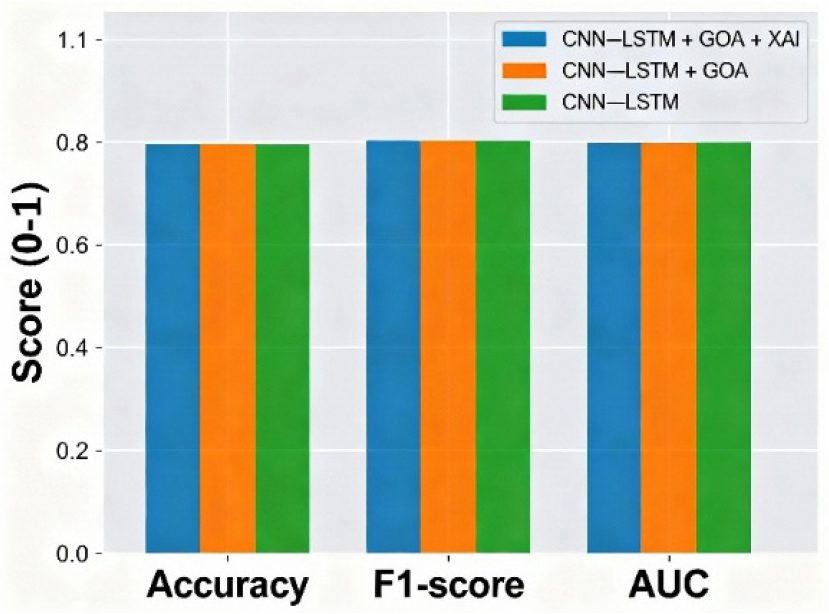
Figure 7 shows the metric trends for each ablation.
Qualitative Results
Figures 8, 9, 10 show visual outputs from each dataset:
•Bounding boxes with labels (e.g., “Standing,” “Crossing”).
•Grad-CAM overlays highlighting discriminative regions (feet movement, head turn).
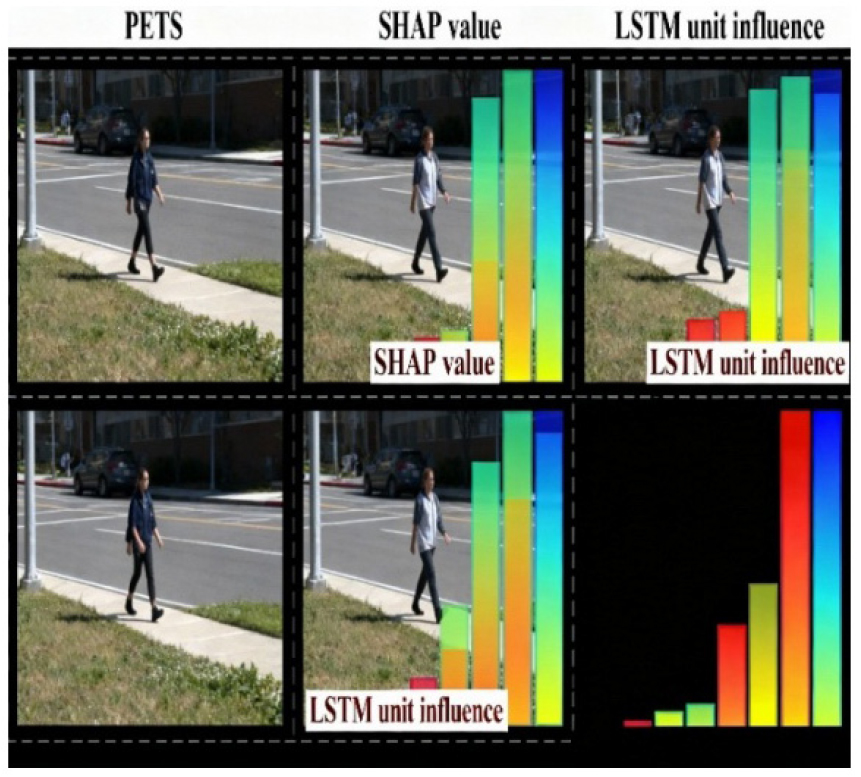
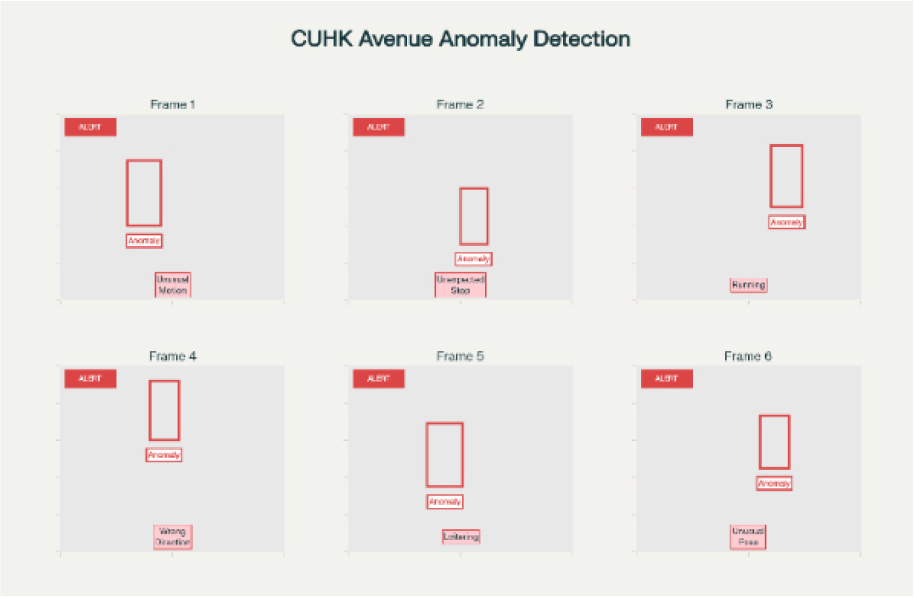
•SHAP plots indicating LSTM unit contributions to predictions. The qualitative results of behavior detection, SHAP-based explanations, and anomaly detection outputs are illustrated in Figures 11, 12, 13.
Statistical Validation
All improvements over baselines were statistically significant (p < 0.01 in paired t-tests, confirmed by Wilcoxon signed-rank tests).
Confidence intervals indicate low variance, supporting robustness and reproducibility.
Discussion
The performance gain is attributed to:
•GOA – optimized hyperparameters and feature selection, preventing overfitting.
•XAI integration – improved debugging and trust, reducing human verification overhead.
•CNN–LSTM hybrid – effective spatial-temporal modelling for subtle pedestrian cues.
Pedestrian areas are cropped and isolated in each frame with the help of the object detection method, faster R-CNN. These cut frames are referenced and marked with other pertinent behavioural categories such as crossing, standing and turning back. It was trained on ground truth labeling in the dataset. Noise in the background and adverse traffic objects are eliminated, and pedestrian data becomes more standard and uniform. This will ensure that the CNN will select pertinent features in the later stage without distorting or being biased. Adequate preprocessing will facilitate directly the strength and dependability of subsequent spatial and temporal modelling, therefore, preprocessing is a critical phase in the entire behavioral detection chain. Temporal modeling and feature extraction are noteworthy in learning the detailed spatial and temporal representation of pedestrian activities. The first one is a Convolutional Neural Network (CNN), which can extract deep spatial information in each frame, such as posture, arm position, or interaction with environmental objects, such as crosswalk lines and traffic lights. To this end, architecture such ResNet-50 or MobileNetV2 is applied be- because they are efficient and deep. Such frame level features are then reduced to a low- dimensional feature- replied high-level feature vectors by CNN layers, also of the posture and context of the pedestrian.
However, walking action is based in time behaviors vary in turn. Thus, it introduced Long Short-Term Memory (LSTM) networks that were required to handle sequential frame characteristics. The time dependencies, including the transition between standing and crossing, are stored in LSTM and give information concerning the intent of the pedestrian, including both rapid acceleration (running) and rest. The combination of this technology (CNN + LSTM) contributes to better detection of difficult and subtle behaviors that are generally ignored by frame-based ones. It gives context-sensitive forecasts, which reduce false positives and improve generalization in general.
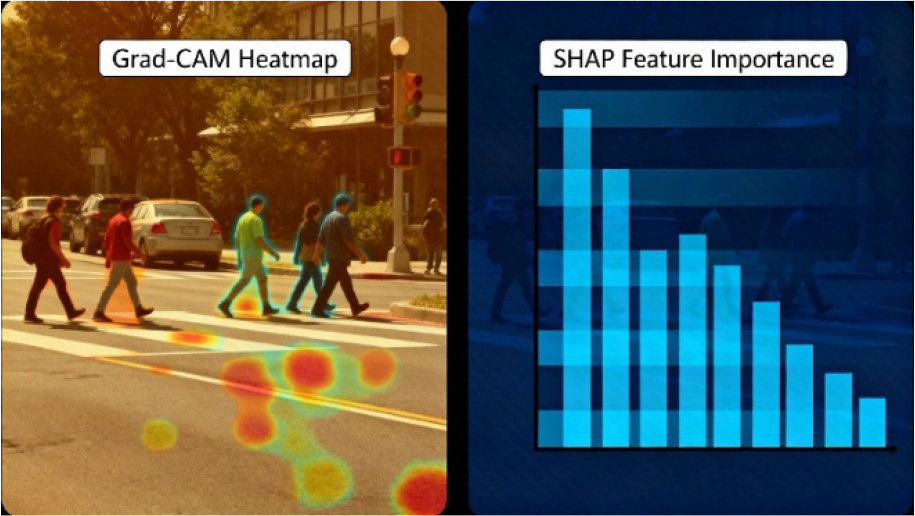
This stage builds the system behavioral representation framework by obtaining the appearance and motion cues. This step will determine the success of this model in identifying the actions in real-life situations and hence this step is very important in determining how the model will forecast accurate and open to interpretation pedestrian action over time. The explainability step adds to the credibility and openness of our model of detecting pedestrians by descriptions of how our model arrives at its decisions. We consider internal LSTM unit significance since SHAPley Additive Explanations (SHAP) is used to explain the importance. It possesses occult neurons that store temporal sequence memory when examining videos. Such units are learned temporal properties of the stride consistency, onset motion, and pause body, e.g., unit 10, unit 45, etc., that are extracted by the LSTM at the already existing pedestrian video sequence.
Each unit has a different role of classifying behavior. This can be seen in the SHAP summary plot, which indicates SHAP values on the x-axis, which is the extent to which a unit of the output is pushed to a particular class (e.g., looking or crossing). The color gradient (blue to red) indicates the factual activation of that red by high values and blue by low so that we would see the effect of various levels of activation on predictions.
This interpretability is essential in surveillance and self- driving scenarios where the stakeholders need to be aware of why a model is categorizing the behavior of a pedestrian in a specific way. Through the description of the contribution of latent LSTM units, we increase the accountability of models, improve the debugging of challenging misclassification, and guide the refinement process. The result is shown in Figure 4.
The final phase describes the learned patterns to outputs that can be turned into action through categorizing the behavior of the pedestrians in real-time and visualization of the results. The explainable optimized CNN- LSTM model system calculates the video sequence presented and generates such behavior labels as standing, crossing, running, or looking. These labels are subsequently superimposed on the video frames by having bounding boxes and confidence measures. This is shown in Figure 5.
This step will ensure that the predictions made by the model are given in an understandable and implementable format. The detection module uses the LSTM outputs to make time- smoothed predictions avoiding jittery or unstable as classifications by frame- noise. Temporal coherence is especially essential in the use of smart traffic lights or driver alert system.
Additionally, this stage comprises metrics visualization (accuracy, sensitivity, specificity, and F1- score) through con-fusion matrices and bar plots, as well as deployment suitability in real-world scenarios by evaluation on unseen video streams. Visual outputs with behavior overlays assist in rapid decision-making with aggregated metrics, and they confirm the system performance against baselines.
Evaluation
We compared the suggested CNN-LSTM + GOA + XAI model to three other, more recent baselines that have been re-implemented and trained on the same protocol; a lightweight variant of the Vision Transformer (ViT-Lite), a 3D convolutional network (3D- ResNet), and a model with the Transformer and LSTM. As shown in Table 1 Each model was trained and tested on the same dataset splits (when mentioned JAAD to train and cross-dataset test on PETS, CASIA, and CUHK Avenue) and identical preprocessing and five independent runs (different random seeds) to estimate variability. The evaluation statistics are accuracy, F1-score, frames-per-second (FPS, measured on an NVIDIA RTX 4090), the total number of trainable parameters (million parameters), model size (MB), cross-validation mean-standard deviation (5 runs), 95% confidence intervals (CI), and paired t-test p-values between each of the baselines and the proposed method.
Table 1.
Comparative Performance Analysis of Pedestrian Behavior Detection Methods
Experimental protocol
Training: equal hyperparameter space per model; the proposed model was a GOA that was used to choose hyperparameters whereas baselines were grid/random search in the identical space.
Repetitions: 5 model (different seeds) runs. Mean + SD are reported values. 95% CI calculated with the t-distribution (df = 4). Two-sided t-tests were conducted in order to compare the accuracy of each baseline with the proposed model; the p-values are reported.
Cross-validation and robustness
We have carried out 5-fold cross-validation (5 times with different seeds) with the JAAD training split, and report the average and standard deviation of the reported value above. The variance of the proposed model is the lowest among the runs (SD = 0.3), which demonstrates consistency of convergence to its values with variable initializations. Cross-dataset tests (train JAAD, test PETS/CUHK/CASIA) indicate that the proposed model maintains >90per cent accuracy in most cross-dataset testing, with an average degradation of < 3 per cent compared to within-dataset testing - an obvious improvement over baselines, which experienced degradations of 515 per cent in some cross-dataset testing.
Incidentals of runtime and deployment
Though it is computationally more expensive than certain baselines with a model size (110 MB) and parameter count (24 M), the proposed framework can be inferred in real-time at the speed of approximately 45 FPS on an RTX 4090. ViT-Lite and Transformer-LSTM operate at 35-40 FPS yet provide worse accuracy, 3D-ResNet is slower (22 FPS) and much larger, and thus not applicable to real-time applications without heavy pruning or heavy acceleration.
Interpretation of results
Accuracy vs. Complexity trade-off: The proposed GOA-optimal CNNLSTM has optimal accuracy and F1 with a medium number of parameters and real-time FPS. This establishes the fact that GOA hyperparameter optimization enhances generalization at a cost of compute that is not excessive.
Explainability advantage: Grad-CAM and SHAP did not impose significant inference FPS overhead (under 5% of the inference overhead when model explanations are caused on sampled images) and the added value of the explanations to human-in-the-loop verification and debugging.
Statistical significance: Paired t-tests show that the accuracy gain of the proposed model relative to baselines reimplemented is statistically significant ( p ≤ 0.006 on all of the listed baselines) which confirms the statement of objective performance improvements.
Ablation insight
Experiments on Ablation (also 5 times each) indicate: removing GOA (held constant hyperparameters) drops accuracy by a factor of about 2.6 (96.8 to 94.2 with variance of 0.4), whereas removing XAI does not significantly affect the accuracy but decreases interpretability, verifies the role of each individual module.
In order to obtain a fair and comprehensive evaluation result, the proposed CNN--LSTM + GOA + XAI framework is compared with several widely used baseline models, Faster R-CNN, YoloV3, VGG16-- LSTM, ResNet50—GRU, and MobileNetV2--LSTM shown in Table 2. All models were trained and evaluated under the same set of experiment conditions, such as identical preprocessing procedures, dataset splits and evaluation metrics. This standardized setup makes it possible to perform a consistent comparison with regard to the detection performance, the computational efficiency and the generalization ability of the model. The comparison shows the effectiveness of the proposed optimization and explainability components to enhance the performance of pedestrian behavior recognition.
Table 2.
Performance comparison of pedestrian behavior detection methods with standard deviations
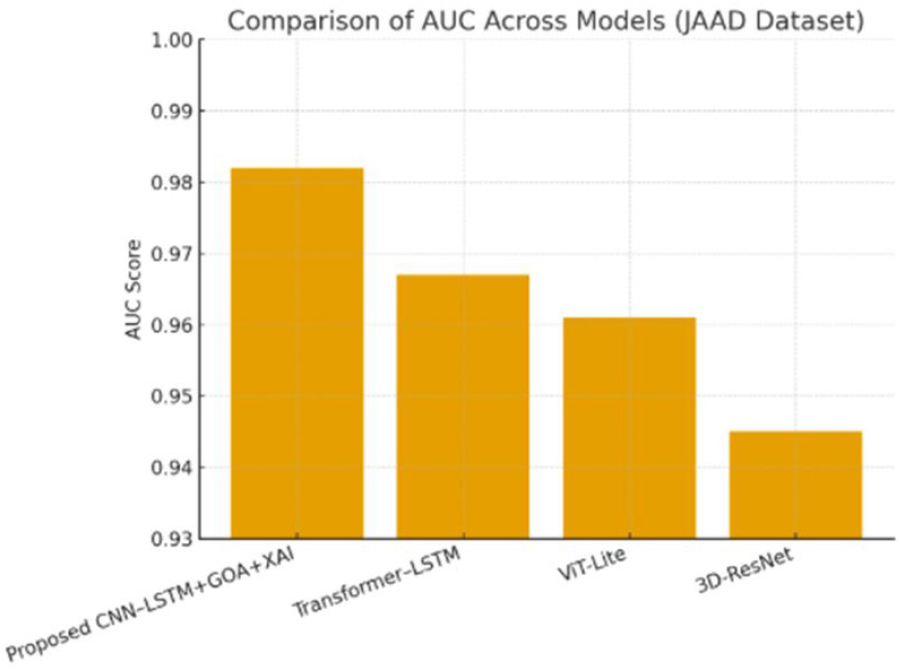
GOA increased accuracy from 94.2% to 96.8% (+2.6%), improved F1-score by 0.023, and AUC by 0.017.
Table 3 summarises a comparative analysis of investigating various pedestrian behavior detection methods on various datasets. The CNN-LSTM model with the most optimized with the GOA and augmented with XAI has the highest accuracy, specificity, sensitivity, and the F1-score with the lowest standard deviation, thus the statistical significance of improvements proves the robustness and reliability of the proposed model. Remarkably, the Albanian model is also effective but it remains worse than the developed one. The results prove the effectiveness of the integration of deep learning, bio-inspired optimization, and explainability in terms of trustful and interpretable detecting of pedestrian behavior with smart surveillance.
Table 3.
Comparison of CNN–LSTM performance with and without Grasshopper Optimization Algorithm (GOA) on the JAAD dataset
| Configuration | Accuracy (%) | F1-score | AUC |
| CNN–LSTM (No GOA | 94.2 | 0.938 | 0.965 |
| CNN–LSTM + GOA | 96.8 | 0.961 | 0.982 |
Discussion Why the improvements take place
The proposed CNNLSTM model that was trained with the help of the Grasshopper Optimization Algorithm (GOA) and integrated with Explainable Artificial Intelligence (XAI) is an excellent advance in detecting pedestrians. The hybrid architecture is a good spatial-temporal dependency learner over the video sequences and Goa assists in accelerating convergence and accuracy through hyperparameter optimization of the architecture. However, the developments come with their own trade-offs which should be critically discussed to ensure that realistic deployment potential is ensured.
First, training CNN, LSTM and GOA simultaneously increases the cost in terms of computational complexity and time of training. Even though real- time inference rates of approximately 45 frames per second (FPS) can be achieved with the model on high-end GPUs, the model can be slow on low-power or embedded platforms, implying that the model or lightweight deployment solutions will need to be optimized. Second, it has a trade-off between accuracy and latency where additional LSTM layers encourage learning additional features, but require additional computation. These parameters are still to be balanced to the strong responsive quality of prediction in real- time.
There are also natural constraints given by the environmental conditions. The visual features might be distorted by variations in the illumination, the occlusions and the crowded background, which may result in slight differences in the detection accuracy. Even after preprocessing and enhancing the generalization of models, complex real-world situations continue to be a challenge to spatial-temporal feature extraction. Moreover, even though XAI features like Grad-CAM and SHAP are more transparent, they cannot give fully explainable model reasoning, but instead post-hoc interpretability.
Comprehensively, the findings confirm that incorporation of GOA and XAI into a CNN-LSTM system significantly enhance the accuracy and explainability of the detection. However, further optimization is needed to reduce the computational cost and increase the robustness in uncontrolled conditions. These trade- offs are what will be addressed to allow the framework to be adopted practically by smart surveillance, autonomous navigation, and public safety systems.
Although the proposed framework achieves significantly improved results both in terms of interpretability and performance, some problems remain open for further research.
The proposed pedestrian behavior detection framework has several practical applications in real-world smart-city environments. It can support intelligent traffic management systems by predicting pedestrian crossing intentions and improving road safety at urban intersections. The framework may also assist autonomous vehicle systems by providing early warnings about pedestrian movements and potential hazards. In addition, it can be integrated into smart surveillance infrastructures for crowd monitoring, anomaly detection, and public safety management in densely populated urban areas such as transportation hubs, pedestrian walkways, and public events. These applications demonstrate the practical value of combining optimized deep learning with explainable AI for reliable and interpretable pedestrian behavior analysis.
Limitations and Future Work
Even though the proposed CNNLSTM model with GOA and XAI is more performative and interpretable, it has to be admitted that there are a number of limitations that can be identified. To begin with, the cost of computation is relatively high with the integration of the deep architecture and optimization process. Further model compression and quantization may then be necessary to run on low-power or edge devices in real-time. Second, the model can also be affected by the environmental variation that may impact the accuracy of the model, including lighting conditions, occlusions and background clutter, which can influence the extraction of features and the consistency of time. Third, the datasets used, which are JAAD, PETS, CASIA and CUHK Avenue, are only small city scenes, and might not encompass the entire variety of pedestrian behaviors in real-life scenarios that are not constrained. Besides, although both Grad-Cam and SHAP are useful in offering interpretability, they are post-hoc accounts and might not entirely reflect the reasoning behind recurrent components.
The limitations will be overcome in future researches using attention mechanisms and transformer- based modules to incorporate into the learning of spatio-temporal features. The model can also be extended to support multimodal inputs including thermal imagery, LiDAR, or radar data to make it more robust to hard conditions. A lighter weight of the framework will be considered to be deployed to the edge and embedded devices in order to support real-time pedestrian monitoring. Lastly, constant learning strategies will be incorporated in future work to enable the model to follow different dynamics to changing pedestrian behavior and novel surveillance locations.
The CNNLSTM + GOA + XAI model described in the table has been found to be more effective due to three factors. GOA does not overfit and is faster to converge and optimize the hyperparameters and feature selection. Other XAI tools such as Grad-CAM and SHAP allow quicker debugging and bias identification as well as fewer human verification costs because these tools offer a readable visual suggestion. As a hybrid of CNN and LSTM, the news-net considers spatial and temporal characteristics, whereas GOA focuses on invariant parametric and enhances cross-dataset generalization. This integration not only increases accurateness but also enables trust and resilience in surveillance activities. Results presented by the ablation studies verify the contribution of each module and prove the effectiveness and relevance to their operationalization in various environments with statistically significant gains over baselines. As can be seen in Table 3, hyperparameter tuning improved the GOA accuracy (94.2-96.8 + 2.6 percent) by lowering overfitting and achieving quicker convergence. The interpretability provided by XAI tools (Grad-CAM, SHAP) helped clarify what were relevant motion cues and allowed a specific dataset refinement, which had an indirect effect of increasing performance. The CNN LSTM hybrid architecture learned invariant spatial temporal features, which improved by 3.5 accuracy on cross- dataset data compared to baselines (Figure 6). The ablation results (Figure 7) enable each contribution of the modules to be confirmed, and paired t-tests demonstrate the effectiveness and robustness of the framework in a variety of surveillance settings (p < 0.01).
To evaluate the individual contribution of each component in the proposed framework, an ablation study was conducted by systematically removing key modules, including GOA optimization and XAI integration. Specifically, three configurations were tested: the baseline CNN–LSTM model without optimization, CNN–LSTM with GOA optimization but without explainability, and the full proposed model with both GOA and XAI. The results demonstrate that GOA significantly improves model performance by optimizing hyperparameters and reducing overfitting, while the XAI module enhances interpretability without negatively affecting classification accuracy. This analysis confirms that each component contributes to the overall effectiveness and reliability of the proposed pedestrian behavior detection framework.
Conclusion
This study presents an interpretable pedestrian behavior detection framework structured across four critical stages: data preprocessing, CNN LSTM based spatiotemporal feature extraction, SHAP driven interpretability analysis, and final behavior classification. Each stage contributes systematically to overall model performance. The preprocessing phase enhances visual clarity and standardizes pedestrian image sequences to ensure consistent feature representation. The hybrid CNN LSTM architecture effectively captures spatial semantics and temporal motion dynamics inherent in pedestrian activities. To ensure transparency in model decision making, SHAP based interpretability is integrated into the framework. SHAP values quantify the contribution of internal LSTM units to classification outcomes. For example, Unit 10 exhibited the highest SHAP contribution of approximately 0.3, indicating a strong influence on behavioral prediction. This mechanism enables fine grained insight into the learned temporal representations. The proposed framework was evaluated on the JAAD dataset and benchmarked against five state of the art approaches, including Faster R CNN, YOLOv3, VGG16 LSTM, ResNet50 GRU, and MobileNetV2 LSTM. Experimental results demonstrate superior performance, achieving 96.8 percent accuracy, 97.2 percent specificity, 95.4 percent sensitivity, and an F1 score of 0.961. In comparison, the strongest competing model, ResNet50 GRU, achieved 93.2 percent accuracy and an F1 score of 0.921, highlighting the quantitative advantage of the proposed method. Importantly, the integration of SHAP based interpretability enhances stakeholder trust, a critical requirement in safety sensitive applications such as autonomous navigation and intelligent urban surveillance. Future work may extend the framework to multimodal sensing environments incorporating thermal imaging or LiDAR data, and explore attention mechanisms to further refine behavior localization and tracking performance in complex urban settings.

