


Introduction
Research Question
Review of Sustainable Development Models
Methodology
Method
Data Collection
Context
Case Study application
Problems Identification
Build-up sustainable redevelopment Indicators
Delphi technique
Discussion of Results
Conclusion
Introduction
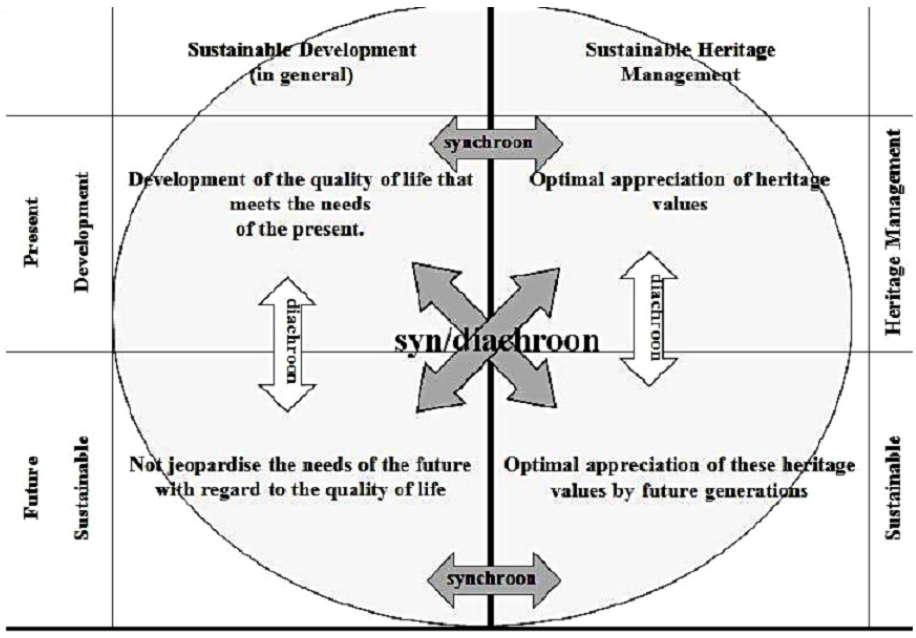
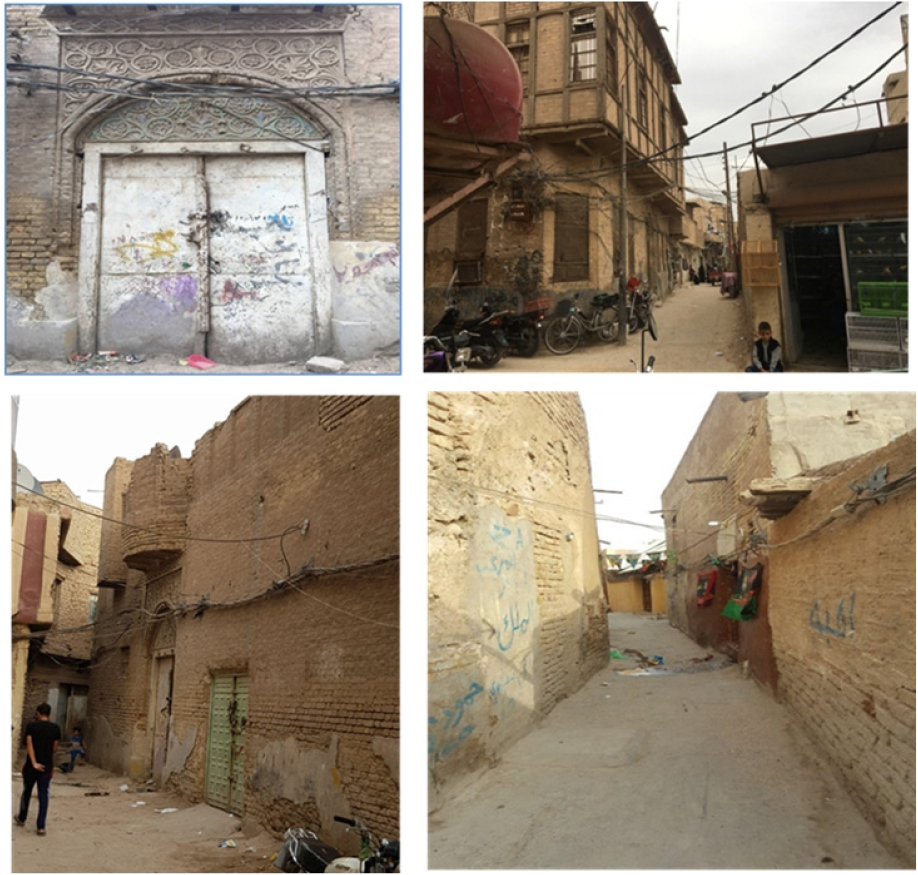
With a focus on sustainable development, the goals and desired beneficial outcomes of asset rehabilitation are examined as a challenging process. Instead of building new cities, sustainable development aims to reclaim abandoned land. Buildings and the entire infrastructure are being renovated as a result of his growth, making the area more desirable as a location for investment or habitation [1, 2]. An urban heritage city core can be found at the heart of many cities all over the world. In addition to offering their communities significant social, cultural, and economic benefits, they provide them with an exceptional sense of place and identity. Urban sprawl, population growth, and other issues that could lead to the neglect or even destruction of historic sites and buildings, unfortunately, frequently cause serious issues in these areas. In order to ensure sustainable development for future generations while preserving our common cultural heritage, urban heritage city centre must be revitalized. A thorough strategy that involving numerous stakeholders is necessary to accomplish this. Many cities struggle to finance significant projects due to limited resources and finances. Due to competing interests among various stakeholders, such initiatives frequently face a lack of political will or public support. Figure 1 show, that the greatest appreciation of heritage values improves all three dimensions of this interdisciplinary approach, enhancing quality of life in accordance with current requirements (synchronic). The conservation of growth plans for standard of living (syn-diachronic) and the realization of these historical values by future generations (diachronic). In all three directions, this is accurate. Multimodal analysis may have a negative impact on the cultural of protected old urban sections or Heritage sites, leading to an overabundance of tourist attractions, employment losses, and a reduction in picture quality. Less intergenerational responsibility and little community participation will result from this. Unsustainable heritage management has an impact on the historic modal, which will eventually be destroyed in a proactive manner. It will also be negatively impacted by the loss of scientific knowledge, the sense of an unfriendly environment, environmental contamination, and the ineffective utilization of land and structures. Furthermore, restoring historical structures can be difficult, time-consuming, and costly. Despite these challenges, revitalizing and protecting urban heritage city cores is critical for achieving sustainable development in communities. This not only helps to preserve the shared cultural heritage, but it also has economic benefits: by investing in historic building restoration, we create jobs and attract new businesses, which can increase tax revenues for local governments. Additionally, preserving historic sites gives locals special places to explore and enjoy while fostering a sense of community pride. Urban redevelopment is initially defined by Roberts [3] as a complete and integrated vision that solves urban issues and aims to enhance the economic, social, and environmental circumstances of a place that has undergone transformation. The components of sustainable development could be classified to environmental, economic, and social; they contend that in reality, each component of sustainability is handled by a number of redevelopment objectives [4]. Furthermore, sustainability evaluations should make allowance for interdependencies, economic, environmental, and social challenges, along with the long-term effects of current actions [5]. However, because of a number of issues and the participation of several parties, redevelopment is highly complicated. It is a complex task, thus it is essential that dangers and difficulties are recognized right away. When an old structure reaches the end of its useful life, it needs to be renovated. Over time there is appreciation in land and depreciation in building structure while providing an example of determining the best moment for renovation [6]. Once the value of the land exceeds the worth of the structure, it is much more acceptable to redevelop the building. This view is supported by the fact that the majority of the structures in Hilla’s historic district actually exist. Older buildings in Hilla’s city center have a lifespan of 40 to 150 years (Figure 2), but land value with existing development limitation laws is significantly more than the present worth of those buildings and their use. Numerous buildings in the city’s historic district undergo renovations regardless of their age or longevity. Sustainable urban redevelopment, which also acts as a policy agenda to improve social, environmental, and economic conditions, reduces the adverse effects of urban expansion [5]. The historic district of Hilla is expanding quickly. By increasing the value of the land, urban redevelopment activities, infrastructural growth, and rising land and construction demand all support the gentrification tendency. Hilla’s heritage city centre is unique due to the fact that it is not very old and experiencing fast transformation. Hilla’s considerable past as well as its quick transition helps to establish its perception as a dynamic, energetic city with deeply embedded heritage values. Rapid progress does, however, entail consequences. One the one hand, Hilla centre is valued for its historical relevance and heritage values by businesspeople, visitors, and urban planners. On the other hand, it is apparent that despite the city’s fast expansion and the requirement for urban renewal, Hilla historical assets and distinguishing traits must be preserved. This paper purposes to demonstrate how, Hilla urban growth and constructed heritage preservation may coexist and cooperate to assist one another. Also, it will demonstrate how historical values’ economic potential might aid urban development. Heritage values might be fabricated or even built from scratch in order to promote urban growth. Despite the fact that Iraq possesses several historical cities with worldwide historical significance, the Hilla is in the frontline of conservation. This kind of strategy may promote participation and awareness among stakeholders, communities, and decision-makers. Through sustainable urban redevelopment, which also helps developers and planners solve significant environmental concerns, the idea of sustainability is being spread among architects, planners, and developers [4]. Sustainable development has been cited as requiring the preservation of cultural heritage. The utilizing the city’s history necessitates that the entire city and surrounding area be maintained in top condition, and not just each individual structure [7]. In order to achieve a balance between the past and present of significant urban areas, adjustments should be made to a city’s tangible and intangible aspects as part of the larger goal of historical conservation. As a case study, urban and building rehabilitation plans have not yet been significantly influenced by sustainability. Recent research has been done to improve the connection between sustainability and building or urban rehabilitation in worldwide practices. The rationale for conducting this study, As we have seen from the literature review, there is a real need to develop a new methodology. This methodology is essential for the formulation and selection of indicators to assess sustainability, with a composite framework approach [8]. The contribution of the study to the existing literature is the proposed approach offers a considerable advance in how heritage is appraised in connection to the overall objectives of urban sustainability. The finding of common indicators between urban development and heritage conservation may assist in anticipating issues, identifying priorities, and giving baseline knowledge to support more and better sustainable practices in urban redevelopment [9]. The conflict of forces to transform the city centre and its historical assets needs new strategies emphasizing the necessity of sustainable development in the old city centre. In other words, it must evaluate the current city centre, its historical relevance and values, as well as its application for the redevelopment purposes.
Research Question
The research question was developed to explore how to apply the redevelopment model inside urban historic sites as a step toward sustainability. The primary idea is that revitalizing and protecting urban heritage city center is critical for achieving sustainable development. This study aims to shed more light on the importance of preserving urban history and how to remove impediments to the advancement of the sustainability paradigm. There is a lack of studies and frameworks that can be successfully used in cities at the local level, prompting the research question: “How can we create a methodology for evaluating local sustainability indicators and encouraging the reconstruction of heritage urban districts?”
Review of Sustainable Development Models
Sustainable development is an evolving concept, and heritage is now recognized to have great potential in contributing to social, economic and environmental sustainability goals. Heritage conservation has improved quality of life and reduced carbon emissions [11]. The new urban agenda recognizes heritage as an important factor for urban sustainable development, but there is no general consensus on how to best approach and deal with it. Examining the current redevelopment models is one way to identify the key components of a strong model for assessing sustainability and comprehend the advantages and disadvantages of each model. For the strategic and operational evaluation of sustainable urban redevelopment, a number of methods and tools have recently been developed, reporting through indicators [12]. These tools are well-liked because they can evaluate urban management performance and competitiveness in the context of sustainability goals [13]. Sustainability analyses provide metrics for activity outcomes and a way to track them over time [14]. They also serve as investment recommendations. They make it possible to set the objectives and support the decision- making procedures. Since they frequently serve multiple functions, they are crucial in operational calculations for the planners, the administrators, the legislators, and the decision-makers.
A 2016 study found that the most effective method for assessing the objectivity of sustainable project and policy scopes is rating systems. There are few indicators of heritage status and little scholarly literature devoted to heritage [9]. A set of metrics that can be used to evaluate the potential contribution that heritage can make to sustainable development must be developed because of these factors [15]. Indicators of sustainability may be evaluated using a variety of techniques for creating sustainable redevelopment models [16]. Due to its inherent complexity and ambiguity, sustainable development is challenging to evaluate and quantify. To assist organize such complexity for the sake of information exchange and decision making, it is necessary to have a complete grasp of the linkages between diverse environmental, economic, and social variables [17, 18, 19, 20, 21]. The definition of sustainable development by [22], which strives to provide a systematic framework for developing indicators and information systems, is a key classic text in this area. The primary model types that may be used to create sustainable redevelopment models are combination models [23]. The problem with these approaches is that there is no connection between sustainability goals and sustainability indicators. Three fundamental conceptual frameworks are listed by [24] as being used by indicator initiatives in all throughout the world, which are 1) A framework for measuring regional sustainability that centers on a long-term outlook for the area; 2) Short-term goal models that don’t attempt to satisfy the requirement to show relationships between indicator regions; 3) Models that emphasize performance assessment. These models’ flaws include their emphasis on Bottom level (Local community) without top level (Expertise). Model is unique in that it incorporates ideas like domains, system orientators, and capitals [25]. Five categories of models are described by [26]: domain, goal, sectoral, issue, and causal frameworks. These models’ flaw is that there is no link between Top and Bottom. Al-Alwani [8] created a methodology to help with local Middle Eastern municipal assessments of sustainability. The disadvantage in this model is focusing on the Top level more than Bottom level. Each of these models and methodologies in above has weaknesses.
Methodology
In order to investigate a unique and information rich case that was selected for the in-depth study, this work used a mixed qualitative approach.
Method
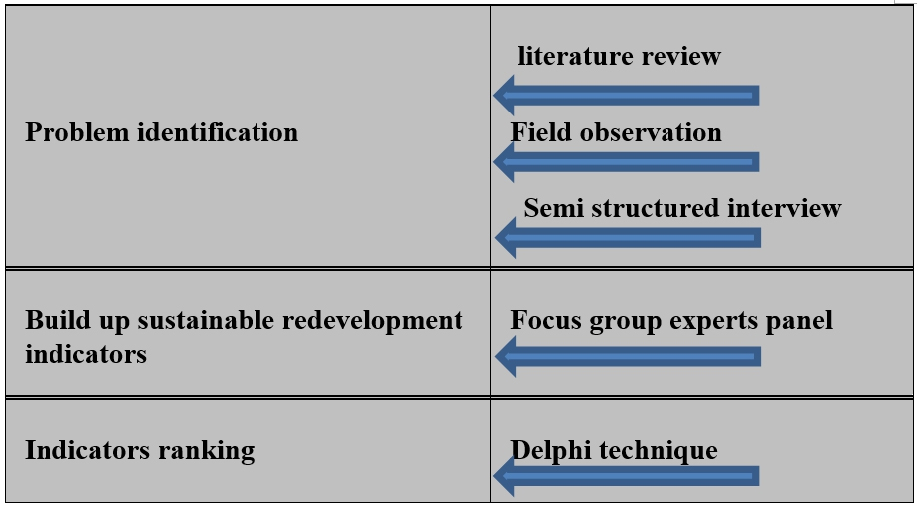
This paper employs an analytical and descriptive methodology. With the help of this study, a fresh framework for assessing redevelopment projects’ sustainability performance will be created. For the investigation of a single case study, this model has been chosen. One instance may satisfy every need for evaluating the theory, whether to confirm, refute, or expand it. The theory proposition can then be evaluated against the single case (Hilla) to see if it is true or whether another possibility is more pertinent. Data from single or numerous studies are often applied to theories rather than to populations, hence they might be used to support theories but not populations [27]. This research is qualitative and quantitative; weighting factors had been used to analyze the data obtained and focuses on the factors that have direct relevance to the approach to urban redevelopment. These significant determinants were developed based on the theoretical background that established the three major factors which are environmental, social and economic factors. Urban redevelopment is an integrated action that is emerging with the purposes to catch long-term answers to the problems of issues such as physical, social, economic and environmental by participation and cooperation [28]. In this research a model composed of five key stages (Figure 3) was utilized to assess the social, environmental, and economic sustainability of the redevelopment project. One of the main advantages of this method is that it can be used as a tool for ranking indicators to confirm covered and ignored issues [29]. It raises the ability of indicators to be easier to recognize and to help transfer valuable information to decision makers [30]. However, the disadvantage is that it is quite modest and does not collect some of the complex interrelationships between a diversity of the dimensions of sustainability [30].
Data Collection
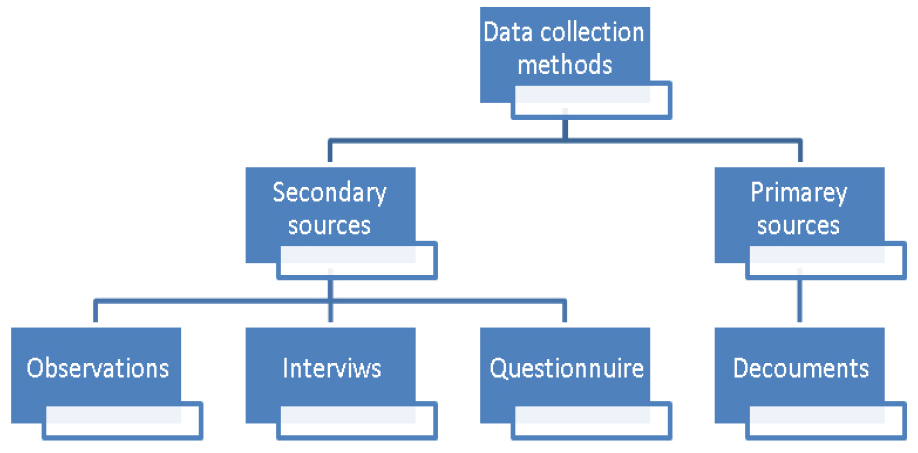
Accurate data collection is essential for maintaining the integrity of research. By selecting the right data collection tools (Figure 4) and outlining how to use them correctly, the likelihood of errors is reduced. A formal process for data collection is necessary to ensure that the data is precise and well-defined. This provides a basis for comparison and offers a suggestion of areas for improvement. In this research five techniques for gathering data were used and highlighted in the following subsections as follow:
Wide ranging review of literature
As a conceptual step, data was gathered from many sources, such as prior studies, official reports, and government papers, followed by a study of urban sustainability and a comparison of worldwide evaluation methodologies. This research started with a look at the literature on urban redevelopment as a concept, as well as a sustainability evaluation for urban regeneration initiatives. Various materials, including published government reports, census data, books, articles, formal studies, research reports, and items appearing on websites and in the media, were studied as part of the literature study. Furthermore, official and academic documents as well as statistical information regarding the case study regeneration have been analysed. Reviewing the available case study literature makes it clear that there is a lack of an all-encompassing policy of urban development that would direct laws in accordance with the demands of the contemporary socio-economic reality. Additionally, some of these rules and regulations can be at odds with the fresh redevelopment ideas. The literature review findings from the first stage were synthesized to reveal the relevant indicator or criteria. It explains the concepts represented in the analysis and to formulate the requirements for developing the model. These criteria were further refined in the second and third stages conducted with number of experts from various backgrounds of the case study.
Field observation
Following the literature review, to gather information for the case-study analysis, a field investigation was carried out on-site. It’s crucial together data from various sources when performing a case-study analysis. Field observation is one of the best ways to achieve this. Field observation can offer important insights into how people interact with and experience the subject matter in real life after completing a literature review, which gives an overview of the available research on the subject. During the field research, researchers visited the case study area several times to conduct interviews and to make the surveys. During the site visits, researchers made observations in relation to sustainability. During the field research, researchers visited the case study area several times to conduct the interviews, to make the surveys, and to make their own observations in the area in relation to sustainability. The primary sources of data gathering for the study included interviews, questionnaires, and the researchers’ personal observations. The indicators to assess the case study were carried out using the data and information gathered during the field investigation. Taking pictures of buildings and observing the surroundings of the site, which may have an impact on building condition, are also included in this phase. Understanding the construction of historical structures and the history of urban development is also necessary for the case study process.
Semi-structured interview
Using open-ended questions, a large number of interviews were done to look at how locals and stakeholders saw the difficulties associated with urban redevelopment in a case study. In this case study, the local residents and the stakeholders which have knowledge of urban redevelopment projects in their community participated in semi-structured interviews. Through these discussions, researchers were able to identify recurring themes regarding the difficulties encountered when implementing such projects, including: a lack of resources; poor communication between the various parties involved; difficulty obtaining necessary permits; and resistance from existing residents due to concern over displacement or lifestyle changes brought on by new development plans. The public’s goals for tackling local urban concerns were elicited through the interview process. One of the most effective methods for acquiring information to comprehend certain approaches to urban change has shown to be conducting interviews. As a result, this article is based on a theoretical research, a geographical analysis, and analytical talks with provincial councils, local authorities, architects, planners, decision makers (government officials), religious academics, local inhabitants, and regular visitors to the city. In a case study, twenty interviews were done.
Focus group
Discussions and consultation with a panel of experts resulted in the development of a list of local evaluation components. It takes expert advice to sort the criteria found during the literature review and stakeholder interview so that you can understand their local importance. A panel of experts has been established from significant stakeholder groups, including academia, government, and industry. Together, this group evaluates potential paths for social, environmental, and economic growth while speculating on possible future occurrences and scenarios to depict them throughout the visioning stage. This study aims to offer a number of sustainability measures. It was found through this focus group that the development technique was sufficient and the signals were reliable. The focus group method is used in this study in order to focus on problems and wishes connected to local sustainability as well as gathering qualitative information and perspectives from a group of people [31].
Questionnaire survey
On the basis of iterative questionnaire consultation with expert panels, Delphi is utilized to develop the proper weightings indicators. Panelists were (six experts from the city of Hilla four experts with academic qualifications and two with relevant experience) selected based on their record of publications in the fields of sustainability, urban regeneration, planning, and development, as well as their standing in research and reputation on both the national and international levels. Those in the public sector such as planners, economic development and urban regeneration consultants as well as policymakers legislators, real estate developers, regeneration consultants, and others are all represented. After a sufficient level of consensus was attained by using a Delphi technique, the expert responses were gathered on a 5-point Likert-type scale, ranging from unimportant to highly important. Experts were given a thorough list of the indicators of redevelopment along with a questionnaire that ranked each indicator’s relative value on an important scale.
Case study
The researchers conducted case studies with the aim of completing a thorough investigation of the area to find and describe the phenomena and the essential elements [32]. Additionally, a thorough examination of a case study’s duration frequently forms part of the research design or, at the very least, requires the use of data. Additionally, by reproducing the correlated patterns, the consideration of multiple case studies contributes to a more reliable result, enhancing the validity and robustness of the theory. Additionally, a three stage procedure is included. The new model was evaluated in a case study to guarantee its dependability. Validating and testing the models before implementing them is a crucial step in ensuring the success of urban redevelopment initiatives. Teams can be sure that their models will function as expected once deployed in cities all over the world by utilizing these techniques during the development phase, such as running simulations based on real-world scenarios. Now that it is aware of this, it is able to anticipate even greater advancements made possible by novel solutions, like those offered by our recently tested framework. Verification and testing are necessary for any urban redevelopment project to be successful. Teams can make sure that their plans will work in practical situations and produce the best results for citizens by taking the time to evaluate frameworks prior to implementation. The final outcomes will be verified and tested by applying the framework to specific urban redevelopment initiatives.
Context
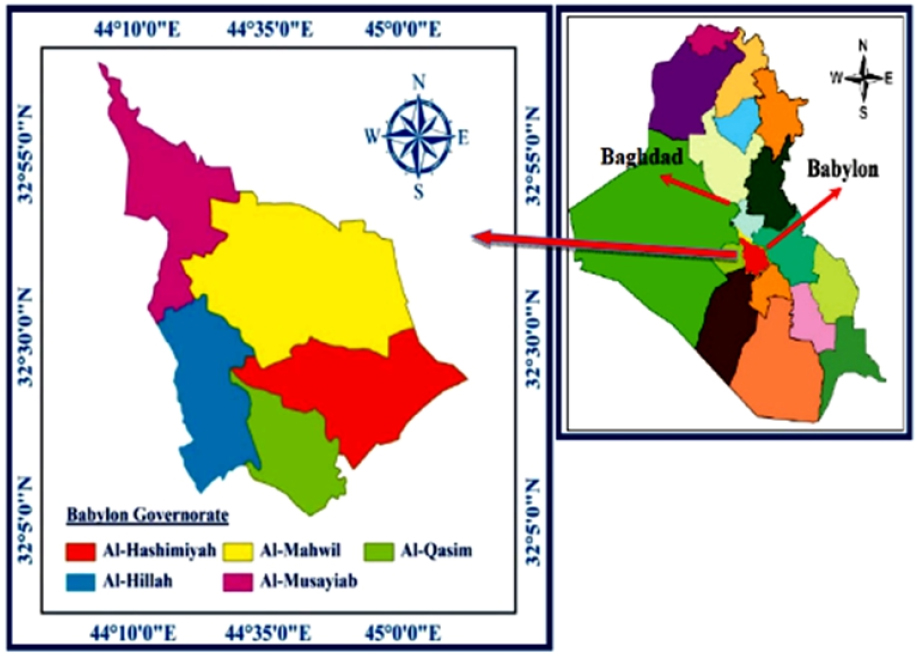
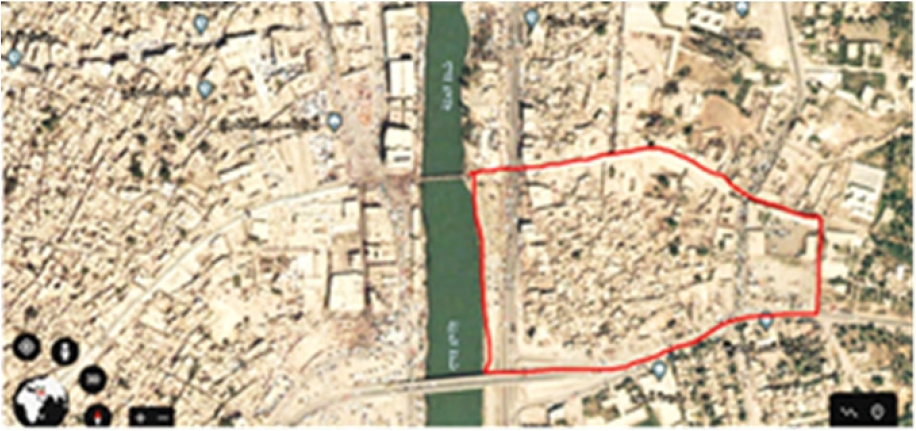
This study concentrated on Hilla, the provincial capital of Iraq’s Babel province, has a rich history and culture. Hilla, located on the banks of the Euphrates River, has long been an important trading and commercial center. Because of its archaeological sites and monuments, it has grown in popularity as a tourist destination in recent years. It is situated at 32.46 latitude and 44.42 longitude (Figure 5). The city of Hilla extends along the eastern and western banks of the Euphrates River. The city has an area of about (5243) hectares and a total population density of (63.71 people/ha). The part that is to be redeveloped in this paper consists of 2 residential neighborhoods. This city was chosen because it possesses traits common to many other Middle Eastern nations and contains a significant number of distinctive cultural heritages that have not yet been certified as cultural heritage structures (Figure 6). Due to its close vicinity to the ancient city of Babylon, which has given the city a great relevance in terms of development potential, Hilla has a unique chance. Additionally, it is one of the major Iraqi cities, and its central business district is home to a large number of viable old buildings. The city has made a concerted effort to appreciate the value of and renovate this old building stock. The case study was also, chosen because it was thought that it may serve as a suitable illustration for the examination of local urban redevelopment strategies and serve as an example of the lessons that can be gained from local redevelopment initiatives.
Case Study application
The research started with literature reviews on urban redevelopment concept and sustainability assessment for urban redevelopment projects. Numerous materials, including officially released reports, census data, books, articles, formal studies, research papers, articles from websites and media, have been examined. To gather data and information for the case study analysis, a field study had been carried out locally after the literature review. During the field research, several interviews were made with many stakeholders and local people living in the city.
The interviews and survey are consisted of questions such as: What are problems and challenges in your city? What are your wishes for redevelopment your city? How can your city be improved in your view? The focus group had been conducted and consists of expertise to build -up a list of indicators and the final form of the assessment model was achieved through Questionnaire survey (Delphi technique).
Problems Identification
This research study is focused on building a model for redevelopment assessment of old building with emphasis on sustainable redevelopment in old part in Hilla. The primary sources of data for the study were surveys, interviews, fieldwork, and the researchers’ personal observations in addition to analysis of the literature to determine the key difficulties or concerns of local sustainability in the city of Hilla, Iraq, as the chosen case study. The indicator-based evaluation of the case study was conducted using the data and information (Table 1) gathered during the field investigation.
Table 1.
some problems that investigated at the case study
Build-up sustainable redevelopment Indicators
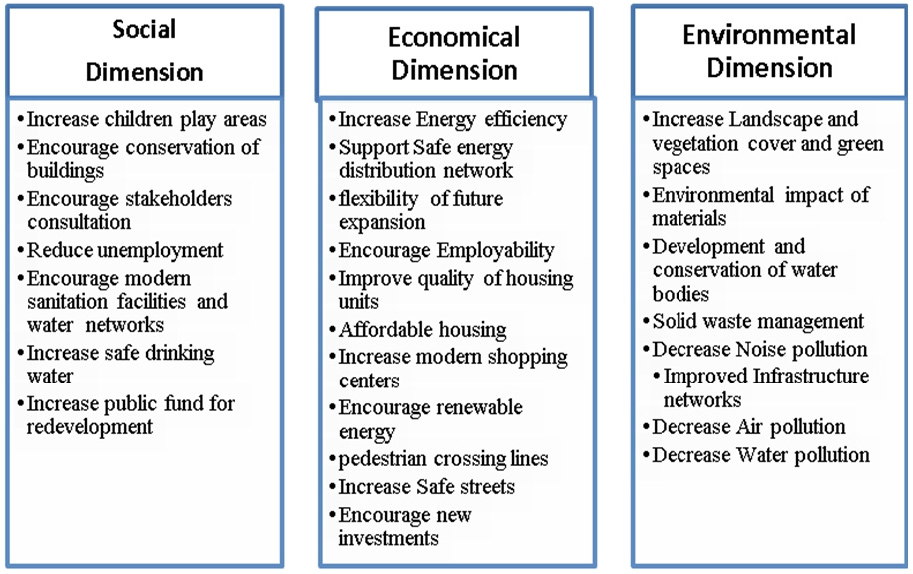
For efficient group discussions, it is advised that the size be between six and twelve [34]. Ten people were in the focus group for this case study. Each indication had been constructed using a logic process that was devised in cooperation with the experts from various disciplines present at this focus group, and all concerns expressed were organized into their associated dimensions as shown in Figure 7.
Delphi technique
The Delphi approach was used to generate group agreement based on expert opinions when the intended redevelopment indicators were met [35]. Experts with comprehensive knowledge of linked topics and skilled specialists participated. The use of the multi-stage Delphi approach in two rounds as an iterative application allowed participants to review their judgments and provide more insight and information as needed after taking into account the previous experts’ replies at the focus group [36]. Two crucial rounds of the Delphi approach were used in this study: idea generation to help restrict the field or insight. Delphi searches for as much more information as it can simultaneously in order to educate and foster consensus by fusing a wide variety of expert viewpoints [37]. In the second round, ratings or rankings are included, as seen in Figure 8. It comprises the involvement of experts who were chosen for their expertise, position, and specialty as well as their understanding of various environmental factors, social and economic challenges, urban planning and design, and political concerns pertaining to urban regions.
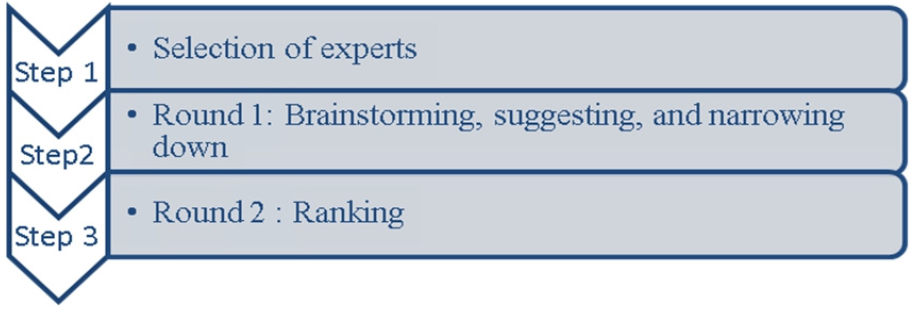
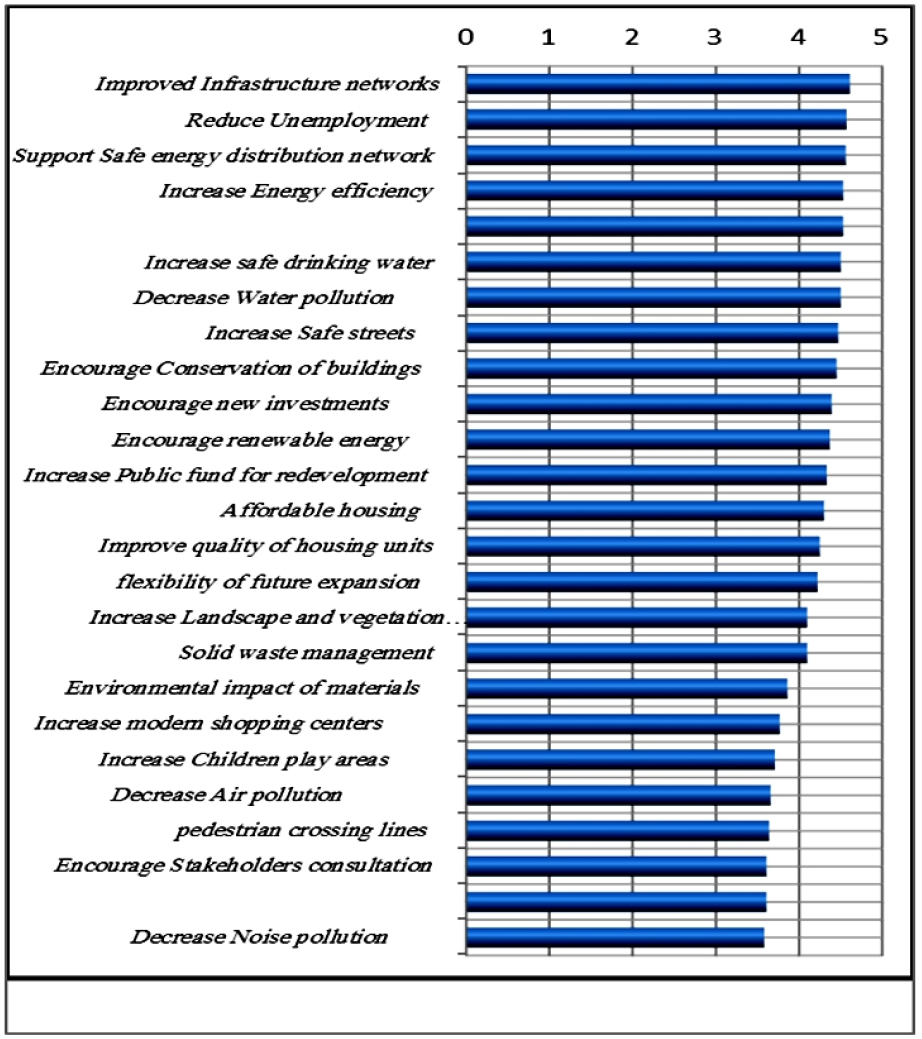
Following the first round of Delphi questionnaires, expert opinion showed that there was no extension of the original list of indicators and no modifications in the indicators found in the previous phase (focus group). They were then moved into the quantitative stage to determine their relative relevance. A questionnaire with an itemized rating system was used to rank indications on a priority basis, with forty experts participating in practice. The replies were tallied on a Likert-type scale with five possible outcomes: insignificant (1), of little relevance (2), slightly important (3), important (4), and highly important (5). This led to the creation of the ultimate list of suggested model urban redevelopment indicators, which is shown in Table 2 and Figure 9 include three main dimensions and 25 urban indicators that are prioritized.
Table 2.
Round 2 Delphi results and analysis
Discussion of Results
The research establishes to address the main research question: “How can we create a methodology for evaluating sustainability indicators and encouraging the reconstruction of historic urban districts? In order to address this main research question, the research in this paper built a new methodology to develop suitable local sustainability indicators to facilitate assessment of local sustainability and verified the new methodology for its applicability in heritage part for city of Hilla as a case study. The replies were tallied on a Likert-type scale with five possible outcomes: insignificant (1), of little relevance (2), slightly important (3), important (4), and highly important (5). This led to the creation of the ultimate list of suggested model urban redevelopment indicators, which is shown in Figure 7 includes three main dimensions and 25 urban indicators that are prioritized. The indicator with the greatest priority is “Improved Infrastructure networks,” which is followed by “Reduce unemployment” indicator, “Encourage Employability” indicator, “Energy Distribution Network” indicator, “Energy efficiency” indicator, and “Modern Sanitation Facilities and Water Networks” indicator. The respondents ranked the conservation of water bodies as being more essential than reducing noise pollution, which had the lowest mean score and greatest sustainability. These results demonstrate that the model is founded on an awareness of the main problems and obstacles associated with local urban regeneration. According to Figure 7, these results may appear unexpected at first sight, but they are really common and expected, particularly in a nation like Iraq where several conflicts have contributed to poverty and instability. Participants also gave priority to these issues since Hilla struggles much in them and because they speak to the needs of the neighborhood. Analysis reveals that participation in heritage is the key element that has the greatest potential to lead to long-term sustainable development. Neighborhood residents were unable to take part in the consultation process due to the lack of formal structures, and many were unclear about the heritage policy. To effectively communicate protection, there needs to be a point of contact between the general public and the local government. By comparing the results obtained in the fieldwork with the theory in literature review, we can confirm that. The new methodology in this paper successfully collected related social, economic, environmental and institutional problems in the heritage part of the city of Hilla over the use of source document analysis, interviews and focus groups.
Conclusion
A strategy for assessing sustainability in redevelopment is crucial for tracking the benefits and drawbacks that developed projects offer. By exploring the connection between urban renewal and the population’s attitude toward cultural heritage assets 35 (Smith and Williams, 1986), the economic value of historical assets in the historic city center, perceptions of the historical center and its messages 36 (Boyer, 1996), and other factors, it is possible to better understand the relationship between the conservation process and urban renewal in the old city center. The evaluation of social, economic, and environmental regeneration processes depends heavily on their indicators. Rebuilding cities sustainably requires addressing social, environmental, and economic issues concurrently. To bridge the gap between managing cultural heritage and sustainable development, a model has been created. This article seeks to provide a novel model for heritage-related sustainability indicators that depart from this assumption. The suggested model represents a sizable improvement in heritage evaluation in relation to the broad goals of urban sustainable development. In point of fact, the identification of indicators that are shared by heritage management and urban development could assist in anticipating difficulties, establishing priorities, and providing baseline information to encourage more and better sustainable practices in urban development. (Guzman et al., 2017a). The 26 indicators that make up the model established for this study were chosen using a multistage model that involved locals, shareholders, and expert advice. The model was then modified and graded through two iterative rounds of the Delphi exercise. The study’s weighting system, which was recently designed, prioritizes and reflects the problems that metropolitan areas confront. Finally, this model may be used to evaluate the effectiveness of rehabilitation initiatives and provide a tool for reviewing and improving urban redevelopment methods. Additionally, it may be useful in creating new urban redevelopment evaluation tools or changing the existing tools to make urban redevelopment more sustainable and contribute to a sustainable society in general. The contributions of the study in this paper by adding information and thoughtful of the development of a sustainability methodology in the heritage part of the city. The implementation of the study approach and subsequent findings have the potential to greatly impact various academic fields, as well as contribute to the enhancement of sustainable redevelopment initiatives. By examining the intricate connections between different disciplines, we gain a more comprehensive understanding of the challenges we may face in promoting sustainable solutions. Furthermore, the results derived from this research may inspire other institutions to adopt similar strategies, leading to a collective effort in promoting sustainable redevelopment. The main strength of this study is the creation of a comprehensive evaluation tool with a solid theoretical and practical foundation that first addresses the subjectivity of sustainability development. By combining broad indicators with specialized indicators and sub-indicators, it expands contextual evaluation flexibility. In essence, our research serves as a stepping stone in the pursuit of interdisciplinary collaboration and the ultimate goal of creating a greener, more sustainable future for generations to come. There was a need to hold the goals of indicator measurements, but there was a limitation such as funding and time prevented this. Thus, it would be desirable to do suggestions for future research work of goal setting in order to prove goal achievement. Moreover, the proposed model should be used by researchers to various geographical case study regions, and should be updated correspondingly.

