


Introduction
Literature Review
Greenwashing
PESTEL model
Fraud Triangle Theory
Research context
Hypothesis Development
Research Methodology
Design
Development of the questionnaire
Sampling and collection of data
PLS-SEM method
Results and Hypothesis Testing
Common method bias
Convergent and discriminant validity
Structural model evaluation
Discussions
Relationship between social factors and corporate greenwashing
Relationship between economic factors and corporate greenwashing
Relationship between environmental factors and corporate greenwashing
Relationship between legal factors and corporate greenwashing
Relationship between political, technological factors, and corporate greenwashing
Research implications
Conclusions
Appendix
Introduction
Construction activities negatively affect the environment, including habitat destruction, air and water pollution, and resource depletion [1]. The cost of mitigating these impacts can be high, which may deter many firms from adopting comprehensive environmental measures [2]. Sustainable practices, such as using eco-friendly materials and implementing waste-reduction strategies, often require significant financial investments, making them less attractive to companies focused on short-term profitability [3]. Governmental regulations [3] and increasing client demand for sustainable construction [4] push firms toward more environmentally friendly practices. However, Chen et al. [5] witnessed many construction firms resort to greenwashing to meet these expectations without incurring high costs. Wang et al. [6] noted that this tactic involves overstating their environmental efforts and achievements through marketing and communication rather than making substantial changes to their actual practices. This practice undermines environmental improvements and misleads stakeholders about the company’s real environmental impact [7].
Greenwashing behavior can be viewed from internal and external aspects. Internal factors (i.e., organizational culture, leadership, and resource allocation) reflect a firm’s internal management of sustainability initiatives [8]. In contrast, external factors (i.e., regulatory pressures, market demands, and societal expectations) define the context within which firms operate [9]. Internal factors primarily influence a firm’s motivations and capabilities, which remain within its direct control [10]. On the other hand, external factors exert pressures on firms that they must adapt to, shaping their business strategies [3]. While both internal and external factors are significant, Li et al. [9] argued that external factors are often the primary drivers of greenwashing. Zhang et al. [11] reinforced this view by highlighting that external pressures from governments, stakeholders, and the market can compel firms to adopt sustainability practices or resort to greenwashing.
Researchers have increasingly focused on how external environmental factors influence greenwashing practices in recent years. Prior studies separately examined the roles of government policy [3], social media [12], customer demand for green products [13], technological advancements [14], and financial incentives [9] in corporate greenwash. These studies highlighted that the external environment impacts corporate greenwashing in several ways. However, these studies examined external organizational factors only discretely in relation to greenwashing behavior. This approach overlooks the general context in which greenwashing occurs, limiting the ability to understand the comprehensive reasons behind such behavior. In other words, these studies may fail to account for the effects of different external forces that explain corporate greenwashing. In contrast, a holistic approach integrates these diverse elements, providing a more precise and comprehensive picture of how they collectively shape corporate practices [15]. By examining the roles of different external factors, researchers can uncover the synergistic and sometimes contradictory effects that contribute to greenwashing. This comprehensive perspective would enable a deeper understanding of the collective influence of external environments on greenwashing. This knowledge helps to form effective policies and interventions that address the root causes of greenwashing. It also helps businesses develop genuine, credible sustainability strategies [16].
There is still a lack of studies that holistically examine how external environmental factors affect corporate greenwashing, especially in the construction sector. The present study aims to extend the current greenwashing literature by addressing the following research questions:
∙RQ1: What external environmental factors foster corporate greenwashing?
∙RQ2: What external environmental factors hinder corporate greenwashing?
To address these research questions, this study employed the PESTEL model (political, economic, social, technological, environmental, and legal factors) to categorize external factors. The Fraud Triangle Theory (FTT) was used as a theoretical lens to explain the relationship between PESTEL factors and corporate greenwash through its three components: pressure, opportunity, and rationalization. Specifically, political and regulatory pressures, as well as economic and market demands, can pressure firms to project an environmentally responsible image [17]. Weak legal enforcement and available technological tools may provide opportunities for companies to engage in greenwashing without significant consequences. Social and cultural norms might lead to rationalizations, justifying greenwashing as a competitive strategy or as a means of meeting stakeholder expectations [18].
This study makes several contributions to the literature. First, the study clarifies which factors promote, hinder, or do not affect greenwashing, offering a comprehensive understanding of external pressures that drive or mitigate deceptive sustainability practices. Second, the findings can inform the formulation of targeted regulations and guidelines for policymakers. Policymakers can design more effective measures to curb deceptive practices and enhance corporate transparency by identifying which external factors contribute to greenwashing. Third, the study provides strategic insights for business planning. Understanding which external factors influence greenwashing allows firms to develop strategies that align with genuine sustainability goals and avoid practices that could damage their reputation. This knowledge helps companies navigate external pressures more effectively, fostering genuine commitment to sustainable practices and improving their corporate responsibility.
Literature Review
Greenwashing
Greenwashing refers to misleading stakeholders about the environmental benefits of a company’s products or practices [19]. The concept was first highlighted by environmentalist Jay Westerveld in 1986, who criticized hotels for promoting towel reuse programs as eco-friendly while failing to address broader environmental issues [20]. The term gained prominence as companies began recognizing the growing consumer demand for environmentally friendly products and sought to capitalize on this trend without substantially changing their operations [11].
Firms engage in greenwashing for several reasons. Zhang [21] acknowledged that it allows them to capitalize on the growing consumer preference for sustainable products without incurring the costs of genuine environmental improvements. As environmental concerns become more mainstream, companies face pressure from consumers and regulators to demonstrate their commitment to sustainability. Greenwashing offers a way to present an eco-friendly image [22] while avoiding the financial burden of substantial changes to business practices [19]. Li et al. [19] also highlighted that greenwashing can help firms gain a competitive advantage by differentiating their products in a crowded market. By positioning themselves as environmentally responsible, companies can attract environmentally conscious consumers and enhance their brand reputation [23]. This practice is often driven by the desire to maintain or increase market share and profitability in an increasingly eco-aware marketplace.
However, the negative aspects of greenwashing are significant. [11] noted that it undermines genuine efforts toward environmental sustainability by creating a false sense of progress. When companies exaggerate their environmental accomplishments, they divert attention from real issues and reduce the pressure on firms to implement meaningful changes. This practice can erode consumer trust and foster skepticism toward all corporate environmental claims, making it harder for genuinely sustainable companies to stand out [20]. Greenwashing also has broader environmental impacts. Kim and Lyon [24] argued that it could delay necessary regulatory reforms and perpetuate harmful practices, as companies that engage in greenwashing may not take the steps needed to reduce their actual environmental footprint. This undermines collective efforts to address pressing global environmental challenges, such as climate change and resource depletion [9].
Greenwashing can manifest in several distinct forms, rather than a single uniform behavior [11]. Prior studies have identified common types such as vague claims, selective disclosure, and the use of irrelevant imagery. Vague claims refer to ambiguous terms such as “eco- friendly” without clear evidence or verification. Selective disclosure occurs when firms highlight positive environmental actions while concealing negative impacts. Irrelevant imagery involves using natural symbols or visuals that imply sustainability without substantiating those claims. In this study, greenwashing is measured as a general behavioral construct reflecting misleading environmental communication. The measurement captures perceptions of firms’ exaggerated or unsubstantiated sustainability claims. Although specific typologies are not separately modeled, the items implicitly reflect common practices such as selective disclosure and symbolic communication. This approach is appropriate for examining the overall influence of external environmental factors on greenwashing behavior.
PESTEL model
The PESTEL model is a strategic tool for analyzing the external macro-environmental factors that affect an organization [25]. PESTEL refers to political, economic, social, technological, environmental, and legal factors. Each aspect shows how external factors influence a company’s operations and strategy [15]. Political factors include government policies and regulations that can impact business activities, while economic factors encompass conditions such as inflation and growth rates [16]. Social factors consider demographic trends and cultural attitudes; technological factors focus on advancements and innovations; environmental factors address ecological concerns; and legal factors involve laws and regulations affecting business operations [26].
The PESTEL model is useful for understanding how external factors contribute to or mitigate greenwashing. Depending on their stringency, political factors can constrain or encourage greenwashing [21]. Economic pressures may drive companies to exaggerate their environmental efforts to appear more sustainable without substantial changes [27]. Social factors, including heightened consumer awareness and demand for genuine sustainability, can pressure companies to avoid greenwashing or expose misleading claims [28]. Technological advancements can enhance transparency and reporting, potentially reducing greenwashing [14]. By applying the PESTEL model, researchers and analysts can gain a comprehensive view of how these external factors [15] interact to shape greenwashing practices within different industries.
Fraud Triangle Theory
The Fraud Triangle Theory (FTT), introduced by criminologist Donald Cressey in the early 1950s. FTT has significantly influenced the understanding of organizational fraud [29]. Cressey’s research into embezzlement identified three core factors that drive fraudulent behavior: pressure, opportunity, and rationalization [30]. These elements form the vertices of the Fraud Triangle and provide a framework for analyzing and preventing fraud within organizations. Cressey’s theory underscored the importance of systemic factors over individual failings. Therefore, FTT highlights how organizational environments can create conditions conducive to fraud [31].
In organizations, the meaning of the FTT lies in its explanation of how structural weaknesses and cultural factors contribute to fraudulent behavior. Pressure in an organizational context can stem from financial targets, economic downturns, or competitive pressures. Opportunities arise from inadequate internal controls, a lack of oversight, or complex organizational structures that obscure accountability [32]. Rationalization is facilitated by a corporate culture that implicitly condones unethical behavior or by ambiguous ethical standards. This theory helps organizations recognize that addressing fraud requires more than monitoring individual behavior; it involves creating a robust environment that mitigates these three factors.
When applied to the study of greenwashing, FTT offers valuable insights into the factors that contribute to deceptive environmental practices [33]. Pressure in this context often comes from competitive markets and the growing demand for sustainable products, pushing companies to appear environmentally friendly [21]. Opportunities arise from weak regulatory frameworks, inadequate enforcement of environmental laws, and the complexity of verifying green claims, allowing companies to exaggerate their sustainability efforts with little risk of detection [5]. Rationalization occurs when companies justify greenwashing by believing it is a temporary measure until they can achieve genuine sustainability, or by viewing their deceptive practices as less harmful than competitors’ [33]. By examining these elements through the FTT, researchers can better understand how greenwashing occurs. This approach helps uncover how each component contributes to deceptive practices and highlights potential areas for improving transparency and accountability in environmental reporting.
Greenwashing is conceptualized as a form of organizational fraud, making it consistent with the FTT. Pressure arises from market competition and stakeholder expectations, motivating firms to present a sustainable image. Opportunity is created by weak legal enforcement and limited monitoring systems, which reduce the risk of detection. Rationalization occurs when firms justify greenwashing as a common industry practice or a necessary competitive strategy.
To clarify the link between external environmental conditions and fraudulent behavior, this study integrates the PESTEL framework with the FTT components. Table 1 summarizes how each PESTEL dimension may influence pressure, opportunity, and rationalization in a complementary manner. The mapping is not restricted to a one-to-one relationship, as each factor can simultaneously affect multiple components of FTT. For example, economic conditions may create pressure while also shaping rationalization processes. Similarly, weak legal and environmental enforcement can increase opportunities and justify misleading practices. This integrative approach provides a clearer and more structured explanation of how external factors contribute to greenwashing behavior.
Table 1.
Mapping between PESTEL dimensions and FTT
Research context
Vietnam, a rapidly developing country in Southeast Asia, has experienced significant economic growth and urbanization over the past few decades [34]. This growth has been accompanied by a booming construction industry, which is vital to the country’s development. The Ministry of Construction predicts that by 2030, Vietnam will need an additional 70 million square meters of housing annually, roughly equivalent to 17,500 buildings, each with 30 floors [35]. However, this rapid expansion has brought considerable environmental challenges that necessitate closer scrutiny and more sustainable practices [36].
Vietnamese construction activities have a profound impact on the environment. Large-scale urbanization and infrastructure projects result in deforestation, soil erosion, and biodiversity loss. Nguyen and Bhatl [35] reviewed that buildings in Vietnam use 17% of the country’s freshwater, a quarter of its wood harvest, 30-40% of its energy production, and half of its raw materials. The extraction and use of construction materials, such as sand and gravel, contribute to riverbank erosion and habitat destruction [37]. Additionally, construction sites generate substantial amounts of dust and particulate matter, contributing to air pollution. The energy-intensive nature of construction also increases greenhouse gas emissions, exacerbating climate change [38].
Despite the significant environmental footprint of the construction sector, Kim et al. [36] acknowledged that environmental awareness in Vietnam remains relatively low. Effective construction waste management practices are not widely adopted, leading to the improper disposal of debris and hazardous materials [39]. The concept of sustainability in construction is still in its nascent stages, with many firms prioritizing cost and speed over environmental considerations [40]. Circular economy principles, which promote the reuse and recycling of materials, are not yet mainstream in the industry [41]. This lack of awareness and implementation of sustainable practices underscores the need for enhanced education and stricter regulations [40].
In Vietnam, greenwashing activities among construction firms are increasingly prevalent [42]. One common practice is using “green” materials that may only meet minimal environmental standards or lack verifiable eco-friendly properties [43]. These materials are often marketed as sustainable, yet their environmental benefits are negligible or unproven. This misleading practice creates a facade of sustainability while causing little ecological impact. Another tactic involves using vague or misleading labels such as “eco-friendly” or “sustainable” in marketing construction projects [44]. These labels are often employed without specific details or third-party certifications to support the claims [45]. This ambiguity allows companies to project an image of environmental responsibility while making only superficial or minimal efforts toward genuine sustainability. For example, a construction firm might highlight small green spaces or token environmental features in their projects, giving the impression of comprehensive eco-friendly practices [46]. These greenwashing activities deceive consumers and stakeholders, creating a false perception of environmental responsibility.
Pendse et al. [47] emphasized that studies on greenwashing have predominantly been conducted in developed countries such as the USA [48], UK [49], Italy [27], Germany [5], France [50], and Canada [51]. These regions have seen much research exploring the motivations and impacts of deceptive environmental claims. However, few studies have focused on greenwashing in developing countries such as Vietnam. This gap highlights the need for more research in emerging economies where rapid industrial growth can exacerbate environmental challenges.
In the Vietnamese construction industry, greenwashing has received little attention. Comprehensive studies are scarce despite the sector’s significant environmental impact and the increasing incidence of exaggerated sustainability claims [36, 39, 52]. Given Vietnam’s fast-paced development and environmental implications, understanding greenwashing in this context is crucial. This study fills this gap by investigating how external factors influence greenwashing behavior among construction firms in Vietnam. Using the PESTEL model, it examines the impact of political, economic, social, technological, environmental, and legal factors on firms’ propensity to engage in greenwashing. This research contributes to the academic understanding of greenwashing in Vietnam and provides practical insights for policymakers and industry stakeholders to promote genuine sustainability efforts in the construction sector.
Hypothesis Development
Political factors can be crucial in mitigating greenwashing among construction firms [5]. When government leaders prioritize environmental sustainability and commit to enforcing environmental regulations [48], construction firms face greater pressure to align their practices with genuine sustainability goals. This policy creates an environment where firms are less likely to engage in greenwashing, as the risk of detection and repercussions increases [5]. This reflects the “pressure” component of FTT [30], where firm behavior is influenced by the need to comply with stringent expectations.
Political stability also helps reduce greenwashing by providing a consistent regulatory environment. In politically stable settings, regulatory frameworks are more likely to be enforced consistently and effectively [53]. Stability ensures that environmental regulations and standards are upheld, reducing the opportunities for firms to exploit regulatory gaps or engage in deceptive practices [54]. Firms operating in such environments are held to higher standards of transparency and accountability, which aligns with the “opportunity” component of FTT.
Furthermore, government transparency and anti- corruption measures are critical in curbing greenwashing [55]. When governments are transparent about regulatory processes and actively combat corruption, it enhances the credibility of environmental standards and certifications. Anti-corruption measures ensure that regulatory enforcement is fair and effective, making it harder for firms to deceive stakeholders without facing consequences [48]. This environment aligns with both the “opportunity” and “rationalization” components of FTT, as firms have fewer opportunities to engage in greenwashing and are less likely to rationalize such practices in the face of strong, transparent regulatory oversight [14]. It is hypothesized that:
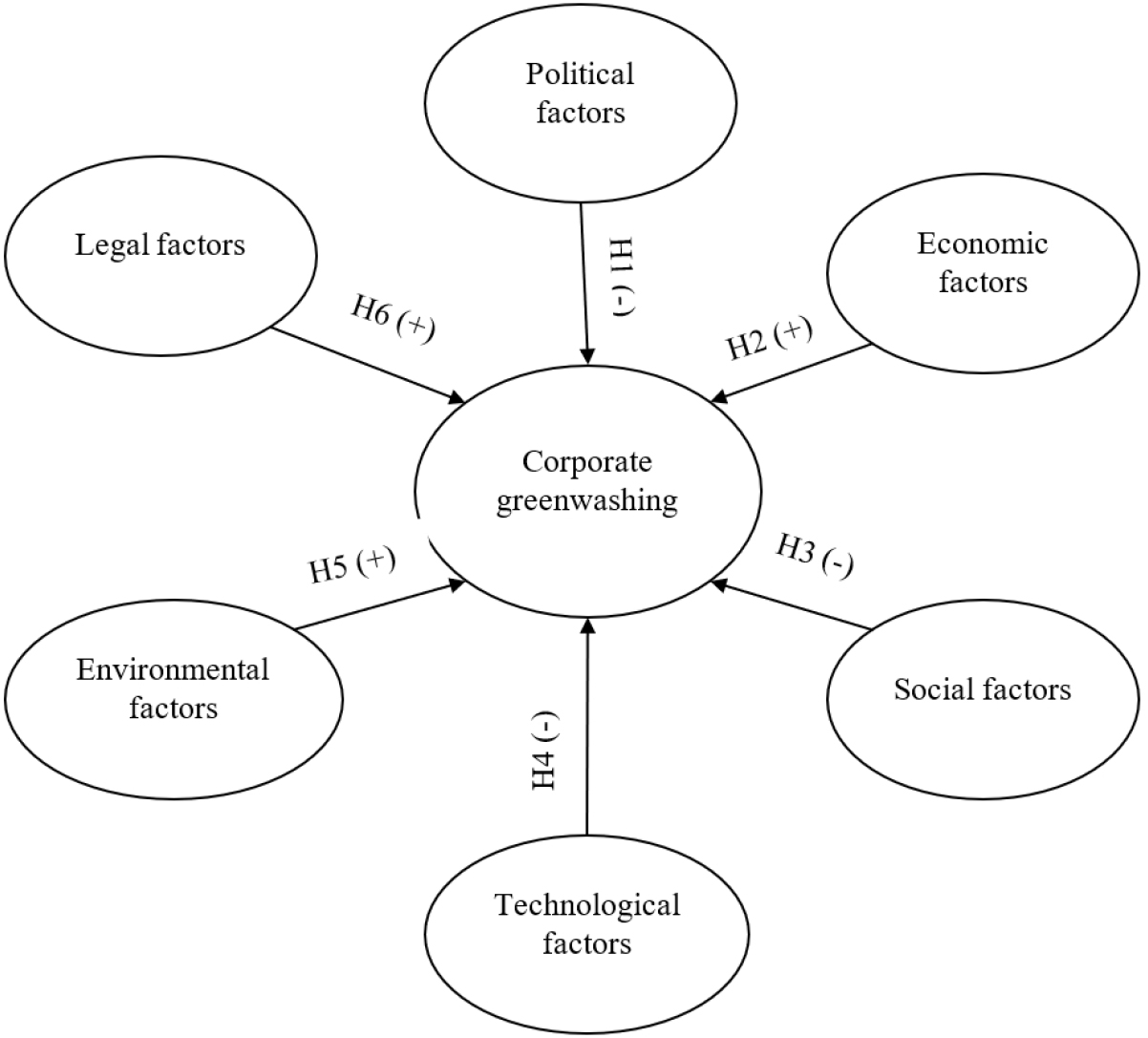
H1: Political factors are negatively linked to corporate greenwashing.
Economic factors significantly drive greenwashing among construction firms [56]. High costs associated with genuinely sustainable building practices can push firms towards greenwashing as a cost-effective alternative. The expenses for implementing authentic sustainability measures are substantial [6]. Thus, firms may opt to present a superficial image of environmental responsibility rather than investing in fundamental changes. This behavior aligns with FTT’s “pressure” component, where financial constraints create a strong incentive for firms to engage in deceptive practices to save costs and maintain their competitive edge [57].
Furthermore, limited financial incentives for green initiatives and research and development exacerbate the propensity for greenwashing [58]. In the construction sector, the lack of substantial economic benefits or support for actual sustainability efforts means firms have little motivation to invest in genuine green practices [20]. Greenwashing becomes an attractive option, allowing firms to appear eco-friendly without the associated costs. It is hypothesized that:
H2: Economic factors are positively linked to corporate greenwashing.
Social factors can negatively impact greenwashing among construction firms [55]. The increasing customer demand for genuine environmental responsibility pressures firms to adopt authentic sustainable practices [28]. As consumers become more informed and concerned about environmental issues, they are more likely to scrutinize companies’ environmental claims [59]. This heightened scrutiny makes it riskier for firms to engage in greenwashing, as misleading or exaggerated claims can lead to reputational damage and loss of customer trust [55]. In this context, FTT’s “pressure” component underscores that the demand for genuine sustainability compels firms to prioritize genuine improvements over superficial greenwashing.
Moreover, the growing emphasis on environmental responsibility, fueled by social platforms [12], educational programs [60], and public discourse [61], promotes greater transparency and accountability [55]. Social media amplifies the voices of environmental activists and concerned consumers, creating a platform for exposing greenwashing practices [12]. Educational programs and public discussions increase awareness about genuine sustainability, making it harder for firms to get away with deceptive practices [60]. This social environment fosters a culture of accountability and encourages firms to engage in genuine sustainability efforts rather than resort to greenwashing. FTT’s “opportunity” and “rationalization” components are impacted as firms are less able to justify greenwashing and face fewer opportunities to engage in deceptive practices without facing severe consequences. It is hypothesized that:
H3: Social factors are negatively linked to corporate greenwashing.
Technological factors can significantly reduce greenwashing among construction firms [62]. The availability of innovative sustainability assessment tools and software plays a significant role in the process [14]. These advanced tools provide firms with detailed, accurate evaluations of their environmental performance, making it easier to identify and address potential greenwashing. By employing these technologies, firms can ensure that their sustainability claims are based on rigorous data and assessments rather than superficial or misleading representations [21]. This aligns with the “opportunity” component of FTT, as the availability of such tools reduces the opportunity for firms to falsely present their environmental efforts.
Additionally, integrating advanced construction technologies further diminishes the likelihood of greenwashing. As construction firms adopt more sophisticated technologies, they must commit to improving their environmental practices [63]. These technological advancements promote transparency and authenticity in sustainability efforts, as firms must meet higher standards and demonstrate genuine environmental benefits [64]. Furthermore, technological improvements in monitoring and verification systems enhance the accuracy of environmental claims [65]. These systems enable continuous tracking and verification of environmental performance, making it more difficult for firms to engage in deceptive practices. These technological advancements align with FTT’s “rationalization” component, making it harder for firms to justify greenwashing and promoting more credible environmental practices. It is hypothesized that:
H4: Technological factors are negatively linked to corporate greenwashing.
Environmental factors significantly affect construction firms’ washing practices. Inadequate enforcement of environmental standards is a primary factor [21]. When regulatory agencies fail to enforce environmental regulations rigorously, construction firms may exploit this leniency by greenwashing [49]. Firms can make misleading environmental claims without fear of repercussions or scrutiny [66]. This aligns with FTT’s “opportunity” component, where the lack of strict enforcement creates an environment where firms can more easily deceive stakeholders without significant risk. Additionally, the limited availability of reliable environmental data and assessments exacerbates greenwashing [67]. Firms may struggle to substantiate their environmental claims without access to accurate and comprehensive data. This data gap allows companies to present misleading information about their sustainability practices. In such cases, FTT’s “opportunity” component is evident, as firms exploit the lack of reliable data to justify superficial environmental claims.
The lack of clear environmental certification standards further compounds the issue [68]. When certification criteria are vague or inconsistently applied, firms may exploit these ambiguities to portray themselves as more environmentally responsible than they are. This situation provides an opportunity for greenwashing, as firms can align themselves with loosely defined standards without making substantive changes [7]. This behavior reflects both the “opportunity” and “rationalization” components of FTT, in which companies rationalize their deceptive practices by exploiting certification frameworks to enhance their market image without genuine improvements in environmental performance. It is hypothesized that:
H5: Environmentalfactors are positively linked to corporate greenwashing.
Legal factors significantly influence greenwashing among construction firms [3]. Weak legal requirements and regulations create an environment where firms can easily engage in greenwashing without facing substantial consequences. When environmental laws are lax, firms have fewer incentives to adopt sustainable practices [9]. They may exploit these lenient regulations to make exaggerated or misleading environmental claims, thereby engaging in greenwashing [60]. This scenario aligns with FTT’s “opportunity” component, as the weak legal framework allows firms to deceive stakeholders while minimizing the risk of regulatory action.
Chen et al. [3] highlighted that even when regulations exist, inadequate enforcement often compromises their effectiveness. This lack of rigorous monitoring and enforcement means that firms can freely present themselves as environmentally responsible without undergoing the scrutiny required to ensure compliance [21]. In this context, greenwashing becomes a more attractive option as firms are less likely to be penalized for misleading claims. This situation reflects FTT’s “opportunity” and “rationalization” components, where firms exploit ineffective enforcement to rationalize their deceptive practices and take advantage of the lack of oversight. Additionally, limited legal channels for reporting and addressing greenwashing issues further contribute to the problem [12]. The absence of robust legal mechanisms for reporting and addressing greenwashing allows such practices to persist unchecked. This creates a permissive environment in which companies can justify their greenwashing behavior by exploiting legal ambiguities and lacking formal reporting channels. It is hypothesized that:
H6: Legal factors are positively linked to corporate greenwashing.
Table 2 presents the linkage between research questions and the proposed hypotheses. Moreover, Figure 1 summarizes the research hypotheses.
Table 2.
Linkage between research questions and hypotheses
Research Methodology
Design
This study employed a deductive approach to investigate the impacts of external environmental factors on greenwashing behavior in the Vietnamese construction sector under the FTT. A deductive approach begins with a theoretical framework and hypotheses, which are then tested through empirical data collection [15]. This method is suitable because it validates existing theories with new evidence, providing a structured and systematic way to explore complex phenomena. By applying this approach, the study aimed to test specific hypotheses derived from FTT regarding political, economic, social, technological, and environmental factors.
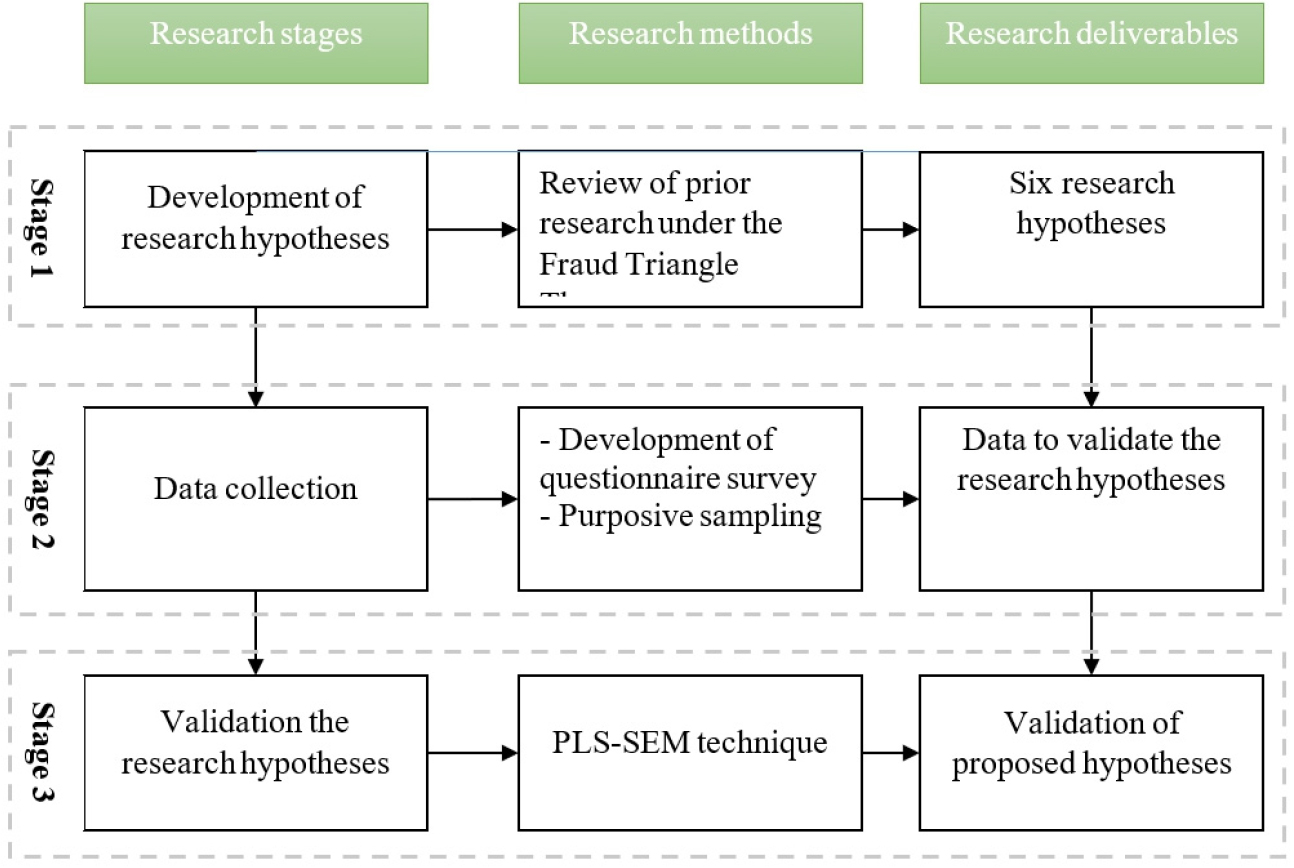
Figure 2 illustrates the methodology used in this study, which involves three key stages. First, hypotheses were developed through an extensive literature review grounded in FTT. Next, data were gathered using a purposive sampling approach. Finally, the data were analyzed using PLS-SEM to test and validate the research hypotheses in the Vietnamese construction sector.
Development of the questionnaire
The questionnaire was divided into two main sections. The first section collected demographic information from respondents, including their educational background, work experience, and organizational type. The second section focused on seven factors: political, economic, social, technological, environmental, legal, and greenwashing. The questions on political factors were formulated from a thorough literature review of existing studies [5, 48, 53, 54, 55]. Similarly, the measurement items for economic factors were developed based on a review of previous research [6, 20, 56, 57, 58]. The social factors dimensions were derived from an extensive review of prior studies [12, 28, 55, 59, 60].
The technological factors questions were also based on a comprehensive literature review [14, 21, 62, 63, 65]. The environmental factors questions were based on previous studies [21, 66, 67]. The legal factors dimensions were created through a literature review [3, 9, 21, 60]. Questions measuring greenwashing behavior were adapted from Ferrón-Vílchez et al. [70]. All measurement items were rephrased to suit the context of the Vietnamese construction industry. A five-point Likert scale (ranging from 1 = strongly disagree to 5 = strongly agree) was used for all variables, with respondents indicating their level of agreement with each item. The measurement items are presented in the Appendix.
Sampling and collection of data
Due to the lack of a government or construction association registry listing the number of construction firms operating in Vietnam, purposive sampling [71] was employed to recruit construction practitioners who could provide reliable information on greenwashing behavior. Purposive sampling is particularly suitable for this study, given the typically low response rate in construction management research [72]. This sampling method allows the selection of participants who are most likely to provide rich, relevant, and reliable data, thereby enhancing the quality and depth of the findings despite a potentially limited number of responses [37]. By intentionally targeting key professionals and experts in the Vietnamese construction sector, purposive sampling ensures that the collected data is meaningful and representative of the population being studied. Moreover, this approach is efficient and practical, making the best use of available resources while addressing the specific research objectives [40].
However, purposive sampling also presents several limitations that should be acknowledged [69]. As a non- probability sampling technique, it may limit the representativeness of the sample. The selected respondents may not fully reflect the broader population of construction practitioners in Vietnam. This may introduce potential bias, as participants are chosen based on accessibility and expertise. Consequently, the findings should be interpreted with caution when generalizing to the entire industry. Despite these limitations, purposive sampling remains appropriate for exploratory research in contexts with limited sampling frames. It enables the collection of informed, relevant responses from experienced practitioners. Future studies are encouraged to adopt probability sampling methods to enhance generalizability and reduce potential bias.
Three hundred sixty questionnaires were distributed face-to-face to Vietnamese construction practitioners, yielding 156 responses. The collected surveys were carefully reviewed to identify and exclude unreliable or invalid responses, resulting in the removal of three questionnaires due to significant non-responses and 11 questionnaires with uniform answers. Consequently, data from 142 practitioners were retained for analysis. The response rate achieved is deemed sufficient according to Tijani et al. [15]. This research collected 142 responses, exceeding the threshold, indicating the sufficiency of the sample size. Demographic characteristics of the respondents are presented in Table 1. Specifically, the distribution was as follows: 18.3% had 3-5 years of experience, 47.2% had 6-10 years, 26.8% had 11-15 years, and 7.7% had over 15 years. Job titles included 9.2% managers, 7.7% team leaders, 68.3% seniors, and 14.8% juniors. Regarding educational background, 89.4% held a bachelor’s degree, while 10.6% had a master’s degree. Respondents were from different organizational types: 58.5% were contractors, 22.5% were consultants, 10.6% were owners, and 8.5% worked in government agencies.
PLS-SEM method
Partial Least Squares Structural Equation Modeling (PLS-SEM) is a robust statistical technique to model complex relationships between observed and latent variables [73]. Combining factor analysis and multiple regression, PLS-SEM allows researchers to simultaneously examine measurement and structural models [37]. This makes it particularly suitable for this study, which investigates the impact of external environmental factors on corporate greenwashing in the Vietnamese construction sector.
PLS-SEM is ideal for several reasons. Firstly, its exploratory nature suits this relatively new area of research, such as greenwashing behavior [74]. Secondly, PLS-SEM can handle complex models with numerous indicators and latent variables, accommodating the intricate relationships in this study [75]. Thirdly, it is robust with small to medium sample sizes (142 valid responses) [73]. Unlike CB-SEM, which requires large sample sizes and normally distributed data, PLS-SEM does not [37]. The technique also allows for simultaneous assessment of the reliability and validity of the measurement model, ensuring accurate measurement of constructs related to external factors and greenwashing. Lastly, PLS-SEM emphasizes predictive accuracy, aligning with the study’s aim to identify the most significant external factors influencing greenwashing behavior [73].
Results and Hypothesis Testing
Common method bias
To ensure the integrity of the measurement items used in this study, a standard-method bias (CMB) assessment was conducted. CMB refers to the variance attributable to the measurement method rather than the constructs the measures represent [74]. Harman’s single- factor test is a widely used technique for detecting CMB [37]. This method involves performing an unrotated factor analysis to determine if a single factor accounts for most of the variance. The study revealed that the first factor accounted for only 36.163% of the variance, well below the 50% threshold [75]. This result indicates that no single factor dominated the data, suggesting that common method bias is not a significant issue in this study [73].
Convergent and discriminant validity
Convergent validity was evaluated, with the results presented in Table 3, focusing on the agreement among multiple items measuring the same concept. This assessment utilized factor loadings, average variance extracted (AVE), and composite reliability (CR) for reflective constructs [73]. As indicated in Table 3, all item loadings exceeded the recommended threshold of 0.6. The composite reliability values, which measure the degree to which construct indicators represent the latent construct, ranged from 0.802 to 0.944, well above the cutoff of 0.70 suggested by Hair et al. [73]. The AVE values, representing the proportion of variance in the indicators explained by the latent construct, ranged from 0.590 to 0.809, surpassing the recommended threshold of 0.50 [75]. These findings provide strong evidence of the model’s convergent validity.
Table 3.
Measurement model
After that, discriminant validity was evaluated to determine the degree to which constructs are distinct and uncorrelated, effectively reflecting the measure’s accuracy [74]. Traditionally, cross-loadings and the Fornell-Larcker criterion have been used to assess discriminant validity tests [37]. However, these methods have been criticized for their low sensitivity in detecting issues with discriminant validity (Hair et al. [73]). Consequently, an alternative approach, the heterotrait- monotrait ratio (HTMT), was employed [37]. According to the HTMT results presented in Table 4, none of the interconstruct correlations exceeded the 0.85 threshold. This finding meets the HTMT criterion, indicating that the study lacks discriminant validity issues.
Table 4.
Discriminant Validity Analysis
Structural model evaluation
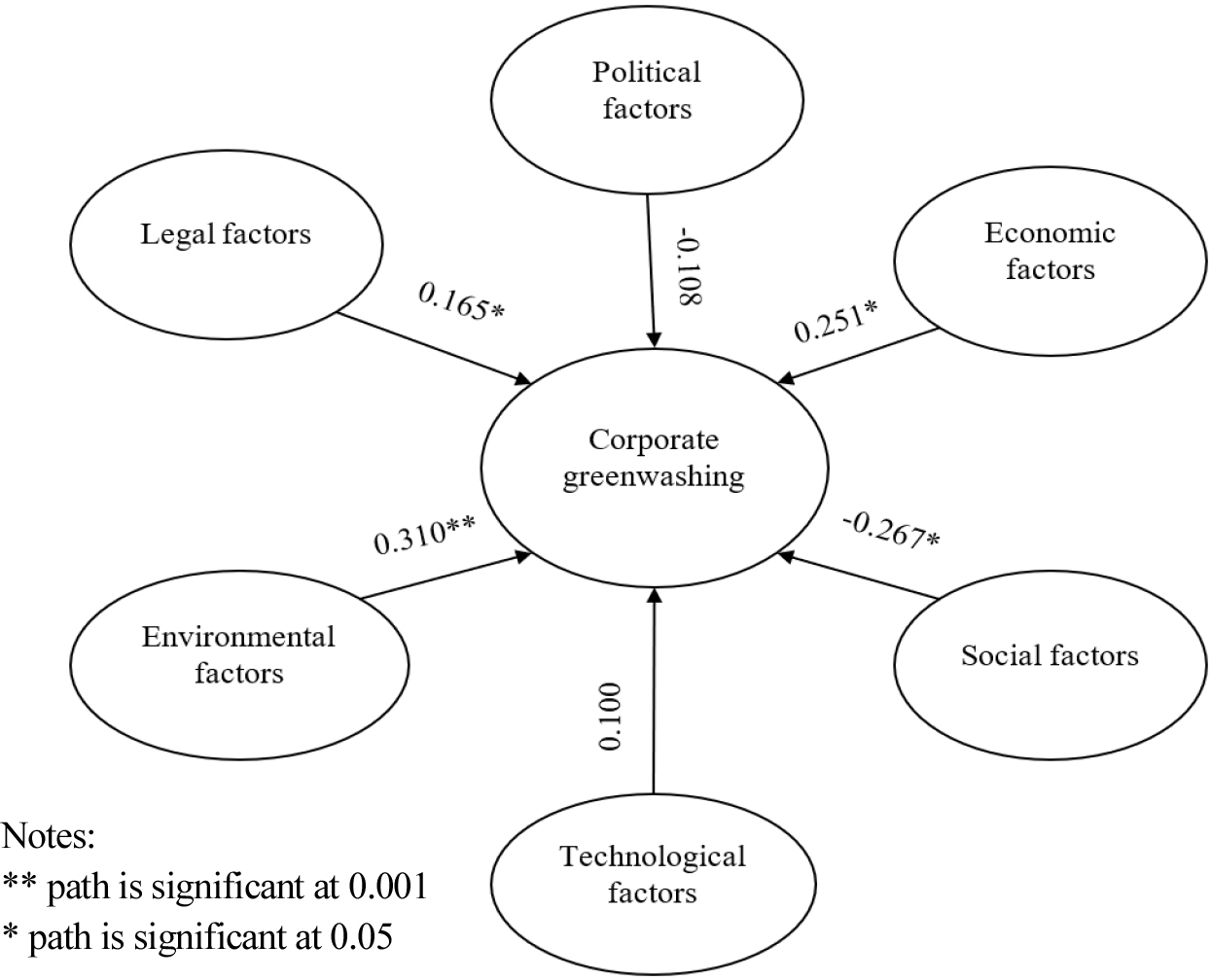
The study conducted a structural model analysis to estimate path coefficients, using bootstrap resampling to assess their statistical significance. The results in Table 5 and Figure 3 indicate that hypotheses H2, H3, H5, and H6 are supported, while hypotheses H1 and H4 are not. Specifically, the analysis reveals a negative relationship between social factors (H3) and corporate greenwashing (β = -0.267). Conversely, economic (H2), environmental (H5), and legal (H6) factors positively impact corporate greenwashing, with a path coefficient of 0.251, 0.310, and 0.165, respectively. However, the study did not find significant relationships between political (H1) and technological (H4) factors and corporate greenwashing.
Table 5.
Findings of PLS-SEM
The structural model demonstrates strong explanatory and predictive capability, indicating the robustness of the findings. The model explains a substantial proportion of variance in corporate greenwashing (R² = 0.607), suggesting moderate to strong explanatory power in this research context. In addition, the predictive relevance is high (Q² = 0.519), confirming that the model performs well in out-of-sample prediction. The effect size analysis provides further insight into the practical importance of each factor. Environmental factors exhibit the largest effect (f² = 0.142), indicating a relatively stronger influence on greenwashing behavior. Economic and social factors show small but meaningful effects, while legal factors have a modest contribution. In contrast, political and technological factors demonstrate negligible effects, supporting their non-significant relationships.
Discussions
Relationship between social factors and corporate greenwashing
This study found that social factors negatively impact corporate greenwashing in Vietnamese construction firms. This finding was supported by previous studies by Nguyen [38] and Nguyen and Ha [37], which identified that heightened consumer awareness and demand for sustainable products drive companies toward authenticity in their environmental claims. Wu et al. [76] emphasized that informed consumers are less tolerant of greenwashing, while Chkir et al. [77] highlighted that companies operating in socially conscious markets tend to adopt more transparent practices. Sun and Zhang [78] further corroborated these findings by showing that firms that pursue authentic sustainability often enjoy greater customer loyalty and brand reputation.
Kim et al. [36] highlighted that Vietnamese society highly values environmental responsibility and sustainability. The cultural emphasis on environmental stewardship motivates construction firms to pursue authentic green initiatives that align with societal expectations [38]. Moreover, Vietnamese people actively engage in social forums to discuss companies’ activities and environmental impacts. Hang [79] found that Vietnam had over 72.10 million Internet users, representing approximately 73.2% of its population. Among these, 78.1% are active on social media, with the average Vietnamese person spending 6 hours and 38 minutes online daily. Hang [79] also explored that searching for information and staying updated on current events were among the top two primary motivations for frequent Internet use by Vietnamese people. Platforms like Facebook and Zalo are popular venues for these discussions, creating a dynamic and transparent environment where firms are held accountable for their sustainability claims. These platforms enable real-time communication and scrutiny, which can quickly expose greenwashing practices and damage a firm’s reputation. For example, a company claiming to use eco-friendly materials may face immediate scrutiny and questions on these platforms if its practices do not align with those claims. This scrutiny is a deterrent against greenwashing, as companies know that any discrepancies between their claims and actions will be quickly highlighted and criticized by an engaged and informed public.
Social factors, such as positive media coverage of successful sustainability efforts, set a standard for construction firms, motivating them to adopt honest environmental practices to enhance their reputations and mitigate pressure to conform to societal expectations [12]. For instance, the media spotlight on projects like the eco-friendly Diamond Lotus building in Ho Chi Minh City demonstrates the reputational benefits of genuine sustainability, thereby reducing the temptation to greenwash [80]. Furthermore, educational programs and public discourse on environmental issues in Vietnam raise awareness about the importance of transparency [40]. These actions may help reduce firms’ opportunity to engage in greenwashing, as knowledgeable consumers and stakeholders are more likely to scrutinize and challenge misleading environmental claims.
Relationship between economic factors and corporate greenwashing
This study found that economic factors positively impact corporate greenwashing. This finding was supported by Li et al. [19], Zhang et al. [11], and Zhang [21], who demonstrated that the high costs associated with genuine sustainable practices and limited financial incentives for green initiatives can drive firms toward greenwashing. For instance, Li et al. [9] noted that the financial burden of implementing authentic sustainability measures may prompt firms to resort to deceptive practices as a cost-saving strategy. Similarly, Li et al. [9] emphasized that insufficient support and incentives for green initiatives can make greenwashing a more attractive alternative for companies seeking to avoid the higher expenses associated with genuine sustainability efforts. Zhang et al. [11] and Zhang [21] further corroborated these findings by illustrating how economic pressures and financial constraints drive firms to prioritize short-term gains over long-term sustainable investments, leading to greenwashing behavior.
The current economic uncertainty in Vietnam significantly exacerbates construction firms’ challenges, driving many toward greenwashing as a survival strategy. [81] Vietnam witnessed a sharp decline of 14,100 enterprises, averaging 4,700 fewer businesses each month in the first quarter of 2024. This substantial decrease reflects broader economic strain, which is severely impacting the construction sector. A survey by the General Statistics Office of Vietnam found that 42.2% of construction firms reported more complex business conditions than in the previous quarter, underscoring heightened financial pressures [82]. Additionally, production costs have increased, raising the unit cost of output compared to the previous year [83]. This expense rise further strains firms, pushing them to seek less costly ways to appear environmentally responsible. This financial uncertainty amplifies the temptation for firms to engage in greenwashing as a cost-effective strategy to maintain their market presence while avoiding genuine sustainability investments.
By the end of 2023, Vietnam had documented only 305 green building projects [84]. In a nascent green market where many firms engage in greenwashing, Vietnamese companies may rationalize their deceptive practices as a common industry norm [42]. For instance, a firm might make vague environmental claims, such as stating that it “supports green practices” without concrete evidence or specifics, to project an eco-friendly image [44]. Another example is generating misleading environmental reports that exaggerate minimal sustainable efforts, making the company appear more environmentally responsible than it is [46]. This rationalization process is driven by the observation that many competitors are also greenwashing, allowing firms to justify their actions as a necessary strategy to remain competitive in the emerging green market.
Relationship between environmental factors and corporate greenwashing
The study’s findings are that environmental factors positively impact corporate greenwashing. The findings were supported by previous research conducted by Marquis and Toffel [49], In and Schumacher [67], and Zhang [21]. These studies have documented how weak enforcement of environmental standards and limited access to reliable environmental data contribute to greenwashing. For example, Marquis and Toffel [49] noted that insufficient regulatory oversight allows firms to make misleading sustainability claims without fear of repercussions. Similarly, In and Schumacher [67] highlighted that the lack of reliable environmental data enables firms to present distorted views of their environmental performance. Zhang [21] emphasized that ambiguous certification standards create opportunities for firms to engage in greenwashing by making unverified claims about their sustainability practices.
Inadequate enforcement of environmental standards allows firms to evade scrutiny and perpetuate greenwashing without facing legal consequences. In Vietnam, the Law on Environmental Protection is often inadequately enforced [85], enabling companies to falsely claim adherence to environmental standards while continuing unsustainable practices. The ISO 14001 standard, which requires rigorous environmental management, is sometimes misrepresented, with companies marketing their operations as compliant while neglecting genuine implementation [86]. This leniency in regulatory enforcement allows these companies to mislead consumers by promoting a false image of environmental responsibility, thereby avoiding accountability and undermining genuine sustainability efforts. Such greenwashing not only deceives consumers but also hampers meaningful progress toward environmental sustainability by perpetuating harmful practices under the guise of eco-consciousness.
The lack of clear environmental certification standards in Vietnam exacerbates the risk of greenwashing, as firms can make misleading claims without rigorous scrutiny. Although QCVN 09:2017/BXD establishes the National Technical Regulation on Energy Efficiency in Buildings, its application is limited to a few environmental aspects, leaving many others unaddressed. Additionally, Vietnamese construction practitioners’ low awareness of environmental certification standards [36] further compounds the issue. Without stringent, universally recognized standards or mandatory certification requirements, firms can falsely market their projects as “energy-efficient” or “green” while failing to meet genuine environmental criteria.
Relationship between legal factors and corporate greenwashing
The analysis showed that legal factors positively impact corporate greenwashing. In agreement, the study’s findings [21] argued that inadequate legal requirements enable companies to make misleading claims about their environmental performance without sufficient oversight. He et al. [33] highlighted that a lack of effective enforcement mechanisms allows companies to evade penalties for false sustainability claims, thus increasing the prevalence of greenwashing. Additionally, Lyon and Montgomery [12] emphasized the limited legal channels for reporting and addressing greenwashing, which weaken accountability and permit companies to perpetuate false environmental claims. These studies collectively underscore how gaps in legal frameworks create opportunities for greenwashing, resonating with the findings of this study.
In contrast, this finding diverges from research conducted in developed nations, where regulatory frameworks are more robust and mature. For instance, Marquis and Toffel [49] found that comprehensive environmental regulations and well-defined certification standards in the USA reduce the prevalence of deceptive greenwashing practices. Similarly, Mateo-Márquez et al. [87] highlighted that the strong regulatory environment and effective legal channels for addressing environmental claims led to greater accountability and fewer cases of greenwashing in Spain. The discrepancy between findings in Vietnam and those in developed nations underscores how a mature regulatory framework can effectively curb deceptive practices by providing clear standards, rigorous enforcement, and accessible channels for reporting violations [50].
In Vietnam, there are no specific laws or regulations dedicated solely to addressing greenwashing. Existing legal frameworks, such as the Law on Competition, the Law on Advertising, and the Law on Protection of Consumers’ Benefits, could be relevant, as they address false information about products and enterprises. However, there are no recorded enforcement cases under these laws for greenwashing. The current regulatory environment lacks clear mechanisms to target deceptive environmental claims specifically. Furthermore, green certifications in Vietnam, such as Lotus and LEED, are voluntary rather than mandatory [45]. The voluntary nature of certification further complicates the regulatory landscape, as it does not compel firms to adhere to strict environmental standards or to account for false green claims. The absence of dedicated regulations and mandatory certifications creates a gap, allowing companies to engage in greenwashing with minimal risk of legal consequences.
Relationship between political, technological factors, and corporate greenwashing
The study finds no significant relationship between political factors and corporate greenwashing in Vietnam. These findings contrast with observations from other studies. For instance, Marquis et al. [88] and Pendse et al. [47] highlighted that political lobbying can significantly contribute to greenwashing, as firms use influence to shape regulatory environments in their favor. Similarly, Nemes et al. [89] noted that political spin could impact regulations or governmental decisions to benefit corporations, potentially leading to increased greenwashing.
This result can be better understood by examining the gap between policy formulation and enforcement. Vietnam has established key regulations, such as the Law on Environmental Protection, which outlines environmental responsibilities for firms. However, enforcement remains inconsistent across regions and project types. For example, recent reports indicate that only around 60% of construction projects undergo full environmental compliance inspections. This limited enforcement reduces the perceived risk of regulatory penalties. Under the FTT, this condition reflects an “opportunity” environment in which weak monitoring systems allow firms to act without strict oversight. As a result, political pressure does not strongly influence greenwashing behavior, since firms face limited consequences for misleading environmental claims. In addition, local implementation often varies due to administrative capacity and resource constraints. This further weakens the deterrent effect of political factors. Therefore, the insignificance of political factors is not due to the absence of policies, but rather their limited enforcement and practical impact.
Similarly, the insignificant effect of technological factors can be explained by the low level of technology adoption in the Vietnamese construction sector [90]. Although advanced tools such as digital monitoring systems and sustainable materials exist, their adoption remains limited. Nguyen et al. [91] witnessed that a limited number of green technologies are integrated into construction processes. This low adoption rate reduces the role of technology in improving transparency and accountability. From an FTT perspective, limited technological integration increases “opportunity” for greenwashing, as firms operate in environments with weak verification mechanisms. At the same time, it reduces the relevance of technology as a driver of behavior, since many firms cannot implement or manipulate such systems. Furthermore, the sector is dominated by small and medium-sized enterprises, which often prioritize cost efficiency over innovation. These firms face financial and technical barriers in adopting advanced green technologies. Consequently, technological factors neither constrain nor motivate greenwashing behavior in a significant way. This finding highlights that the effectiveness of technology in reducing greenwashing depends on its actual level of adoption and implementation.
Research implications
This study offers significant theoretical implications by investigating the impact of external environmental factors on greenwashing through the FTT. It highlights how economic, environmental, and legal factors drive greenwashing, providing a holistic understanding of the phenomenon. The findings of this study advance the existing literature on greenwashing by addressing the limitations of prior research that focused on single external factors in isolation. Studies examining individual drivers, such as government policy [3] or technological advancements [14], highlight specific influences but fail to investigate how multiple external factors shape corporate greenwashing. This approach neglects the existence of different external aspects influencing greenwashing behaviors. By demonstrating limited roles of political and technological factors in Vietnam’s construction industry, this research highlights the importance of contextual factors in greenwashing studies. The findings challenge assumptions from prior studies conducted in different contexts, which found that individual external factors significantly drive greenwashing.
From a managerial perspective, the study highlights the importance of addressing economic, environmental, and legal factors to mitigate greenwashing. Firms should recognize that economic pressures, environmental regulations, and legal frameworks significantly shape their sustainability practices. Managers should prioritize transparent reporting and compliance with environmental regulations to avoid misleading claims. The negative relationship with social factors suggests that fostering a strong corporate culture that aligns with societal values can enhance authenticity and reduce the temptation to engage in greenwashing. Firms can improve their reputation and build consumer trust by integrating genuine sustainability practices and addressing social expectations.
The study underscores policymakers’ need to strengthen economic, environmental, and legal regulations to combat greenwashing effectively. The positive impact of these factors on greenwashing underscores the importance of regulatory frameworks and enforcement mechanisms in ensuring corporate accountability. Policymakers should consider implementing stricter standards and certification requirements, enhancing transparency in environmental reporting, and providing more transparent legal avenues for reporting and addressing greenwashing. The lack of significant relationships with political and technological factors suggests that while these areas are essential, immediate policy efforts should prioritize economic and environmental regulations to curb deceptive practices.
From a social perspective, the study highlights the influence of societal pressures and consumer awareness on behavior. The negative relationship between social factors and greenwashing suggests that a well- informed and engaged public can act as a powerful check against deceptive environmental claims. Social movements, consumer advocacy, and increased awareness about sustainability can drive firms to adopt genuine green practices. This finding reinforces the importance of educating consumers and fostering a culture of environmental responsibility. Social engagement and activism can create a more transparent marketplace, incentivizing companies to sustain authenticity and address environmental concerns.
Conclusions
This study investigated the influence of external environmental factors on corporate greenwashing, theoretically supported by the FTT. Data were gathered through face-to-face surveys involving 142 respondents from the Vietnamese construction industry. The PLS- SEM analysis addressed the research questions initially posed: Economic (H2), environmental (H5), and legal (H6) factors were found to influence corporate greenwashing (RQ1) positively, and social factors (H3) were identified as negatively impacting greenwashing (RQ2). Additionally, the analysis revealed that political (H1) and technological (H4) factors did not significantly affect corporate greenwashing.
This study reveals that economic, environmental, and legal factors significantly contribute to corporate greenwashing, highlighting the need for stricter regulations and enhanced transparency. The negative impact of social factors on greenwashing suggests that societal pressures and public awareness can effectively deter deceptive environmental claims. However, political and technological factors had no significant effect, indicating that the immediate focus should be on reinforcing economic and environmental regulations. For policymakers, the study underscores the importance of developing robust legal frameworks and fostering a socially responsible corporate culture to mitigate greenwashing.
While the research objectives were achieved, several limitations suggest directions for future studies. Firstly, this study focuses on the Vietnamese construction industry, which may limit generalizability to other sectors or regions. The specific institutional and social context may not fully reflect conditions in different countries or industries. Secondly, the sample size of 142 respondents may introduce potential bias and limit representativeness across all stakeholders. Thirdly, this study primarily examines external environmental factors without incorporating internal organizational drivers. Factors such as leadership practices, corporate culture, and employee engagement may also play important roles in shaping greenwashing behavior. Excluding these internal dimensions may limit the comprehensiveness of the analysis. Future research is encouraged to integrate both external and internal factors to provide a more holistic understanding of greenwashing. Finally, this study conceptualizes greenwashing as a single-dimensional construct wit,hfailing to distinguish amongologies. Prior research suggests that greenwashing may occur through selective disclosure, symbolic actions, or misleading communication strategies. Future studies should adopt a multidimensional approach to capture these variations and provide deeper insights into firm behavior. This would enable a more nuanced understanding of how different forms of greenwashing respond to external pressures.

