


Introduction
Motivation of Study
Background
Source and Pre-processing of Data
Exploration Procedure
Software
Data Interpretation
Most influential geographic region
Author Influence
The most cited publications
Prominent Journals
The Most Productive Universities
Assessment of Search Terms Frequency
Discussion
Conclusion
Introduction
Skin, the body’s biggest organ serves as an essential barrier [1]. The primary roles of the skin are to shield the body from dangerous chemicals from the environment and to stop the loss of vital nutrients [2, 3]. Several aspects, including UV rays, burning, workout, infections and the workplace environment have an impact on a person’s skin health [4, 5, 6]. Certain elements have a negative impact on human wellbeing, the veracity of skin utility, as well as skin injury and life-threatening conditions. Skin conditions are currently among the most prevalent disorders that affect people due to environmental factors and other elements. One of the most widespread ailments in the world is skin disease [7]. “1/5th or One-fifth” of Americans will develop skin tumour over their lifetime, as per studies, making it most prevalent disease in the country. According to statistics, “melanoma” surpasses maximum fatality ratio among all derma malignancies [8, 9, 10, 11]. The American Cancer Society predicts that there will be approximately newer cases of melanoma in the US year 2020, and that there will also be about deaths from melanoma [12, 13, 14]. The skin disease is considered dangerous disease globally [15, 16].
Correctly identifying skin ailment is difficult, though but Deep learning algorithms have recently surfaced to attain outstanding performance in a variety of jobs [17, 18, 19, 20]. In the perspective of dermatology, “intelligent techniques” incorporate a variety of computational approaches intended to promote in illness analysis and supervision. Traditional approaches like ML that has its own importance Conventional machine learning (ML) procedures, such as Random Forest (RF), Support Vector Machines (SVM), Decision Trees (DT) and K-Nearest Neighbors (KNN), be sure of on physically mined features like colour, texture, and shape to categorise skin abrasions. These approaches necessitate field proficiency for feature extraction and selection and may find difficulty with multifaceted pattern recognition. In comparison, deep learning (DL) approaches, predominantly Convolutional Neural Networks (CNN), mechanically learn categorized feature demonstrations from unprocessed visual data, facilitating more precise and well-organized classification of skin disorders [20]. They have been used specifically for activities involving the diagnosis of skin conditions [21, 22]. As it depends on the dermatologists’ experience, differentiating a skin illness using dermoscopic imaging may be erroneous [23, 24]. A novice expert can typically diagnose melanoma from medical image photos with a degree of accuracy [25, 26, 27]. The fact that human expert diagnosis is mostly reliant on subjective assessment and differs significantly amongst specialists is one of its limitations. The CAD system is more objective in comparison [28, 29, 30]. Outdated CAD systems for skin disease categorization can perform very well in some skin disorder diagnosis tasks by leveraging customised characteristics. These systems, however, often concentrate on a small number of skin conditions, such melanoma and BCC. As a result, they frequently cannot be generalised to make diagnoses for larger classes of skin illnesses [31, 32]. On the one hand, customized attributes are often removed exclusively for a few sorts of skin conditions. They are scarcely adaptable to various kinds of skin conditions. Yet, given the variety of skin conditions, human-made characteristics cannot be helpful against all skin conditions. One solution to this issue is feature learning, that automatically extracts useful features [33, 34, 35]. During the previous years, numerous feature learning techniques have been suggested [36]. Nevertheless, the majority of them were leveraged for image processing activities and mostly targeted cancer indicator and mitotic identification [37, 38, 39, 40].
Consequently, this study’s research provides more detail into existing research on skin disorders, which could assist healthcare providers use this technology more effectively [41, 42]. It also tackles the challenges posed by the need for more cutaneous research and scientific empirical analysis. Therefore, the tenacity of this study implements an exhaustive bibliometric examination to learn more about the publications that have previously been made about skin diseases. This method incorporates “quantitative assessment and analytical metrics” as the foundation for a structured, trustworthy evaluation technique. Bibliometric analysis, which exposes comprehensive investigation, novel developments and topics in AI related research, is more trustworthy than other techniques. The probable assistances of AI in healthcare are considerable [43, 44].
Motivation of Study
ㆍTo raise the standard of living for its population, More than 9,500 people suffered from skin cancer diagnosis per day in USA. Each hour, the illness claims the lives of more than two people.
ㆍIn 2012, approx. millions of person in the US had treatment for non-melanoma skin cancer over 5.4 million case found.
ㆍAnnually skin cancer diagnoses surpass all other cancer diagnoses in the United States [45].
ㆍBy the age of 70, at least one in five Americans will be identified from skin ailments.
ㆍMore than 58 million Americans have actinic keratosis, which is a widespread pre-cancer.
ㆍThe expense of treating skin cancers is projected to be $8.1 billion per year, with $4.8 billion going to non-melanoma skin cancers and $3.3 billion going to melanoma.
The perseverance of this study is to recognize and scrutinize the influence and impact of articles regarding skin ailments. Henceforth, this study aids to recognize the supreme researchers, organizations, publications and nation regarding skin related disorder literature. The current study includes 200 articles disseminated under the Scopus database in the year between 2013- 2023. The main objectives of the study are as follows:
i. Determining the evolution in the proclamation of the skin diseases work for the duration of year 2013-2023.
ii. Scrutinize the persuasive topographical area and exploration alliance, prominent writers in the skin disease area.
iii. To identify most mentioned article, foremost periodical and best academia/organization and the rate of words mentioned in the past work.
Background
From the commencement, investigation in the field of healthcare relied predominantly on a range of health related task, including health statistics, training and development program, and disease detection and examining how these accountabilities inclined the accomplishment of society [46, 47, 48]. The spread of scientific advances and accessibility of facts have subsidised to the adoption of healthcare analytics with a strong emphasis on fact-based personnel decisions [49, 50, 51]. The rise in the number of publications released each year explicitly about analytics in healthcare shows that researchers and scholars are growing and increasingly interested in this area. Furthermore, over time, the number of citations for papers has increased in this field. Research in healthcare is deliberated a bourgeoning discipline which is rising at a very fast pace. Traditional methods of skin disease detection were examined by the expert clinicians [52, 53]. If they are misdiagnosed by inexperienced practitioner, the disease would be treated promptly in order to save the one’s life. The automated methods prove to be the best alternative to achieve success in diagnosing the skin disease and moreover practical experimentation on the datasets make this approach more centric and considerable [54]. An innovative inexpensive machine model that employs entered symptoms and user information to automatically recognize sicknesses. The final aim of engineering is to improve a singular technology that could tackle the issue of constrained utilization of healthcare [54]. Due to their distinct features and manifestations, diagnosing diseases naturally presents an extensive obstacle [55, 56]. Neural networks has come into picture and have developed into potent instrument for the practice of ML(machine learning) and are proving to be enormously optimistic at computing analysis even with unclear factors.
Source and Pre-processing of Data
Bibliometric analysis is a software/ tool aids researchers in the domain of healthcare as it provides a quantitative evaluation of existing literature [57, 58, 59, 60]. By analysing bibliographic data such as the total cited articles, published paper citations, developments and co-authorship, researchers can achieve perceptions into the productivity and influence of individual authors, institutions, countries and journals. Performance judgement is a key feature of bibliometric analysis, as it permits researchers to assess the productivity and impact of authors, institutions, and countries. This information tends to be in usage in order to recognise the most influential authors and institutions in a specific domain and its impact over time. Science mapping is another important aspect of bibliometric analysis, as it provides a visual representation of the structure of a particular field [61]. By mapping the relationships between different authors, institutions, and themes, researchers can obtain a superior understanding of overall structure of a field, and can identify emerging trends and areas of research. Overall, bibliometric analysis a powerful tool for researchers in the healthcare arena, as it allows them to take advantage of in sighting existing literature, evaluate the productivity and impact of authors, countries, and most important to find the evolving trends.
Exploration Procedure
Eminent “Scopus” corpus catalogue accumulated the comprehensive records which holds an extensive writing of publications in comparison to other catalogues, henceforth deliberated major repository of periodicals [62]. Aforementioned research encompassed the Scopus repository for comprehensive analysis. It enables one to identify investigations, authors, and their interconnections with regard to numerous citations and publications based on a query connected to a certain subject. The frequency of citations, publications count per author, prevalence of keywords, author, organization and geographical associations are only few variables that are considered.
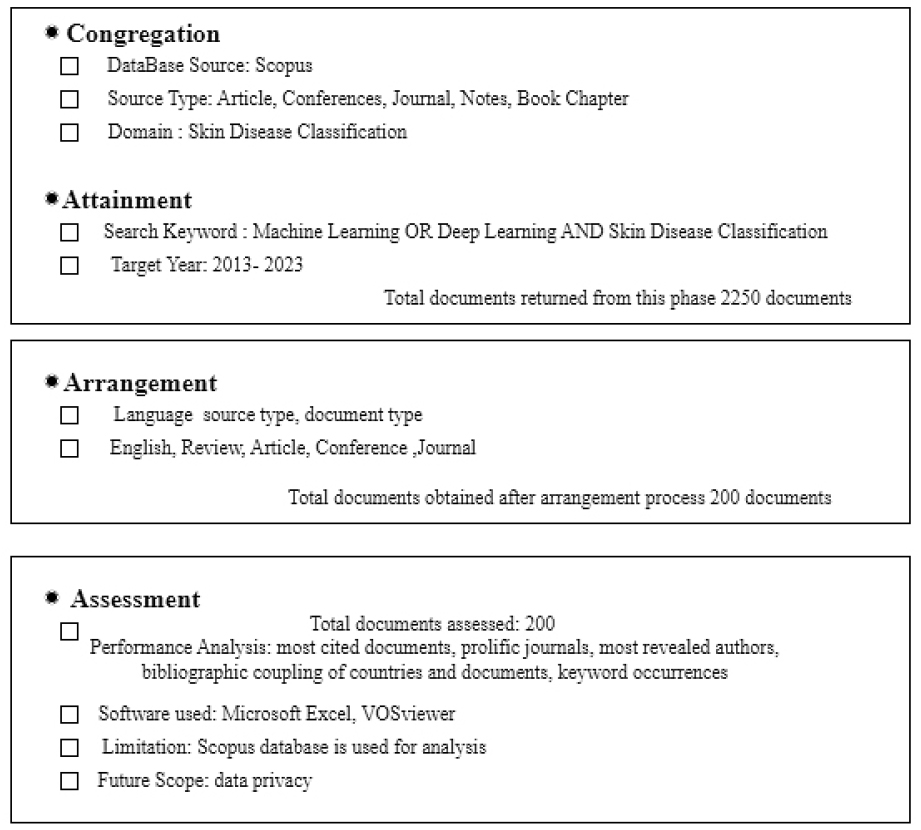
On the appraisal of prior literature and references, numerous search conventions were used to confirm the exposure of all publications and documents. The exploration comprised the keywords like “Machine Learning” OR “Deep Learning” OR “Intelligent Systems” AND “Skin Disease Classification” AND “Federated Learning” OR “Federated Framework”. The mentioned search terms were explored. Lastly, our record embraced book chapters, symposium papers, journals, notes, reviews and book chapters. The documents written in English language were incorporated in the exploration and manuscripts in other languages were deleted from the database. The initial exploration comprised of 200 corpus printed in the session of Jan 2013- 2023. The PRISMA model was deployed for identification, exclusion and inclusion criterion for the better finding of relevant articles as represented in Figure 1.
Software
The procedure employs on VOSviewer software assisting in displaying the scientific literature patterns determined by topic similarities [63]. The mentioned software built around the concepts like association between joint authors, bibliographic joint-citation [64]. Additionally, it enables the inspection of terms used via combination of networking in the papers. For the scrutiny, VOSviewer software is employed to envisage writings based on resemblances between articles. With the aid of this programme, bibliometric networks constructed on collaborative authorship, joint citations has been shaped and visualize efficiently.
Data Interpretation
Mentioned below Table 1 signifies the investigation of obtained data from the Scopus data hub. 200 papers were obtained that includes author: 848 and source: 94 sources (journals/ proceedings) in the year between “2013-2023”.
Table 1.
Description of the literature resources explored
| Data Obtained | Count |
| Articles | 528 |
| Conference Papers | 648 |
| Book Chapters | 140 |
| Editorials | 58 |
| Notes | 35 |
| Reviews | 10 |
| Count of Articles | 10 |
| Publication/s Timeframe | 2013-2023 |
| Authors | 848 |
Figure 2 exemplifies the insufficiency of exploration in the domain of skin disease with machine learning till 2023. It displays the volume and temporal distribution of papers pertaining in the concept of deep learning in healthcare.
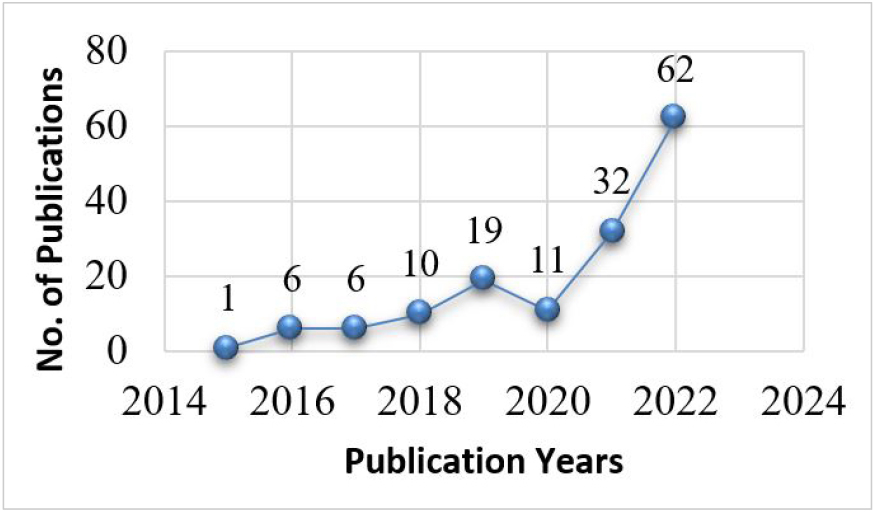
As of the year 2020, total amount of publications has risen significantly (with 94 publications). Particularly, the quantity of articles continues. From 32 in 2021 to 62 in 2022, it increased substantially.
Most influential geographic region
More than 59 countries around the globe made contributions to the disease classification publications, with Asian and European nations contributing the most. The smart techniques are considered a “game- changer” for the healthcare field in future. Intelligent algorithms have been extensively used in recent times and deep learning is more thought-provoking in studies of health sector [65, 66, 67, 68]. Patients in villages and rural areas are denied adequate medical treatment because there are not enough specialists in such locations, and the evaluation is made by qualified workers as a substitute [69, 70, 71]. Table 2 demonstrates the highest subsidising countries concerning skin disease problem publications. Australia leads with the top position with 36 publication count succeeded by Canada and China with 34 and 31 publications correspondingly. Though, Canada holds the first place with 1571 citations followed by Netherlands with 1215 citations respectively. It demonstrates the broad acceptance of possibilities rendered achievable by the categorization of skin diseases problem. As the most dynamic country, Canada is the one with the most citations, and the average citation of it is 46.21 which mean each publication from the Canada is cited by 45-46 papers on average.
Table 2.
Projecting Nations
| Rank | Country | PC | C | AC |
| 1 | Australia | 36 | 568 | 15.7 |
| 2 | Canada | 34 | 1571 | 46.21 |
| 3 | China | 31 | 376 | 12.13 |
| 4 | Egypt | 19 | 323 | 17.00 |
| 5 | Germany | 16 | 295 | 18.44 |
| 6 | India | 10 | 106 | 25.4 |
| 7 | Italy | 10 | 380 | 38.00 |
| 8 | Malaysia | 8 | 103 | 12.87 |
| 9 | Netherlands | 7 | 1215 | 17.35 |
| 10 | Pakistan | 7 | 99 | 14.14 |
| 11 | Poland | 6 | 223 | 37.17 |
| 12 | S.A Saudi Arabia | 6 | 155 | 25.84 |
| 13 | South Korea | 5 | 184 | 36.8 |
| 14 | Spain | 5 | 40 | 8.0 |
| 15 | Taiwan | 5 | 72 | 14.4 |
| 16 | U.K | 5 | 8 | 1.60 |
| 17 | United States | 5 | 126 | 25.2 |
Figure 3 visualises the nation/s research in the healthcare domain. Bibliographic linking has been figured for states/area with at least five articles published. Among 59 nations, only count of 17 met the criterion. A nation is represented by a round shaped in the illustration and the scope of the round shaped indicates amount of the participation; the biggest the round, more contribution. Four clusters were created as an outcome of the coupling of bibliographies.
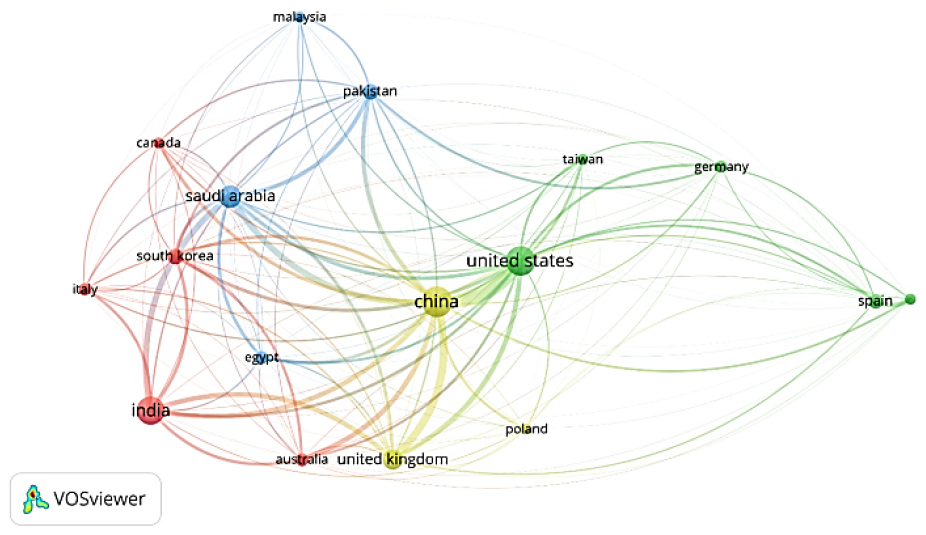
The United States is the dominant nation of the green grouping, which also includes Germany, Spain, Taiwan, and the Netherlands. India is the leader of the crimson group, which also includes Australia, South Korea, Canada, and Italy. Saudi Arabia, Pakistan, Malaysia, and Egypt are all part of the blue cluster. China, Poland, and the UK are also in the same cluster. As a result, each cluster shows the nations utilizing comparable works of literature. Additionally, co-authorship research can help us analyse the author’s networks’ alignment with multiple countries.
Author Influence
The country-wise collaboration hierarchy with co- authorship is shown in Figure 4. The nations that established a minimum of four papers were taken into account. The evaluation shows how many articles there are in different topographical environment. The primary connections between the nations exhibit the number of articles that were produced jointly with one another.
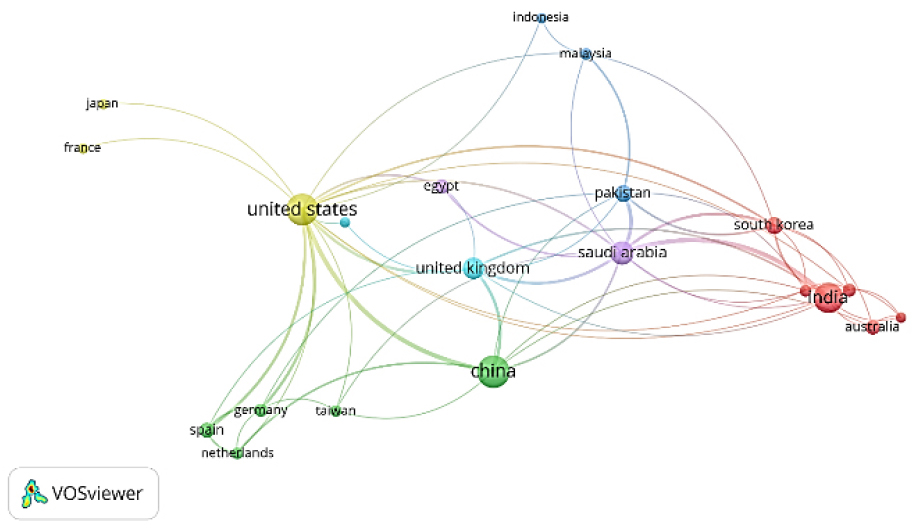
Table 3 demonstrates that the co-authorship among countries. Here, minimum number of document of country is seven. Out of 59 countries, only 10 meet the threshold. China, India and United States has extreme quantity of written papers. Saudi Arabia, United States and United Kingdom have “7” in total association with other nations.
Table 3.
Collaboration of authors among different countries
Analysis is done on the criterion of total publications, total link strength of joint authorship, link examination and cluster. Table 4 validates the researchers who issued skin disease classification. The criterion of minimum documents is eligible as three and minimum citations are six. Out of 909 authors, only nine authors meet the threshold. Chen M., and Li Y. from China and United States holds the highest citations i.e. 76 and 78 or can say the most cited authors. Liu J. and Li. Y. published the highest number of publications.
Table 4.
Prolific researchers in skin disease
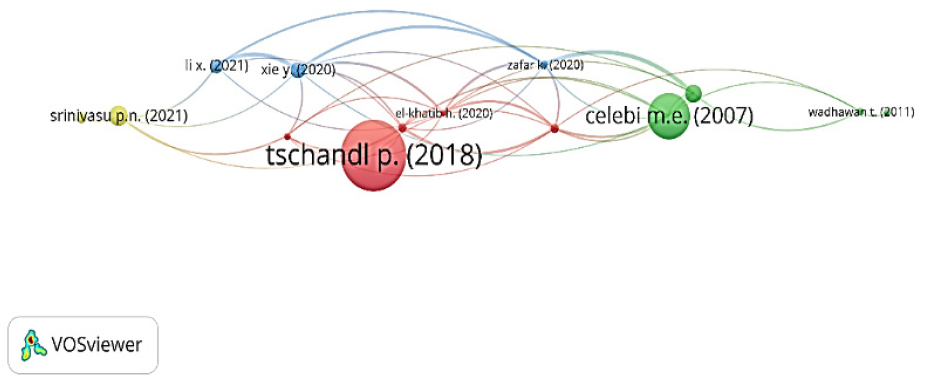
Figure 5 shows bibliographic coupling of documents. The minimum number of citations is 40 per document. Out of total 200 documents, only twenty one documents meet the threshold value. The top author for this analysis is Tschand who reported the highest 848 citations and celebi holds 493 citations [72, 73]. Highest number of strength for the Zafar Y.K is 28. Author developed the skin lesion segmentation algorithm using CNN and provided prolific outcomes [74].
The most cited publications
As the quantity of articles on skin disease has significantly increased over the last ten years, so too have the research that relate to it. Publications in the subject of healthcare in skin ailments have increased dramatically since the research study. Analysing the most frequently mentioned documents is the focus of this section. The calibre and authority of a research paper published is determined by the quantity of citations it receives. According to earlier studies, the significance of an article increases with the number of citations it obtains. The dataset contains 10015 dermascopic images and available publicly on ISIC archive [72]. Different types of dataset were used for skin disease categorization as shown in Table 5.
Table 5.
Dataset Description of Skin Disease Classification
| Datasets | No. of Images |
| HAM10000 | 10,015 |
| ISIC Archive | 85000 |
| PH2 | 200 |
| DermNet | 23000 |
Table 6 symbolises the top 20 fragments of research and publication out of which deep learning requires large dataset for analysis. Likewise, the research paper by Celebi distinguishes the study breaks and offer commendations aimed at impending study in healthcare specifically in skin disease domain [73]. Yoon particular highlighting how genetic and biophysical methods counterparts each other and can return automatic visions with model phospholipid and bacterial cell membranes [75]. To analyse the extremely functional paper, the study assesses the no. of references a publication established. Each article is represented by the author’ name, title of document, source title (journal name), year and most important how many researchers have been cited their articles. Srinivasu proposed a model for derm ailments detection and classification with minimum execution power and efforts [76].
Table 6.
Utmost Mentioned Publications
Prominent Journals
This study includes 91 articles, in which about thirty percent of the publications attained from 10 top-notch journals. Table 7 signifies prominent journals associated with derma disease classification disease classification/detection constructed from total articles printed. International Journal of Molecular Sciences is the high rank journal containing thirteen published articles and having disease. International Journal of Molecular Sciences is the high rank journal containing thirteen published articles and having with five hundred and forty two citations. Sensors received the second highest citations which is recorded as 240 and bagged second position in the top leading journals. Then, further IEEE Access published the in the journals (Figure 6). The choice of articles eligibility for the evaluation based on the atleast five references and minimum number of documents in a source is five. Only ten journals out of 91 total journals met the threshold as an outcome. Out of four clusters illustrated in below figure 6, cluster 1 holds three items named as IEEE Access, Lecture Notes in Computer, Sensors (Switzerland).
Table 7.
Prominent Journals with Citations
| Sr. No. | Source (Leading Journals) | TP | TC | H | SJR |
| 1 | International Journal of Molecular Sciences | 13 | 542 | 195 | 1.176 |
| 2 | Sensors | 13 | 240 | 196 | 0.636 |
| 3 | IEEE Access | 12 | 150 | 158 | 0.927 |
| 4 | Journal of Biomedical Optics | 8 | 183 | 147 | 0.872 |
| 5 | Computers, Materials and Continua | 7 | 24 | 44 | 0.788 |
| 6 | Lecture Notes in Computer Science | 7 | 49 | 415 | 0.407 |
| 7 | Computational Intelligence and Neuroscience | 6 | 10 | 61 | 0.893 |
| 8 | Journal of Healthcare Engineering | 6 | 55 | 37 | 0.509 |
| 9 | Sensors (Switzerland) | 5 | 135 | 196 | 0.803 |
| 10 | Applied Sciences (Switzerland) | 4 | 16 | 75 | 0.293 |
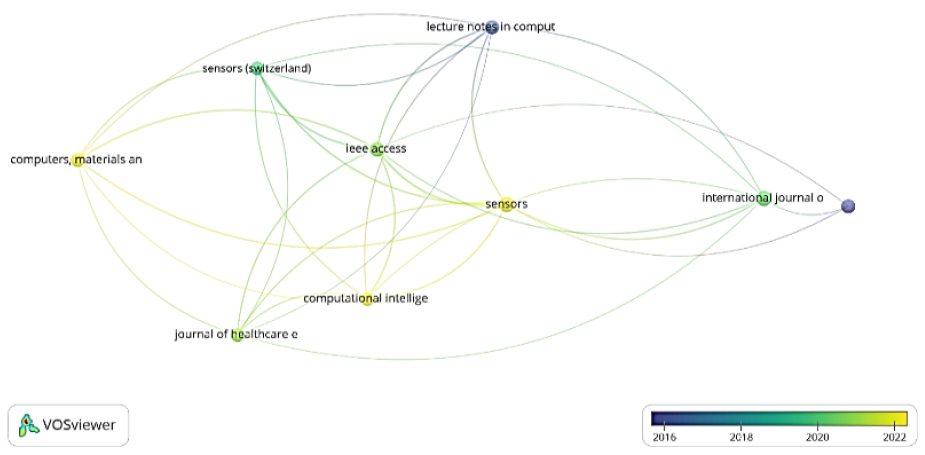
Sensors, International Journal of Molecular Sciences, Journal of biomedical optics resides in cluster 2. Computational Intelligence and Neuroscience, Journal of healthcare engineering in Cluster 3. In cluster 4, Computers Materials and Continua occurs. IEEE Access and Sensors has inferred the highest bibliographic coupling and having the highest total link strength 311 and 280.
The Most Productive Universities
This segment appraises diverse informative campuses having published research on skin disease globally. Table 8 represents numerous organizations supported two or more than two published articles during 2013-2023. Therefore, Asian campuses holds supreme publications with eight papers succeeded by one European country having two papers.
Table 8.
Most productive universities
Assessment of Search Terms Frequency
In order to identify popular study subjects, the network of co-occurring instances of words is an analytical approach that conveys information among the specialised areas of research. The rate of recurrence of keywords is exemplified in Table 8.
Figure 7 depicts numerous keywords/phrases associated to substantial skin disorders functions (classification, detection, feature extraction, analysis) which stipulates that scientists have exposed the gigantic prospective of healthcare analytics in obtaining extensive outcomes for clinicians practice. In order to explore the key themes that comprise the conceptual framework of conversational commerce research, this research performs a collaborative words analysis. Keyword co-occurrence analysis maps the keywords that authors used in their work determining the intellectual organisation of a topic, and the homogeneous grouping of terms in the analysis indicates theme intersections in the area. Figure 7 displays a chain of terms that was generated and pictured using VOSviewer. There are two groups mentioned from the collaborative or joint terms as designated via different shades in the diagram. The Red group/cluster refrains terminologies for detecting skin disorder and the Green coloured cluster redirects the methodological subject for the said disease. Furthermore, the following figure designates various scholars tends to disseminate “ML”, “DL”, “Data Analytics” and “CNN” in the healthcare field. Fewer studies allied with the execution of “AI” in the field of healthcare especially in skin disease.
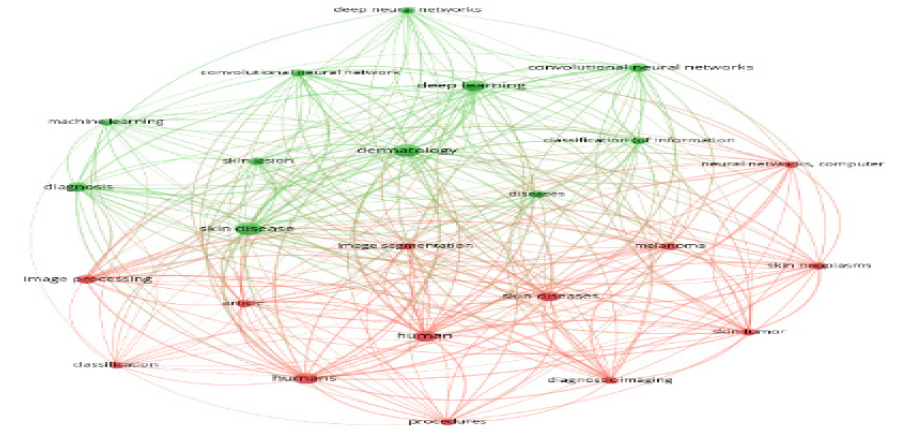
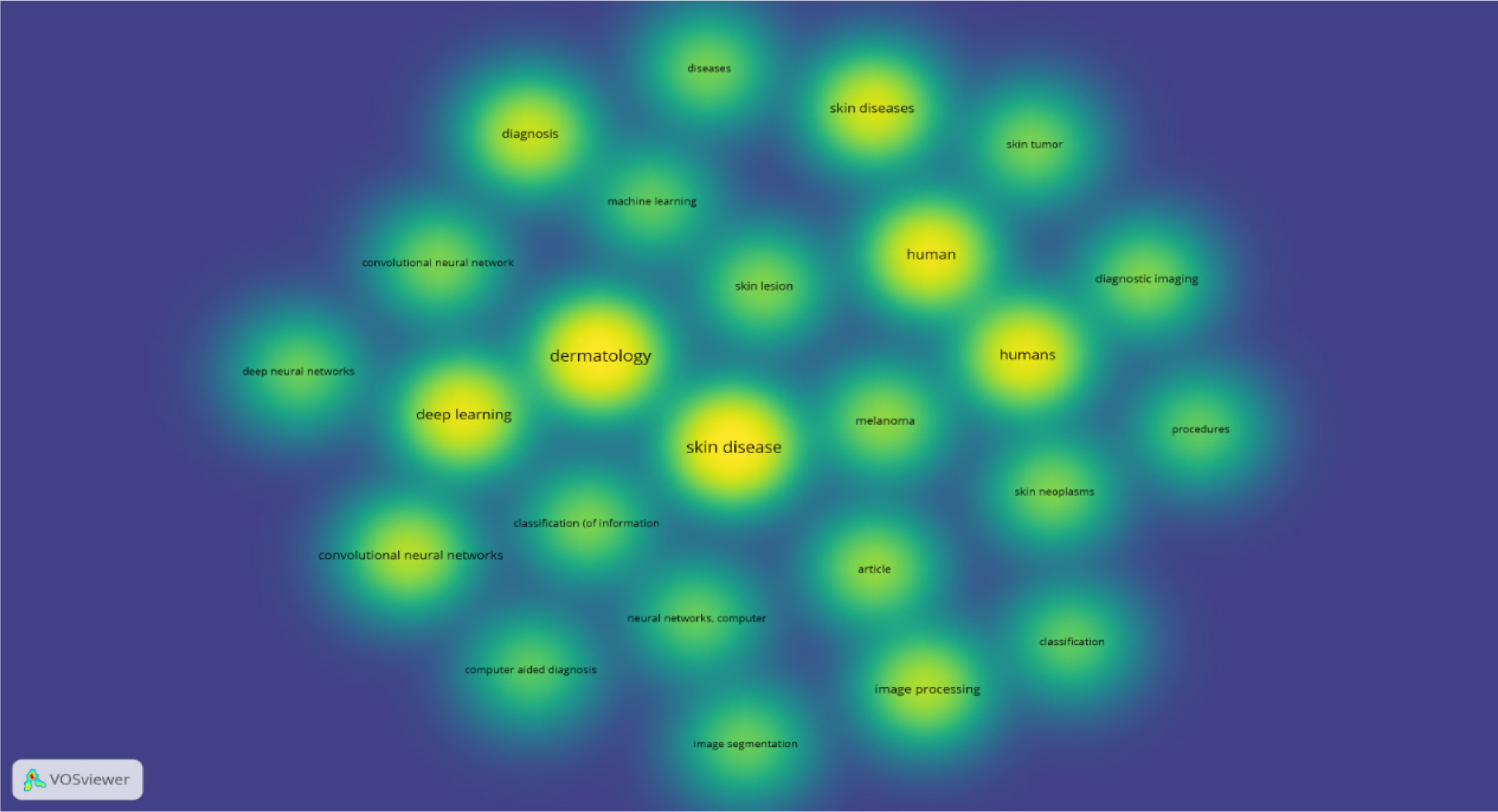
Table 9 signifies the picturing of keywords existence for skin ailments accessible during 2013-2021 years. It is used to establish the strength of networks between words that seems within the zone. Closer the phrases/terms, higher will be the thickness in the region. VOSviewer generates robust GUI mapping [77]. Figure 8 shows the architecture of federated learning where each local client builds and train its model on their local data and send model updates to the central server. Further, all clients updated gradients are sent to central server for aggregation. Finally, the model updated weights sent back to all clients. This process continues until convergence. The yellow highlighted area represents the thickness of articles which are recurrently utilized. Nowadays, keywords like DL, CNN/convolutional neural networks, dermatology, human disease are recognized as important arena for research.
Table 9.
Bibliometric evidence on the keyword co- occurrence of themes
| Keywords and Themes | OC | APY | DG |
| Cluster 1 (Red ): Basic keywords for skin disease | |||
| Humans | 83 | 2018.98 | 738 |
| Skin Tumor | 36 | 2020.89 | 455 |
| Neoplasm | 37 | 2020.51 | 454 |
| Diagnostic Imaging | 38 | 2019.61 | 423 |
| Skin Diseases | 70 | 2020 | 598 |
| Procedure | 30 | 2020.80 | 298 |
| Classification | 30 | 2018.50 | 152 |
| Image Processing | 53 | 2019.11 | 440 |
| Melanoma | 42 | 2020.95 | 422 |
| Image Segmentation | 32 | 2020.56 | 270 |
| Neural network | 31 | 2021.32 | 361 |
| Cluster 2 (Green): Technical Enabler of skin disease | |||
| Disease | 35 | 2020.09 | 305 |
| Skin Disease | 113 | 2019.84 | 855 |
| Skin Lesion | 38 | 2020.92 | 350 |
| Machine Learning | 36 | 2019.90 | 187 |
| Diagnosis | 62 | 2020 | 458 |
| Convolutional Neural Network | 54 | 2020.94 | 438 |
| Deep Neural Network | 32 | 2020.81 | 227 |
| Deep Learning | 81 | 2021.02 | 562 |
| Dermatology | 109 | 2020.33 | 830 |
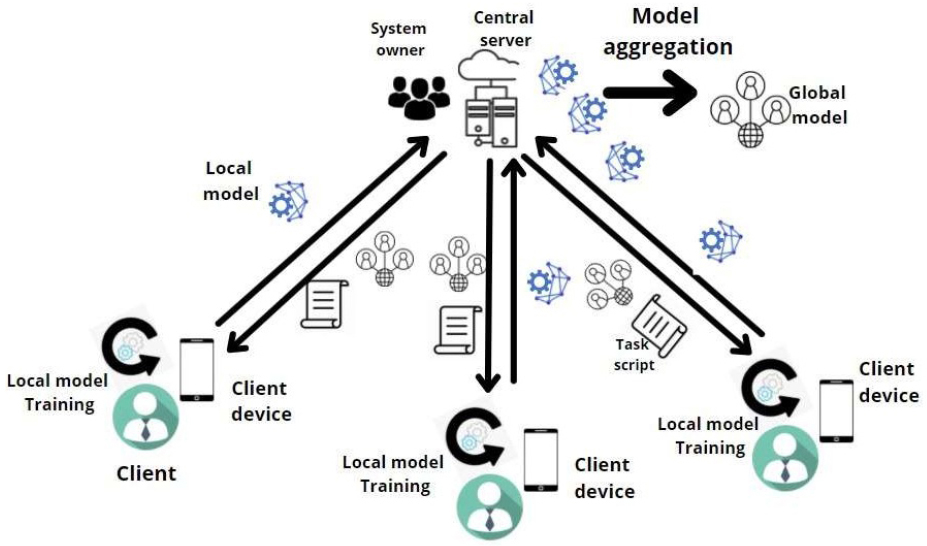
Numerous areas uses AI (artificial intelligence), machine learning algorithms like SVM, DT, NB etc. assists in predicting and analysis [78]. It motivates the experts to analyse and diagnose the disease in an accurate manner. The practice of deep learning in the medical field attains prominence representing the usage of numerical theories in skin disease exploration along with data privacy. The impact of intelligence- driven innovations on medical implementations might be the primary objective of further bibliometric investigations aimed at clarifying the progression of AI in skin field. Measuring artificial intelligence methods are integrated within medical processes, quantifying whether these algorithms boost diagnosis accuracy. The practical consequences of AI breakthroughs in dermatology treatment might be better clarified by these kind of evaluations. Future studies should handle issues such model integration, diverse data, and communication efficacy while concentrating on applying FL practically in dermatological scenarios. Furthermore, the privacy preserving strategies like FedAvg and FedProx, differential patient information can be used to further protect information about patients by using privacy-preserving strategies such as secure multi-party computing and differential privacy settings during collaborative model training. Examining how FL and modern AI models, such vision-language models, may collaborate to boost dermatology diagnosis reliability and interpretation.
Discussion
Bibliometric analysis is a useful tool for providing an outline of a huge amount of publications and allowing for the quantitative assessment of previous research. VOSviewer software is a popular tool for bibliometric analysis, and it has been used to analyse publications on skin diseases. By combining bibliometric analysis with material analysis to acquire an extensive understanding of skin illnesses, this learning adds to the body of awareness on skin diseases analytics. The analysis finds the top journals publishing papers, the influential universities, major academic areas of greatest need, top-cited articles, significant study locations and prominent author. The findings show that DL strategy implementation is still in its early stages, but that this field of study is slowly but surely acquiring traction. Experts can accurately diagnose the ailments by utilising technology like federated learning for achieving data confidentiality. An innovative computational machine learning methodology designated as federated learning (FL) enables its ability to build models without sending raw data amongst different distributed devices or clients which already saves its own data on their local devices. This approach is particularly valuable in the healthcare sector, when safety and confidentiality of data are utmost. The main benefits includes FL minimizes the possibility of revealing the data and adheres the regulations of HIPAA and GDPR policies information by ensuring that confidential data remains present on local devices. By changing primarily only models weights or updates, since only model updates are exchanged, substantial transmission of data may not be essential there is less need for bulk data transfers, therefore it minimizes the bandwidth of network. But having some limitations like data diversity in which the effectiveness of model may be hampered due to diverse data utilized by different distributed clients or organizations. In communication overhead constant exchanging of interaction between client and server may leads to latency. According to the study, the use of deep learning technique in the dermatological sector is still in its infancy, and further study is required to fully understand its potential and fill in the knowledge gaps that exist in the existing body of knowledge. The study found that although some indicators in the literature were broadly disapproved, but the research goes on for appraising the solicitations for dermis ailments along- with other image processing fields. Overall, bibliometric analysis using VOSviewer software is a useful tool for analysing publications on skin diseases and can provide insights into the trends and characteristics of research in this field.
Conclusion
A comprehensive exploration of Deep learning utility in skin arena emphasizing remarkable authors, developments and contemporary advancements in the existing literature. Outcomes indicates improved and precise treatments and diagnosis in healthcare field, particularly in metropolitan localities where exterior influences promote skin disorders. The integration of newer strategies in dermis encourages the sustainable medicinal infrastructure. The practice of deep learning in identifying skin ailments is a favourable methodology that can augment the accuracy of diagnosis and decision-making for clinicians. The conclusions of the study are pertinent for academicians and dermatologists for augmenting approach development for diagnosing skin ailments. The enactment of deep learning is advantageous for experts to comprehend the detection and classification indications of the patients and helps to take and derive best conclusions. Very few studies have been discovered on identifying risks, challenges and capabilities essential for the adoption and implementation of deep learning along with security prospects. To support the significance of FL in this learning, it is relevant to highlight present exploration where FL has been magnificently functional in curative imaging and skin ailments recognition. Adaptive Federated Learning (AFL) for Skin Disorder Identification focused on adaptive FL-based model for skin disease identification, representing better-quality grouping outcomes while maintaining data confidentiality. Federated Contrastive Learning (FCL) familiarised a federated contrastive learning methodology for multi-center medical image classification, effectively addressing data dissimilarity and extending model generalization. Consequently, an additional investigation is required to recognize the jeopardies, encounters, and competencies which is necessitate for the implementation of contemporary approaches in skin disease. Deep learning in dermatology and even other fields brings prospective to transform the different arenas and enhance the accurateness of identification and decision-making for professionals. More learnings are acclaimed on several issues that enhance derma problems such as internal (parasitic) and external (sun burn) engendered problems. In augmentation to this, lot of studies must be in use for the utility of federated learning framework for data confidentiality apprehensions. Addressing those disruptions, extended research should implement for an experimental practice to apprehend the similar one. Advanced study might scrutinize how these modern technologies achieves major contribution in smart therapeutic enterprises and eco-friendly health merchandises. It permits us to create a contemporary urban well-being atmospheric system that may be practicable and sustainable.

